How One Line From a Suya Seller Changed the Way I Run My Own Business Today
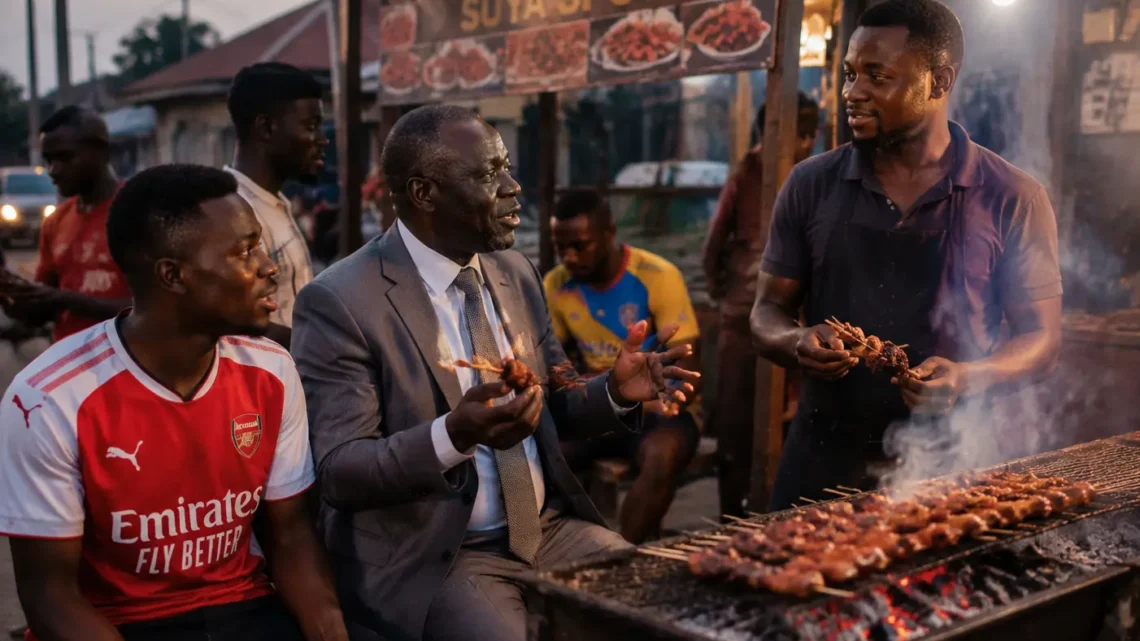
The first time I ever pitched a business idea, I was standing behind a suya stand on Chime Avenue in Enugu, wrapped in the smell of charcoal and roasted onions, watching a man in a slate grey suit argue with Kelechi about the price of a plate of ram meat.
Four hundred naira for this small small thing? the man said, holding up two skewers like evidence in a court case. You people think because we wear suit we are mumu.
Trending Now!!:
Kelechi didn’t even look up from the grill. Oga, na the market price be that. Go ask any suya man from here to Ogui Road.
I was seventeen that year, home for the long vacation, helping my cousin Kelechi man his stand after school hours because my mother said idle hands in Enugu during holidays turn into hands that learn bad things at Polo Park. I didn’t know that grill would become the place where I learned everything I now use running my own small logistics company, moving goods between Enugu and Onitsha with two rickety Hilux vans and a WhatsApp group of forty drivers.
Kelechi was twenty-three then, built like someone who carried sacks of charcoal for a living, which he did, and he had failed his university entrance exam twice. His father, a retired civil servant with a temper that could strip paint, had stopped speaking to him properly, communicating mostly through my aunt, who would relay messages like a reluctant translator between two countries at war. Tell your son food is on the table. Tell your father I already ate.
But watching Kelechi work that grill, I understood something the exam results never captured. He knew, to the naira, how much charcoal cost per bag depending on whether it came from Nsukka or from the bush traders near Awgu.




He knew which customers paid on time and which ones needed to see cash first before the meat touched the grill. He knew that the man in the suit arguing about four hundred naira would still buy, because he came every Thursday at exactly the same hour, like a man reporting for duty.
Why you dey argue with am like that, I asked one evening, fanning smoke away from my eyes. Just give am small discount now.
Kelechi shook his head slowly, turning a skewer with the kind of precision a surgeon might envy. If I discount am today, tomorrow he go come back and expect the same thing. Then the next person go hear and expect am too. You no dey run business with your heart, Chibueze. You dey run am with your head. Your heart go still chop food sha, but the head must first arrange the table.
I didn’t understand it then, not fully. I was still a boy who thought business meant having a shop and waiting for money to walk in. But that phrase stayed lodged somewhere in me, the way certain sentences from certain people just refuse to leave.
The stand grew, slowly, the way most real things grow in this country, without fanfare, without a big launch, just one more bench added, one more grill, one more boy hired to fan smoke and call out to passersby. By the time I finished university in Nsukka and came back for one final holiday before job hunting properly began, Kelechi’s suya spot had become something people called Kelechi Corner, and on Friday nights you could barely find a seat.
That was the same year his father finally showed up, unannounced, in his old Peugeot 504 that groaned like it carried grudges of its own. He didn’t say much. He ordered a plate, sat on the bench like any other customer, and watched his son work. I remember Kelechi’s hands shaking slightly as he seasoned the meat, though his face stayed calm, the way a man’s face stays calm when he’s decided long ago not to let anyone see him bleed.
When the old man finished eating, he stood, dropped a thousand naira note on the table, more than double the price, and said only one thing before he left. Your mother was right about you. Then he drove off in that groaning Peugeot, and Kelechi stood there holding the note like it weighed more than paper should.
I asked him later what his mother had been right about.
She always told him I would build something with my hands since my head no gree hold book, Kelechi said, laughing the kind of laugh that has water hiding just behind it. Papa never believe her. He wanted a doctor or lawyer for the family. Instead he get one suya boy wey dey make better money than some of his colleague children wey graduate.
By the time I left Enugu that year to start my logistics business in Lagos, chasing contracts and losing sleep over fuel costs and drivers who disappeared with company vans, I carried Kelechi’s sentence with me like a small charm in my pocket. You no dey run business with your heart. You dey run am with your head. I said it to myself the first time a client tried to shortchange me on a delivery fee.
I said it again the day I almost gave a loan to a driver whose story didn’t add up, and something in my head, not my heart, told me to check his documents first, which was how I discovered he’d already collected the same sob story money from two other transport companies that month.
Last December, I drove back to Enugu for Christmas and went straight to Chime Avenue before I even dropped my bag at home. Kelechi Corner had become an actual building now, with a proper roof, tiled floor, a generator humming steadily behind it, and three young boys running the grills under Kelechi’s supervision. He wasn’t fanning smoke anymore. He was standing by a small wooden counter, checking a notebook, the way a man checks accounts.
Oga businessman, he called out when he saw me, grinning wide enough to show the gap in his front teeth that never changed no matter how much money changed. You don forget us for Enugu.
We sat on the same kind of bench from years ago, ate the same kind of suya, though the price had tripled with everything else in this country. I told him about my two vans, my forty drivers, the contract I’d just landed moving building materials for a construction firm in Onitsha. He listened the way he used to listen to that man in the grey suit, patiently, calculating something behind his eyes.
You see, he said finally, pointing his skewer at me like a teacher making a final point. I told you. Your heart go still chop food. But na the head wey arrange the table.
Some men build empires from boardrooms with air conditioning and PowerPoint slides. Some men build them from a suya stand on a dusty road in Enugu, one skewer, one honest sentence, one Thursday customer at a time, and the lesson lands exactly the same either way.