I Adopted a Dog and He Accidentally Made Me a Better Person
I was thirty-one years old when a six-pound beagle mix named Biscuit walked into my apartment in Austin, Texas, and quietly dismantled every confident assumption I had ever held about myself as a responsible adult.
It was a Thursday in early spring. My sister Dana had called me two days before, voice cracked with guilt, explaining that she was relocating to Singapore for work and could not take her dog. She needed someone. She needed me. I said yes before she even finished the sentence, because that is what you do when your older sister sounds like she is about to cry into a phone at eleven in the morning.
Trending Now!!:
“He is easy,” she told me, standing in my doorway with Biscuit tucked under her arm like a warm loaf of bread. “He eats twice a day, he sleeps a lot, and he loves belly rubs. You will barely notice he is there.”
I believed her. I should not have believed her.
The first week, Biscuit chewed through the corner of my couch, had three accidents on my bathroom rug, and refused to eat the generic dry kibble I had grabbed off the nearest supermarket shelf. He would sniff the bowl, look up at me with those amber eyes that carried the energy of quiet disappointment, and walk away.
I sat on my kitchen floor on day four, completely defeated, watching a dog reject his dinner. And I remember thinking: I have no idea what I am doing.




That thought cracked something open in me. I had always been the person in any room who researched things thoroughly. I read product reviews before buying a blender. I compared interest rates before opening a savings account. But somehow, I had walked into dog ownership the same way some people walk into Vegas: confident, underprepared, and already losing.
So I started from the beginning.
The first thing I learned, sitting at my laptop with Biscuit asleep across my feet, was that not all dog food is created equal. I had grabbed a budget brand filled with corn fillers and artificial preservatives, the kind that looks fine on the shelf but reads like a chemistry experiment on the back label.
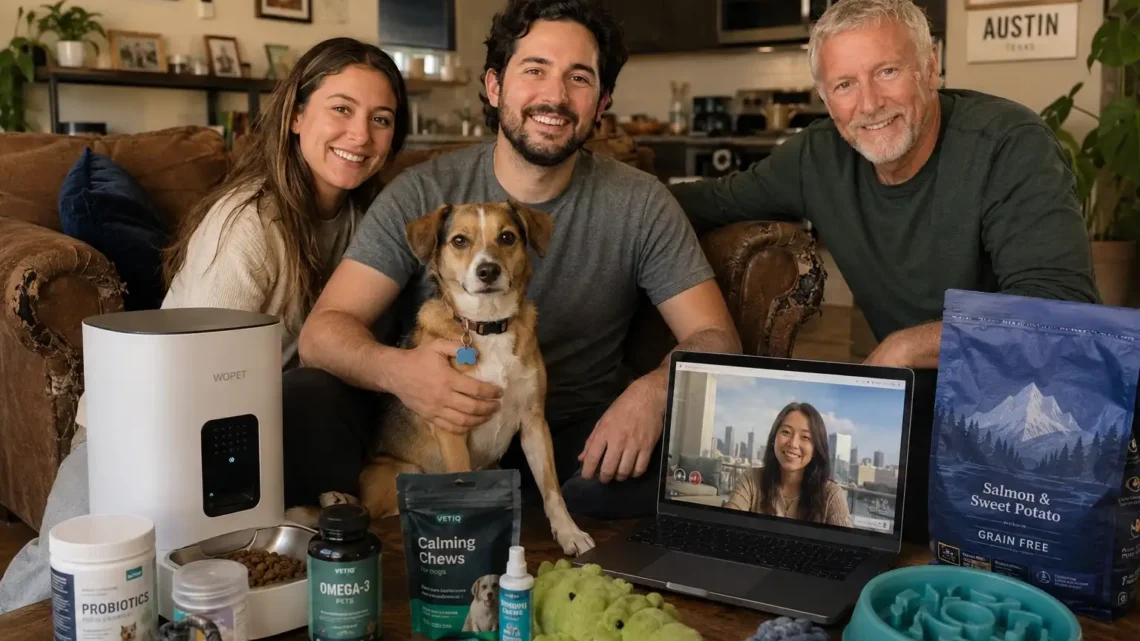
What Biscuit needed, based on his age, size, and sensitive stomach history that Dana had casually mentioned somewhere in her goodbye texts, was a high-quality, grain-free dog food with real protein as the first ingredient. I switched him to a small-batch, limited-ingredient formula with salmon and sweet potato. Within five days, he was finishing his bowl and looking at me for more.
That one change felt like a miracle. It was not a miracle. It was just nutrition.
My neighbor Greg, who had owned three Golden Retrievers over the course of fifteen years, knocked on my door one Saturday morning holding a leash and wearing the expression of a man who had seen too many rookie pet owners spiral. He had heard me through the wall on day two, apparently, apologizing out loud to a dog at two in the morning.
“You need a routine,” he said, stepping inside without much ceremony. “Dogs do not want spontaneity. They want a schedule, good food, exercise, and to know you are not going to panic every time something goes wrong.”
He sat at my kitchen table and walked me through everything: the importance of preventive veterinary care, how flea and tick prevention was not optional in Texas heat, how a monthly heartworm medication could prevent a bill that would genuinely make your knees weak. He talked about pet insurance the way someone talks about seat belts: not because you expect the crash, but because you are not foolish enough to drive without one.
“I skipped pet insurance with my first dog,” Greg said, wrapping both hands around his coffee mug. “Then Remy swallowed a corn cob at age three and I paid four thousand dollars in emergency surgery. I have not made that mistake since.”
I enrolled Biscuit in a comprehensive pet insurance plan the following Monday.
Over the next few months, I became what I can only describe as obsessed, but in a productive way. I researched indoor enrichment toys because beagles are scent-driven working dogs and a bored beagle is a destructive beagle. I bought a slow feeder bowl to help with his digestion.
I invested in a high-quality automatic pet feeder for the mornings I left early, one with a built-in camera so I could watch him approach it from my office desk and feel something embarrassingly close to joy.
I found a veterinarian two miles away, Dr. Simone Alvarez, who ran a small but exceptional practice and talked to animals the way most people talk to close friends. She evaluated Biscuit on his first visit, checked his joints, his teeth, his coat, and then looked at me with the calm authority of someone who had been doing this for two decades.
“You are doing better than most first-timers,” she said, which felt like being handed an Oscar. “But let us talk about his dental hygiene. It is the most overlooked part of pet health and it causes real long-term damage.”
She recommended enzymatic dog toothpaste and a finger brush. She talked about the link between poor dental health and heart and kidney disease in dogs. I had never once in my life thought about brushing a dog’s teeth. I started that same week.
By summer, I had found a groomer I trusted, a quiet woman named Patrice who operated out of a small studio near the farmer’s market and had the patience of someone born for the work. She introduced me to the concept of breed-appropriate grooming, deshedding treatments, and how the right pet shampoo made a real difference in coat health and skin hydration. Biscuit came home from his first appointment smelling like oatmeal and looking absurdly handsome.
I also started him on an omega-3 pet supplement, after Dr. Alvarez flagged some mild skin dryness at his six-month checkup. His coat was noticeably shinier within three weeks. I felt like a scientist who had just confirmed a hypothesis.
Here is the part nobody tells you about becoming a pet owner: it is not the big things that change you. It is the accumulation of small ones. It is learning the specific way your dog sighs when he is content. It is knowing, without looking at a clock, exactly when he needs to go outside. It is building a medicine cabinet stocked with pet-safe wound spray, digestive probiotics, and an anti-anxiety calming chew for thunderstorm nights, because Austin gets storms that rattle windows in October.
It is lying on your living room floor at nine on a Wednesday night, doing nothing in particular, while a small warm animal rests his chin on your ankle and both of you just exist quietly in the same space.
Dana video-called me from Singapore on Biscuit’s first birthday. I had made him a small dog-safe cake I found a recipe for online: peanut butter, banana, and oat flour, topped with a single dog biscuit like a candle.
“You look different,” she said, studying my face through the screen.
“Different how?”
She thought about it for a moment. “Softer. Less in your head.”
She was right. I had spent my twenties being extremely competent at things that did not require me to be present. Owning Biscuit required me to be present every single day, whether I felt like it or not. He did not care about my deadlines or my mood or the fact that I had slept badly. He needed feeding, walking, attention, and love on a consistent schedule, and meeting that need, day after day, had quietly rebuilt something in me I did not know needed rebuilding.
The expensive organic pet food, the carefully chosen grooming products, the vet appointments, the insurance premiums, the enrichment puzzles and interactive toys: none of it felt like a financial burden after a while. It felt like maintenance. The same way you maintain anything that matters.
Now, nearly three years into this, people ask me for advice. Friends who just adopted puppies. Coworkers who are thinking about getting a cat. My colleague Marcus texted me last month asking what automatic litter box he should buy for his new kitten, and I spent twenty minutes giving him a genuine answer, covering odor control, self-cleaning mechanisms, and why the cheaper models tend to jam at the worst possible times.
I am not a veterinarian. I am not a professional groomer or an animal nutritionist. I am just someone who learned the hard way that pet care is not an afterthought. It is a commitment that asks you to pay attention, spend wisely, and show up consistently for a living creature that gives you everything it has in return.
Biscuit is asleep on the couch right now, the one he partially destroyed in week one. I never replaced it. I like the chewed corner. It is a record of where we started.
And I would not trade a single expensive vet bill, a single chewed cushion, or a single 2 a.m. anxiety spiral for any version of a life without him in it.