
I Packed One Bag, Bought a One-Way Ticket, and It Ruined Me in the Best Way Possible
The first time I ever boarded an international flight alone, I cried in the airport bathroom for six minutes straight. Not because I was scared. Not because I was sad.
I cried because I had just spent four years telling myself I would “do it someday,” and someday had finally, terrifyingly, arrived.
Trending Now!!:
I was thirty-one years old, holding a one-way ticket to Lisbon, Portugal, with €800 in my account, a 45-litre backpack I had overpacked by at least fifteen kilograms, and absolutely no idea what solo travel actually looked like outside of Instagram.
I had read every travel blog I could find. I had watched every “budget travel tips” video on YouTube. I had built what I genuinely believed was a solid travel itinerary. And I was still completely unprepared for what happened next.
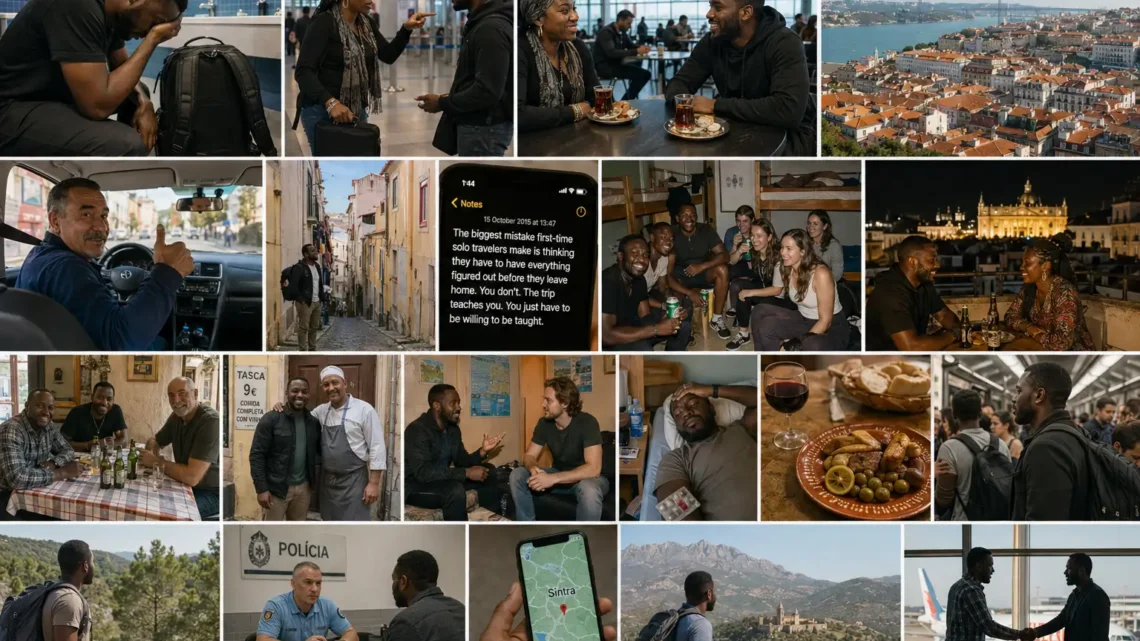
The flight from Lagos to Lisbon had a layover in Istanbul. Four hours. Simple enough, right? Except I had somehow misread the gate information, ended up on the wrong terminal level, and missed the transfer bus by thirty seconds.
I stood there, breathing hard, watching the little bus disappear into the grey Turkish morning, my backpack straps digging into my shoulders, and I thought: This is it. This is how the trip ends. In a bus lane in Istanbul.



That is when Amara found me.
She was Nigerian, which I only knew because she was loudly arguing with an airport official in a mixture of Yoruba and English that made both of them deeply confused.
She spotted me the way Nigerians always spot each other abroad, that invisible radar that activates the moment you hear someone kiss their teeth in frustration.
“Oga, you look lost,” she said, dragging a suitcase that was clearly violating several laws of physics.
“I missed the transfer bus,” I said.
She laughed. Not a polite laugh. A full, from-the-belly laugh that echoed off the terminal ceiling. “Welcome to international travel, my brother. Come. I know where to go.”
I followed a complete stranger through Istanbul Atatürk Airport, and that was the moment my entire understanding of what it meant to travel changed forever.
Amara had been doing solo travel for six years. She was a content creator, a budget travel expert in every practical sense of the word, and she moved through airports the way water moves through stone: with total, unhurried certainty.
She knew which airline staff to approach, which queues to avoid, and how to smile in a way that communicated both urgency and charm simultaneously. Within forty minutes, we were rebooked, reseated, and sitting at a small café near Gate 14 drinking the best Turkish tea I have ever tasted in my life.
“The biggest mistake first-time solo travelers make,” she said, wrapping both hands around her glass, “is thinking they have to have everything figured out before they leave home. You don’t. The trip teaches you. You just have to be willing to be taught.”
I wrote that down in my phone’s notes app. I still have it there.
Lisbon arrived the way beautiful things tend to: quietly, without warning, and all at once. The city hit me the moment the taxi crossed the bridge over the Tagus River.
Golden light on terracotta rooftops. Narrow cobblestone streets climbing hills that had no business being that steep. The smell of salt and grilled sardines drifts up from the waterfront. I pressed my face against the taxi window like a child.
The driver, a short man named Fonseca with a grey moustache and strong opinions about football, caught my reflection in the rearview mirror and smiled.
“First time in Lisboa?” he asked.
“Is it that obvious?” I said.
“You have the face,” he said, waving one hand in a circular gesture. “Everyone has the face. The first time.”
I stayed in a small hostel in Alfama, the oldest neighbourhood in Lisbon, for €22 a night. That hostel was one of the best travel decisions I ever made, not because it was comfortable, but because of who I met there. Budget accommodation gets a bad reputation from people who have never actually done it.
What they do not understand is that a hostel dorm room at 11pm is one of the most honest places on earth. Six strangers in bunk beds, nobody pretending. People tell you things in hostels they would never say at a hotel bar.
On my second night, I sat on the hostel rooftop with a cold beer and a woman named Chidinma, a software engineer from Enugu who had quit her job, bought a Eurail pass, and was halfway through a three-month solo travel journey across Europe.
“People think solo travel is lonely,” she said, staring out at the city lights. “It is the opposite. When you travel alone, you have to talk to people. You have no choice. You become more social than you have ever been in your life.”
She was right. I talked to more strangers in my first four days in Lisbon than I had in four months back home. I talked to a retired professor from Porto who knew the hidden gems of the Alentejo region better than any travel guide I had ever read.
I talked to a young chef who took me to a tiny tasca in Mouraria where you could get a full meal with wine for €9, and the grandmother in the kitchen looked personally offended if you did not finish everything on your plate.
I talked to a British backpacker named James who had been travelling on a shoestring budget for eleven months and whose advice about finding cheap flights changed how I have booked every trip since.
“Never search for flights on your phone,” James told me with the absolute seriousness of a man passing down sacred knowledge. “Use incognito on a laptop. Clear your cookies first. Search on a Tuesday. And never, ever book the first price you see.”
I have no idea if the science behind all of that is real. But I have followed it religiously for ten years and I will die on that hill.
The trip was not all magic, though. I want to be honest about that because too much travel content online sells you a fantasy that collapses the moment you arrive and realise reality did not get the memo. I got food poisoning in Porto. Bad.
The kind where you are horizontal on a hostel mattress at 2am making bargains with God about your dietary choices. I got pickpocketed on the Lisbon Metro, lost €60 and my favourite pen, and spent an entire afternoon at a police station filing a report in broken Portuguese with a bored officer who had clearly seen this exact situation approximately nine thousand times before.
I ran out of data on my SIM card in the middle of hiking the Sintra trails and had no offline maps downloaded, which meant I spent two extra hours wandering through the most beautiful forest I had ever seen, completely lost, genuinely frightened, and also somehow having the best afternoon of my entire life.
That is the thing about travel that nobody fully explains to you before you go. The bad moments do not cancel the good ones. They become part of the same story. The food poisoning in Porto is why I now always carry oral rehydration salts and a full course of antibiotics in my travel health kit.
The pickpocket situation is why I now use a money belt and split my cash across three different locations in my bag. Getting lost in Sintra is why I now download offline maps religiously before every hike, and also why I have a deep, abiding love for the Portuguese forest that I cannot fully explain to anyone who was not there.
I spent five weeks in Portugal. Then Morocco. Then, because Amara had texted me a voice note from Tbilisi that was essentially just forty seconds of her shouting “GEORGIA IS INCREDIBLE, GET ON A PLANE”, I went to Georgia.
Each place taught me something different. Morocco taught me how to slow down, how to drink mint tea without rushing, how to sit in a souk and simply watch the world exist around me without feeling like I needed to be doing something productive.
Georgia taught me that hospitality is not a transaction, that strangers would feed you wine and walnut-stuffed dumplings and ask nothing in return except that you enjoy yourself fully. And Portugal, my first love, taught me that the best travel experiences are almost never the ones you planned.
Over the years, I have refined what I now think of as my real travel philosophy, built not from travel blogs but from ten years of booking wrong flights, eating questionable things in beautiful places, making friends with people I will never see again but also cannot forget, and slowly, imperfectly learning how to move through the world with less fear and more curiosity.
Budget travel is real, and it is wonderful, but it requires honesty about what you are willing to trade. Slow travel beats rushing through a checklist of tourist attractions every single time.
Travel insurance is not optional; I learned this the hard way in Morocco, and I will never fly without it again. The best travel itinerary is always the loosest one. And if a stranger with a too-heavy suitcase offers to help you find your gate, you follow them.
Last year, I was in an airport in Bali. I saw a young man standing near the departure boards with a backpack and the specific expression of someone who had just realised they were in the wrong terminal. I walked over.
“You look lost,” I said.
He looked at me, slightly panicked. “I missed the transfer bus.”
I laughed. Properly. From somewhere deep. “Come,” I said, already walking. “I know where to go.”
He hesitated for exactly one second, the same way I once did, and then he followed. And that, more than any destination I have ever visited or any view I have ever photographed, is what travel actually gave me: the ability to be Amara for someone else.
I still have that note in my phone. “The trip teaches you. You just have to be willing to be taught.”
Ten years later, I am still being taught. And I have never once regretted buying the ticket.