The $5,500 Bet That Changed My Life: Investing in Gold, Stocks, and ETFs
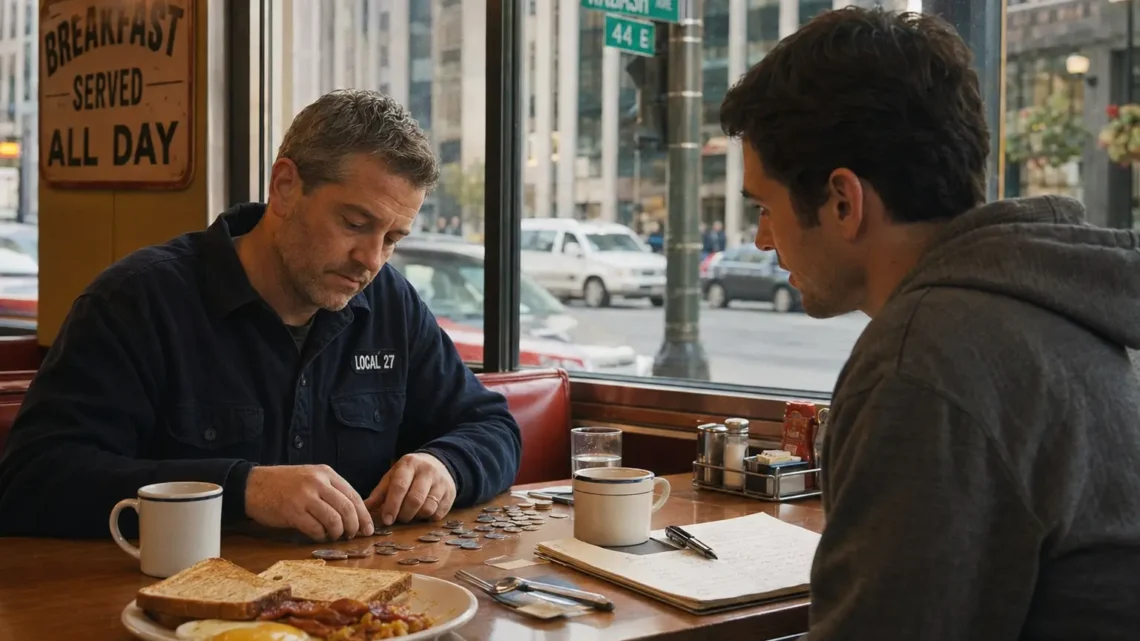
I still remember the exact moment I decided to take investing seriously. It was a Tuesday afternoon in March 2014, and I was sitting across from my older brother Marcus at a diner in downtown Chicago, watching him count out exact change to pay for a $9 breakfast.
Marcus had spent the last twenty years working a solid union job, putting every spare dollar into a savings account, and doing everything “the right way.” He was 52. He had $34,000 saved. And he had just been told his pension was being restructured.
Trending Now!!:
“I did everything they told me to do,” he said quietly, not looking up from the coins. “Everything.”
I was 31 at the time, with about $6,000 in a checking account and a vague plan to “invest someday.” Watching Marcus that morning, I felt something shift in my chest. Not pity, exactly. More like fear. The specific, clarifying kind of fear that makes you move.
I went home that evening and opened my laptop.
The first thing I typed into Google was: how to start investing with little money. Three hours later, I had seventeen tabs open, a headache, and absolutely no idea what a brokerage account was.



The words were everywhere: portfolio diversification, asset allocation, expense ratios, index funds, dividend stocks, gold ETFs, capital gains tax. I felt like I had walked into a foreign country where everyone spoke fluently, and nobody had time to translate.
I almost closed the laptop. I am glad I did not.
The next morning, I called a college friend, Derek, who had been quietly building wealth since his mid-twenties and never made a big deal about it. We met for coffee on a Saturday, and I told him exactly where I stood. Six thousand dollars. Zero investment knowledge. One very broke older brother who changed everything.
Derek leaned back in his chair and smiled in that unhurried way he had.
“Okay. Forget everything you read last night,” he said. “Let’s talk about three things. Gold, stocks, and ETFs. You only need to understand these three to start building real wealth. Everything else is noise.”
I pulled out a notepad like I was back in school.
Gold came first. Derek explained it not the way textbooks do, not as a commodity or a hedge instrument, but as the world’s oldest financial anxiety blanket. When economies wobble, when inflation climbs, when currencies lose their footing, gold holds its ground. People have trusted it for five thousand years. That kind of track record is hard to argue with.
“But you’re not buying gold coins and hiding them under your mattress,” he laughed. “You buy GLD, IAU, SGOL, or any gold-backed ETF. You get the price exposure without needing a safe.”
I wrote down the tickers. I asked him how much of my money should go into gold.
“Somewhere between five and fifteen percent of your total portfolio. It’s insurance, not a growth engine. Don’t expect it to make you rich. Expect it to keep you from getting destroyed when everything else bleeds.”
That sentence stayed with me. Keep you from getting destroyed.
Then he moved to individual stocks, and this is where the conversation got more honest and more uncomfortable. Derek had made money on stocks. He had also, as he put it without any embarrassment, lost a significant amount chasing companies he had no real business buying.
“2008 almost wiped me out,” he said, stirring his coffee slowly. “I was overexposed in financials. Bank stocks, mortgage companies. I thought I had done my research. I had read annual reports, earnings calls, the whole thing. And then the market collapsed and I watched thirty-eight percent of my portfolio disappear in about six weeks.”
He paused and looked directly at me.
“The mistake wasn’t buying stocks. The mistake was concentration. I put too much in too few places, and when those places failed, I had nothing cushioning the fall.”
Stock market investing, he told me, requires patience, discipline, and a tolerance for volatility that most people underestimate until they are actually living through a market crash.
The S&P 500 had delivered roughly ten percent average annual returns over the long term, historically speaking. But that average hid some brutal years.
You had to be willing to stay invested through the pain. The investors who panic-sold during the 2008 financial crisis, during the 2020 COVID crash, during every major downturn, were the ones who permanently locked in their losses. The ones who held on, or better yet kept buying, came out significantly ahead.
“Buy quality companies with strong fundamentals,” Derek said. “Apple, Microsoft, Berkshire, Johnson and Johnson. Companies that have proven themselves across multiple market cycles. Don’t chase the hot stock your coworker is raving about. Don’t trade on Twitter rumors. Don’t touch penny stocks. Ever.”
I wrote that last part twice.
Then came ETFs, and this is where everything clicked for me.
Exchange-traded funds were, the way Derek described them, the single greatest invention in the history of retail investing. Low cost, broadly diversified, tax-efficient, and simple enough that a 31-year-old with zero experience and $6,000 could buy them the same afternoon he opened a brokerage account.
An S&P 500 index ETF like VOO or SPY gave you exposure to five hundred of the largest American companies in a single trade. A total market ETF like VTI extended that even further. International ETFs covered developed and emerging markets. Bond ETFs provided stability and income. Sector ETFs let you tilt toward technology, healthcare, energy, or real estate without picking individual winners.
“Most professional fund managers,” Derek said with something that sounded almost like amusement, “do not consistently beat a basic S&P 500 index ETF over ten to fifteen years after fees. Think about that. You can outperform most of Wall Street just by buying a low-cost index fund and doing absolutely nothing.”
I looked at him. “So why doesn’t everyone just do that?”
“Because doing nothing feels wrong. People want to feel like they’re in control. They want to act. Investing rewards the ones who learn to sit still.”
I opened a Fidelity account the following Monday with $5,500, keeping $500 in cash as a small emergency buffer. I put $3,000 into VTI, the Vanguard Total Market ETF. I put $1,500 into VOO, the S&P 500 ETF. I put $700 into IAU, a gold ETF. And I put $300 into AAPL, partly because Derek suggested it and partly because I wanted the psychological satisfaction of owning at least one individual stock.
I told myself I would not check the portfolio every day.
I checked it twice a day for the first three months.
The numbers moved constantly, and every small dip sent a small wave of nausea through me. One afternoon in June of that year, VTI dropped about 2.3 percent in a single session on some bad economic data out of China. I sat at my desk feeling like I had physically lost money, like someone had reached into my wallet. I called Derek in a mild panic.
“How much did you actually lose in dollars?” he asked.
I did the math. “About sixty-nine dollars.”
Long pause.
“Go for a walk,” he said. “Come back in five years.”
I did not sell. That is possibly the best financial decision I have ever made.
The years that followed were not smooth or cinematic. The market dipped and climbed and dipped again. I watched cryptocurrency mania consume coworkers who tripled their money and then lost most of it.
I watched a colleague at work, a sharp guy named Tony, sink $40,000 into a single biotech stock based on a tip from his brother-in-law. The FDA rejected the company’s drug application. The stock dropped 74 percent overnight. Tony did not talk about investments for a long time after that.
I just kept buying. Every month, regardless of market conditions, I added to VTI and VOO. Dollar-cost averaging, they call it, though I thought of it less as a strategy and more as a habit. Like going to the gym whether you felt motivated or not.
By 2017 I had added a Roth IRA and began maxing it out annually, stacking the tax-advantaged growth on top of my taxable brokerage account.
I added a small position in a real estate investment trust ETF, VNQ, for income and diversification into property markets without actually buying property. I increased my gold allocation slightly during the inflation anxiety that was beginning to build quietly in the background of the global economy.
In 2020 the world shut down. The S&P 500 dropped thirty-four percent in thirty-three days, the fastest bear market in history. I remember sitting at home on a Thursday in March, watching the numbers fall, and feeling something I had not expected. Not panic. Not the urge to sell.
I felt something closer to calm, because I had been here before in smaller versions, and I knew what Derek had told me and what the data confirmed: the market had always recovered. Always. From the Great Depression, from Black Monday in 1987, from the dot-com crash, from 2008. Always.
I called Marcus.
“Are you watching the market?” I asked.
“I don’t have anything in the market,” he said.
“I know. I want to talk to you about that.”
We spent two hours on the phone that evening. I walked him through everything Derek had once walked me through. Gold ETFs as a portfolio stabilizer. The long-term case for S&P 500 index funds.
Roth IRAs for tax-free retirement growth. He was 58 by then. Not too late, not even close. He had received a small inheritance from our aunt the previous year and had left it sitting in a money market account earning essentially nothing.
He was quiet for a while after I finished. Then he said, “Why didn’t anyone tell me this twenty years ago?”
I did not have a good answer for that.
Marcus opened a brokerage account the following week. He put a portion of that inheritance into VTI, a portion into IAU, and a portion into a short-term bond ETF given his closer proximity to retirement. He moved slowly and deliberately, which was exactly the right speed.
It is 2026 now. My original $5,500 portfolio has grown into something that would have seemed like fiction to the version of me sitting in that diner watching Marcus count change. I am not a millionaire from this story. But I am financially secure in a way that feels earned and real and grounded. My emergency fund is fully funded. My retirement accounts are on track. I sleep well.
Marcus called me last month. He had just done his annual portfolio review with a fee-only financial advisor I had referred him to.
“I’m going to be okay,” he said. His voice carried something unfamiliar. Relief, maybe. Or the particular lightness that comes from having something to stand on.
“I know,” I said.
“I’m going to retire at sixty-seven. Not rich, but okay. Really okay.”
Sixty-seven. Two years from where he is standing now. After everything.
I thought about that Tuesday morning in 2014, the coins on the table, his quiet devastation. And I thought about what it actually takes to change direction, not talent, not luck, not a windfall, but a Tuesday that scares you just enough to make you open your laptop and refuse to close it.
Gold will not make you wealthy overnight. A diversified ETF portfolio will not double in a year. Individual stocks will test your nerves and your discipline. But time, consistency, and the willingness to learn just enough to take that first real step, those things change everything.
They changed everything for me. And they changed everything for Marcus.
That is the whole story.