The Weight of Water: A Manila Story
A fisherman’s death in Tondo leaves his widow facing a debt that drowned him first. What she chooses to do next reveals the quiet, dangerous arithmetic of survival in Manila’s poorest waterways.
The tide brought Ditas Marasigan’s husband home four days after he drowned, and she was the only one in Tondo who wasn’t surprised.
She had known, the way wives along Estero de Vitas always knew, that Boyet would not survive another season on the fishing boats out of Navotas.
Trending Now!!:
He had borrowed from the wrong man, a moneylender named Mang Ramil who collected interest in flesh when cash ran short, and the last time Boyet came home he smelled like diesel and fear.
Tell them I paid what I owed, he had said, sitting on the edge of their cot while their daughter slept on a mat by the door. Tell them the books are clean.
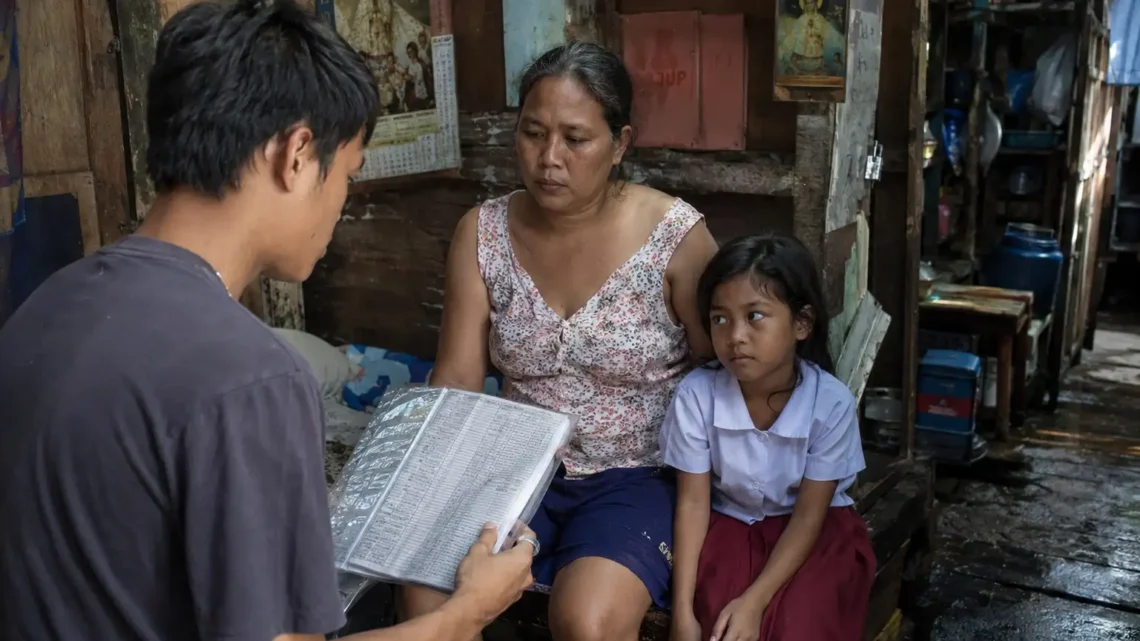
They were not clean. Ditas found that out the morning after the funeral, when Mang Ramil’s nephew, a thin boy named Jojo who could not have been older than nineteen, knocked on her door holding a ledger wrapped in a plastic bag against the rain.
Forty-two thousand, Jojo said, not meeting her eyes. Plus this month’s vig. Tito Ramil says condolences, pero may utang pa rin.




Ditas did not cry in front of him. She had learned that much from her mother, who had buried two husbands and a son in the same stretch of riverbank and never once let the neighbors see her break. She closed the door gently, the way you close a door on a room you do not want a child to enter, and she sat on the floor of her one room house and did the arithmetic of her life.
She sold fish at the Divisoria market three days a week, balut on the other four, and what she earned in a month would not cover half of what was owed even if she ate nothing and her daughter Marielle wore the same school uniform until it tore from her body.
The estero outside her window carried plastic bags and dead leaves and the smell of low tide, the same water that had taken Boyet and given him back swollen and unrecognizable, and she understood that the river did not forgive debts. It only moved them downstream to someone else.
She thought about her cousin Rosalinda, who worked as a domestic helper in Dubai and sent home eight thousand pesos some months, nothing in others, depending on whether her employer paid on time.
She thought about asking Rosalinda for a loan against a loan, the way you might bail water out of a sinking boat with a smaller boat. She thought about the church on Moriones Street where Father Esteban sometimes found emergency funds for widows, though everyone in Tondo knew those funds had a waiting list longer than the line for NFA rice.
What she did not think about, not at first, was the offer Mang Ramil had made through Jojo on his second visit, three weeks later, when the interest had compounded into something resembling a number from a nightmare.
Tito says you could work it off, Jojo told her, still not looking at her, looking instead at the calendar on her wall with its faded picture of the Virgin of Manaoag. There’s a club in Quiapo. Friends of his. They pay good, walang utang, after six months.
Ditas understood what kind of club. Everyone in that part of Tondo understood, the way they understood which alleys to avoid after dark and which barangay officials could be paid to look away. She told Jojo to leave, and he left, but he left the ledger behind, as if to remind her that numbers, unlike mercy, did not disappear simply because you refused to look at them.
That night she walked to the edge of the estero with Marielle asleep on her back, the water black and oily under the streetlight, carrying its cargo of styrofoam cups and a single rubber sandal turning slow circles in the current. She thought about how easy it would be to simply not exist anymore, to let the same water that took her husband settle its accounts with her too.
She had heard of women who did that, here and in Tatalon and in the slums along Pasig River, women who calculated that their daughters were better off with an insurance payout and an aunt than with a mother who owed more than she could ever earn.
It was Marielle stirring against her back, murmuring something about a dream, that broke the calculation in her chest like a fever breaking.
In the morning, Ditas did not go to Mang Ramil. She went instead to Mrs. Elena Bautista, who ran the smoked fish stall three spaces down from her own at the Divisoria market and who had buried a husband to the same kind of debt fifteen years earlier. Elena listened without interrupting, the way women listen to each other in markets, with their hands still moving, scaling fish, counting change, while their full attention rests somewhere else entirely.
There’s a cooperative, Elena said finally. Hindi pa-rinig sa lahat, pero totoo. Vendors only. We lend to each other, no interest beyond what keeps the fund alive. It won’t cover all of it. But it buys you time, and time is the only thing Ramil can’t put a price on, kasi hindi naman niya makukuha.
It was not salvation. Ditas understood that clearly, the way she understood the tides. It was four thousand pesos and a six month repayment plan and the promise of more if she kept her payments clean, a small raft thrown into water still capable of drowning her.
But it was something other than the ledger Jojo had left on her table, and something other than the black water calling her toward an ending that would have made Marielle an orphan twice over in one year.
She went home that evening and burned the ledger in a tin can behind her house, not because the debt was gone, but because she had decided, watching the paper curl and blacken, that some numbers only had power over you when you were alone with them.
The smoke rose thin and gray over the rooftops of Tondo, indistinguishable from the smoke of a hundred other cooking fires, and somewhere beneath it the estero kept moving toward Manila Bay, carrying everything anyone had ever tried to throw away.