Why He Stole from His 80-Year-Old Mother
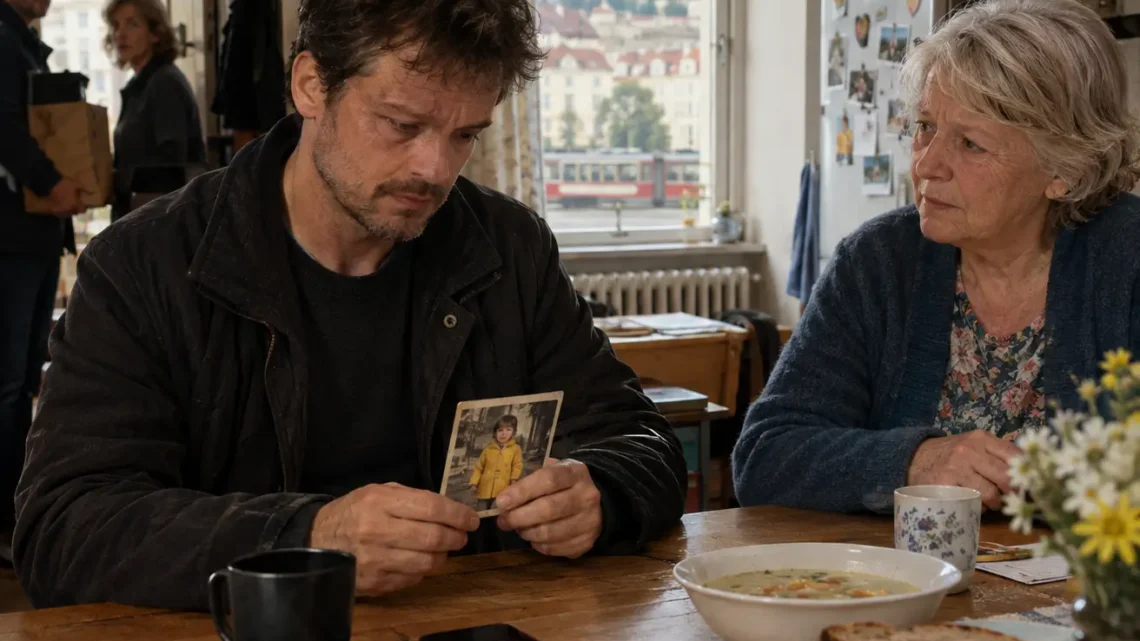
The first time Marek stole something from his mother, it was a photograph, and he was forty-three years old.
He took it from a kitchen drawer in their apartment in Prague, Czech Republic, while she stood in the hallway arguing with a delivery man about a bag of potatoes that had arrived split open. The photograph showed a little boy in a yellow raincoat, holding a dead pigeon in both hands, looking terribly proud of himself.
Trending Now!!:
Marek was that boy.
He slipped the photograph into his coat pocket before he could change his mind.
His mother, Jana, had kept the picture for thirty-six years. She had also kept his baby teeth in a matchbox, every school report he had ever brought home, and a postcard he sent her from a school trip when he was twelve. She kept everything except the things he had actually asked her to keep.
You cannot just leave those potatoes outside, Jana told the delivery man. What am I supposed to do with them, make soup out of the pavement?



The delivery man looked at Marek, hoping for help.
Marek pretended to study his phone.
This was how things worked when he visited his mother. She complained about everything, he stayed quiet, and both of them acted as if nothing important was happening.
That afternoon, he had come to tell her he was selling the apartment.
He had already signed the papers with the estate agent. The buyer had paid a deposit. The sale would cover the remaining mortgage and leave him enough money to pay off his debts, move into a smaller place, and stop pretending that his life was going according to plan.
There was only one problem.
His mother still lived there.
Technically, the apartment belonged to him. His father had bought it before he died, and the ownership had passed to Marek years earlier. Jana had a permanent right to live there, something a lawyer had explained in a room with pale green walls while Marek nodded without really listening.
He had told the buyer everything was being handled.
He had not told his mother anything.
You look thin, Jana said when the delivery man finally left.
I look exactly the same.
That is what thin people say.
She took the potatoes into the kitchen and began cutting away the damaged parts. Marek followed her, carrying his phone and the secret that had been sitting in his chest for three weeks.
Outside, a tram rattled along Sokolovská Street. Somewhere below, a dog barked at a passing cyclist. The kitchen window was open, and the smell of frying onions drifted up from the restaurant on the corner.
Marek had grown up in this apartment. He knew which floorboard creaked near the bathroom and which cupboard door needed lifting before it would close. He knew the radiator in the bedroom knocked three times every winter morning, even after his father had spent an entire weekend trying to repair it.
He had also spent most of his adult life trying to get away from it.
Did you eat? his mother asked.
Yes.
What did you eat?
Lunch.
She turned and stared at him.
You have become a politician.
He laughed despite himself.
For a moment, the words he had come to say seemed less urgent. He could wait until after lunch. He could wait until she finished cutting the potatoes. He could wait until she was in a better mood.
He had become very good at waiting.
Three weeks earlier, Marek had sat in his rented office near Florenc, staring at a spreadsheet that showed he was running out of money.
He worked as a freelance graphic designer. For years, he had earned enough to live comfortably, buy expensive coffee, take short trips, and tell people he enjoyed the freedom of working for himself. He had even posted photographs online of his laptop beside hotel windows, making his life look like a long holiday interrupted by occasional emails.
The photographs never showed the invoices clients had ignored.
They never showed the late-night messages asking for another revision without additional payment. They never showed the credit card statements or the months when he paid one bill with money borrowed to cover another.
The cost of living in Prague had risen, his rent had increased twice, and a large client had disappeared without paying him for six weeks of work.
By the time he admitted there was a problem, he owed money to three people, his bank, and a friend who had stopped replying to his messages.
The apartment was the only thing he had that could solve everything at once.
Selling it would mean giving up the one place his father had left him. It would also mean finally sleeping without calculating what would happen if another client failed to pay.
He told himself he was making a practical decision.
He did not tell himself that he was afraid.
His mother had never been good with money. She saved grocery receipts in an old biscuit tin, reused plastic bags until the handles tore, and once walked forty minutes in freezing weather because she refused to pay for a short taxi ride.
She had also spent years caring for his father after his illness made it difficult for him to work. She had given up a job she loved at a small bookshop to look after him, and she had never returned to full-time work.
After his father died, she stayed in the apartment.
Marek paid for repairs when he could. He replaced a washing machine, covered a plumbing bill, and occasionally transferred money to her account. He resented the cost more than he admitted, especially when she called to complain that he had not visited.
He never asked what it felt like to live alone in a home where every room held a memory.
He assumed he knew.
At lunch, Jana served him potato soup and bread. She had made too much, as usual, and filled a second bowl before he could refuse it.
You should come on Sunday, she said. Your aunt is coming over.
I might be working.
You are always working.
That is how I pay for things.
She put the spoon down.
I did not ask you to pay for things.
The sentence landed harder than she intended. Marek looked at the soup.
He could have told her then. He could have explained the debt, the unpaid invoices, the buyer, the lawyer, and the fact that the apartment was about to become someone else’s home.
Instead, he asked whether she had enough money for the electricity bill.
Her expression changed.
Why?
I am asking.
You never ask that unless something is wrong.
He smiled, trying to make the conversation feel ordinary.
Nothing is wrong.
His mother looked at him for a long moment, then picked up her spoon.
Your father used to say that whenever something was wrong.
The afternoon passed in small tasks. Marek tightened a loose handle on the kitchen cupboard, carried a bag of old newspapers downstairs, and helped her reset the television because she had somehow changed the language settings.
She complained that he was doing everything too quickly.
At half past four, he finally stood by the door with his coat on