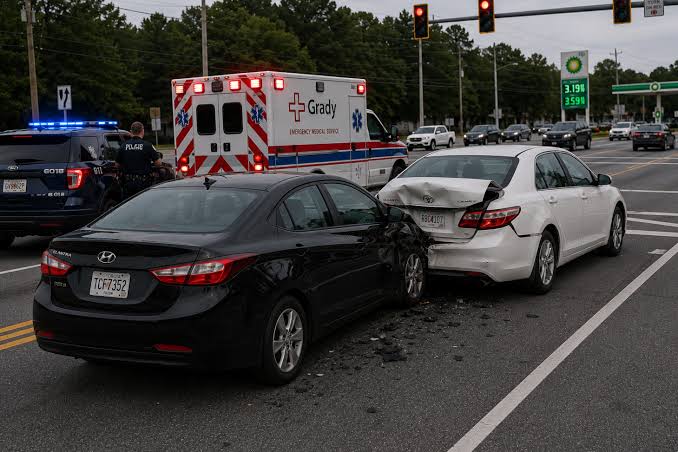
What to Do in the First 24 Hours After a Car Accident Before You Call Insurance
A Practical Guide to Documenting the Scene, Protecting Your Health, and Preserving Your Claim Before Speaking to Any Adjuster
The first 24 hours after a crash shape how a claim unfolds. Drivers should move to safety, call the police, photograph the scene, exchange details without admitting fault, get medical attention, and preserve evidence before giving an insurer any recorded statement. Early documentation protects both health and compensation.
Most guides treat the insurance call as the first step. Claims professionals see it differently: the call makes a driver’s account a permanent record, and the quality of that record depends on what was gathered beforehand.
Trending Now!!:
Adjusters are trained to collect statements quickly while the injured party is still shaken, uncertain about injuries, and often missing basic facts. A driver who has spent the first day building a file negotiates from a very different position than one who improvised on the phone.
None of this means insurers should be avoided. Nearly every policy contains a prompt-notice clause, and an unreasonable delay can give a carrier grounds to dispute coverage. The practical goal is sequencing: prepare first, then report, ideally within a day or two and sooner if the policy language says so.
The First Hour: Safety, Authorities, and Restraint
Secure the scene
Injuries come first. Anyone with neck or back pain, loss of consciousness, or visible bleeding should not be moved unless staying put is more dangerous, such as a fire risk. Emergency services should be called at once, and dispatch records create a timestamped account that later supports the claim.
In a minor collision, move vehicles out of traffic lanes, since secondary crashes are a real hazard on highways. Photograph the positions first if it is safe to do so. Hazard lights, flares, or reflective triangles help protect everyone at the scene.




Call the police, even when the damage looks small
Reporting thresholds vary by state and are commonly triggered by any injury or by property damage above a set dollar amount, which can be as low as a few hundred dollars. Modern repair costs quickly exceed those thresholds, since a cracked bumper with embedded parking sensors can run into the thousands. A police report also answers questions that otherwise become a dispute: who was present, what each driver said at the time, and what the officer observed.
Officers may decline to respond to minor crashes in some jurisdictions. In that case, many states allow a self-report through a department website or a trip to a station, and filing one is worth the effort.
Say little, and say it carefully
Apologizing out of reflex is one of the most common early mistakes. A phrase like “I’m so sorry, I didn’t see you” is human, but it can be quoted back in a liability dispute.
The same applies to the opposite reflex. Telling an officer “I’m fine” at the scene can be cited later if neck pain develops that evening. A neutral answer such as “I’m not sure yet, I’d like to be checked” is accurate and costs nothing.
A Five-Part Framework for the Day After: Scene, Sequence, Symptoms, Statements, Spending
Claims tend to be won or lost on the quality of five categories of information. This framework, built around five words that all start with S, gives drivers a way to organize the first 24 hours without relying on memory.
Scene
Photographs and video should capture all vehicles from several angles, license plates, damage up close, skid marks, debris fields, traffic signals, signage, lane markings, weather, and lighting. Wide shots matter as much as close-ups, because they show the relationships between objects that determine fault.
A short video walking around the scene, narrated with the date and location, adds context that stills cannot.
Dashcam footage should be saved immediately, since many devices overwrite older clips on a loop. Nearby businesses and homes with security cameras are a time-sensitive source: footage is often deleted within days or weeks, and a polite request in person or a note to the manager within 24 hours is far more effective than one sent a month later.
Sequence
Memory degrades fast. Within hours, drivers should write down or voice-record the order of events: speed, direction, lane position, signals, what each party did, and where each vehicle ended up. The notes should be factual and avoid guesses about speed or distance.
Honest uncertainty, such as “I believe the light was green, but I did not see it change,” is more credible than false precision.
Witness details are part of the sequence. Names and phone numbers of bystanders are valuable because independent accounts carry weight with adjusters, and witnesses become harder to find with every passing day.
Symptoms
Adrenaline suppresses pain, and the injuries most associated with ordinary collisions are often the slowest to announce themselves. Concussions can present as fatigue, irritability, or fogginess a day or two later. Soft-tissue injuries such as whiplash frequently peak 24 to 72 hours after impact. Internal injuries can be silent early on.
A medical evaluation within the first day, whether at an emergency room, urgent care, or a primary care office, serves two purposes. It protects your health and creates a documented link between the crash and any injury.
Insurers routinely scrutinize gaps between an accident and the first treatment, and a delay of weeks gives them room to argue that something else caused the problem. Symptoms should be tracked in a simple daily log, including pain levels, missed work, and activities that became difficult.
Statements
Exchanging information with the other driver is expected: name, phone number, address, driver’s license number, plate number, insurer, and policy number. Photographing the other driver’s insurance card and license is faster and less error-prone than copying them by hand.
Beyond that, keep conversation minimal. The other driver’s insurance company will likely call, sometimes within hours, and sound sympathetic. That adjuster works for the other party’s interests, and a driver generally has no obligation to provide a recorded statement to the other side’s insurer. Declining politely, or deferring until the facts are clear, is a standard and legitimate response.
A driver’s own insurer is different. Policies typically include a cooperation clause, so refusing to speak with one’s own carrier can jeopardize coverage. The distinction between the two calls is one of the most overlooked points in the first-day advice.
Quick settlement offers deserve particular suspicion. An early check can look generous, but accepting it typically ends the claim, even for injuries that haven’t surfaced yet. Nothing should be signed within the first day, including releases and medical authorizations that grant broad access to health records.
Spending
Costs begin accumulating immediately: towing, storage fees, rental cars, medical copays, and lost wages. Receipts should be saved from the first dollar, and out-of-pocket expenses tracked in one place.
Some policies include medical payments coverage or personal injury protection, and in no-fault states the driver’s own coverage pays first regardless of who caused the crash. Knowing which applies shapes both the claim and the order of the calls.
Vehicles should not be repaired, sold, or sent to salvage before inspection. Many modern cars contain event data recorders that capture speed, braking, and seatbelt use in the seconds before impact. This data can resolve fault disputes, and it can be lost if the vehicle is repaired or scrapped too early.
Common Mistakes That Quietly Reduce Claims
Several errors recur in disputed claims. Posting about the crash on social media is common: photos of a weekend hike or a gym session can be used to argue an injury is exaggerated, even when the context is innocent. Claimants are better served by pausing public posts until the claim resolves.
Another mistake is treating the first repair estimate as final. Shops often find additional damage after disassembly, and a supplement to the original estimate is normal.
Drivers should also be aware that a repaired vehicle can lose market value even with perfect repairs, a concept known as diminished value. Eligibility rules vary widely by state and by whose policy pays, but it is a loss worth raising rather than ignoring.
Underestimating the uninsured driver problem is a third. Industry estimates have put the share of uninsured motorists at roughly one in seven nationally, with wide variation by state. Drivers with uninsured or underinsured motorist coverage are protected against that scenario, and those without it may discover the gap only after a crash. Checking the policy’s declarations page for this coverage before any claim is filed clarifies what recovery options exist.
Special Situations
Hit-and-run crashes require an immediate police report and any identifying details: a partial plate, vehicle color and make, and direction of travel. Many uninsured motorist policies require a prompt police report in hit-and-run cases, as delays can affect coverage.
Crashes involving commercial vehicles, rideshare drivers, government vehicles, or multiple parties often involve layered insurance and, in some cases, shorter notice windows. Claims against government entities, for example, can carry notice deadlines measured in months rather than years. These cases are where an early consultation with an attorney matters most.
When Legal Advice Becomes Worth Considering
A consultation is reasonable whenever injuries are significant, fault is disputed, an insurer’s offer seems low or evasive, or the other party is uninsured.
Many personal injury attorneys offer free initial consultations and work on contingency, so the cost is usually limited to your time. Statutes of limitations for injury claims vary by state, commonly ranging from one to six years, so the first call is as much about understanding deadlines as about strategy. This article offers general information, not legal advice, and rules differ by jurisdiction.
The Practical Takeaway
The first day after a crash rewards drivers who treat it as an evidence-gathering exercise rather than an administrative one.
Safety, a police report, thorough documentation, prompt medical evaluation, and disciplined restraint in conversation lay the foundation for every later step. The call to insurance still needs to happen, and quickly. It simply goes better when the facts are already in hand.
What People Ask