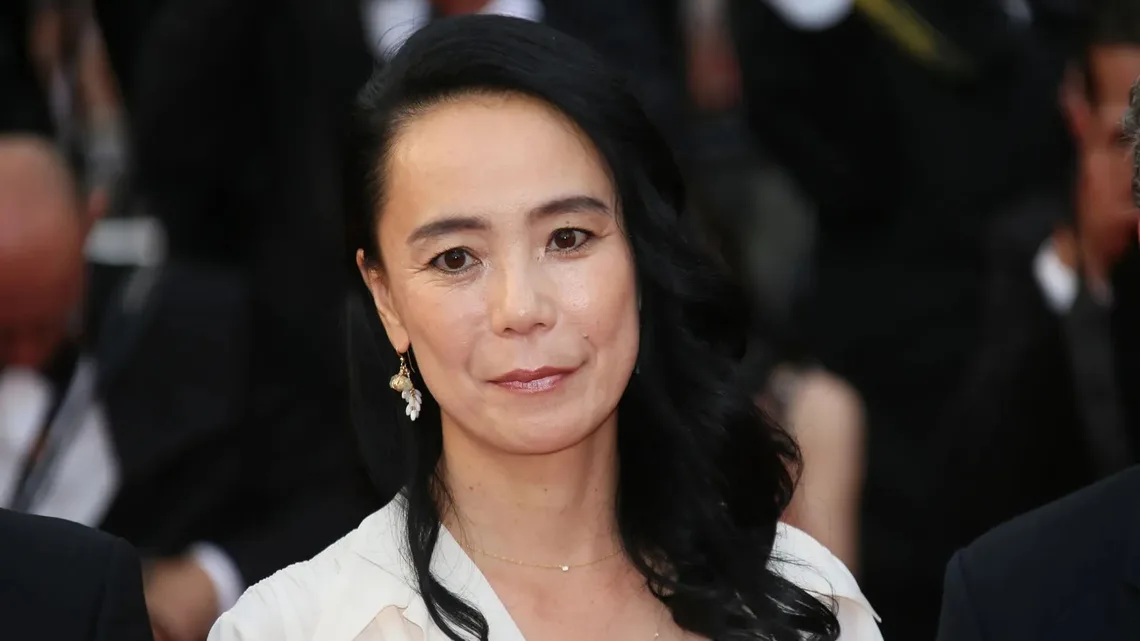
Naomi Kawase Biography: Age, Net Worth, Kids, Movies, Awards, Controversy, Husband, Height
Naomi Kawase is a Japanese film director, screenwriter, and producer who achieved international recognition through her deeply personal and poetic approach to filmmaking.
She first gained major attention with her feature debut, Suzaku, which won the Caméra d’Or at the Cannes Film Festival and established her as a major voice in Japanese independent cinema.
Trending Now!!:
Her work has since combined autobiographical documentaries with fictional narratives exploring family, memory, grief, nature, and human connection, earning her recognition at some of the world’s most prestigious film festivals.
| Naomi Kawase | |
|---|---|
|
|
| Wiki Facts & About Data | |
| Name: | Naomi Kawase |
| Born: | May 30, 1969 (age 57 years old) |
| Place of Birth: | Nara, Japan |
| Nationality: | Japanese |
| Ethnicity: | Japanese |
| Religion: | Shinto/Buddhism |
| Parents: | Mr. and Mrs. Kawase |
| Spouse: | Takenori Sento |
| Relationship: | Divorced |
| Children: | Mitsuki Kawase |
| Occupation: | Film Director, Screenwriter, Producer |
| Net Worth: | $2 million |
Early Life and Education
Naomi Kawase, aged 57 years old, was born on May 30, 1969, in Nara, Japan. Her childhood was marked by family separation, as her biological parents divorced when she was young and she was subsequently raised by her maternal great-aunt, Uno Kawase, whom she regarded as her grandmother.
Growing up in the rural surroundings of Nara strongly influenced her artistic outlook, particularly her sensitivity to nature, family relationships, memory, and loss.



During her school years, Kawase developed an interest in athletics and served as captain of her high school basketball team. She later enrolled at the Osaka School of Visual Arts, then known as the Osaka School of Photography, where she initially studied television production before turning her attention toward independent filmmaking.
Under the guidance of photographer Shunji Dodo, she developed her skills in photography and video production and graduated in 1989. She subsequently remained at the institution for several years as a lecturer, teaching while continuing to develop her own filmmaking career.
Personal Life
Naomi Kawase married Japanese film producer Takenori Sento in October 1997. Their relationship was closely connected to her early filmmaking career, with Sento serving as producer of Suzaku. The marriage ended in divorce in March 2000, after which Kawase returned professionally to her original surname.
Kawase has one son, Mitsuki Kawase, whose presence has also appeared in her personal filmmaking. Her experiences with family separation, motherhood, and her relationship with her great-aunt have remained important themes throughout her work.
Career
Naomi Kawase began making highly personal short films and documentaries during the late 1980s. Her early work focused heavily on her own family history, including her search for her biological father in the documentary Embracing. She continued exploring her relationship with her great-aunt Uno through films such as Katatsumori, establishing the intimate documentary style that would become a defining feature of her career.
Her international breakthrough came with Suzaku in 1997. The film won the Caméra d’Or at the Cannes Film Festival, making Kawase the youngest director at the time to receive the prestigious prize. She continued building her reputation through films such as Shara, The Mourning Forest, Still the Water, Sweet Bean, Radiance, and True Mothers.
Kawase reached another major career milestone in 2007 when The Mourning Forest won the Grand Prix at Cannes. She also founded the Nara International Film Festival in 2010, creating a platform for independent and emerging filmmakers. Her international profile expanded further with Sweet Bean, which became one of her most widely seen films, followed by Radiance and Vision.
In 2022, Kawase directed the official documentary film of the Tokyo 2020 Olympic Games, released in two parts as Official Film of the Tokyo 2020 Olympic Games Side A and Side B. Her career has consequently extended beyond filmmaking into cultural programming, film education, and international arts advocacy.
Awards
- Yamagata International Documentary Film Festival – Recognition for Embracing and Katatsumori (1993, 1995)
- Cannes Film Festival – Caméra d’Or for Suzaku (1997)
- Rotterdam International Film Festival – Award for Suzaku (1997)
- Locarno International Film Festival – Recognition for her work (2000)
- Cannes Film Festival – Grand Prix for The Mourning Forest (2007)
- Tallinn Black Nights Film Festival – Recognition for her work (2010)
- Cannes Film Festival – Recognition for her work (2017)
- Medal with Purple Ribbon – Awarded by the Japanese Government (2015)
- Chevalier de l’Ordre des Arts et des Lettres – Awarded by France (2015)
Net Worth
Naomi Kawase has an estimated net worth of $2 million. Her wealth has been accumulated through her long-running career as a film director, screenwriter, producer, lecturer, and creator of internationally distributed films and documentaries.
Controversy
Naomi Kawase faced significant criticism in 2022 after reports emerged alleging that she had physically struck a staff member during the production of True Mothers. The allegations generated public debate over her conduct on film sets and broader concerns about workplace conditions within the Japanese film industry.
Kawase‘s representatives disputed aspects of the reporting, while the controversy nevertheless attracted considerable international media attention.
Social Media
- Instagram: @naomi.kawase
- X: @KawaseNAOMI
Filmography
- Embracing (1992)
- White Moon (1993)
- Katatsumori (1994)
- See the Heaven (1995)
- Memory of the Wind (1996)
- Suzaku (1997)
- The Weald (1997)
- Kaleidoscope (1999)
- Firefly (2000)
- Sky, Wind, Fire, Water, Earth (2001)
- Letter from a Yellow Cherry Blossom (2003)
- Shara (2003)
- Shadow (2004)
- Tarachime (2006)
- The Mourning Forest (2007)
- Nanayo (2008)
- Koma (2009)
- Hanezu (2011)
- Chiri (2012)
- Still the Water (2014)
- Sweet Bean (2015)
- Radiance (2017)
- Vision (2018)
- True Mothers (2020)
- Official Film of the Tokyo 2020 Olympic Games Side A (2022)
- Official Film of the Tokyo 2020 Olympic Games Side B (2022)
Books
- Suzaku (1997)
- Hotaru (2000)
- Sharasojyu (2003)
What People Ask
NOTICE!! NOTICE!! NOTICE!!
At TheCityCeleb, we strive to provide accurate and up-to-date biographies and entertainment news, focusing on celebrities. Our editorial team researches information from reputable sources, including interviews, official statements, and verified media.If you spot an error or have additional details, please contact us at editor@thecityceleb.com. We value your feedback and are committed to maintaining trustworthy content.