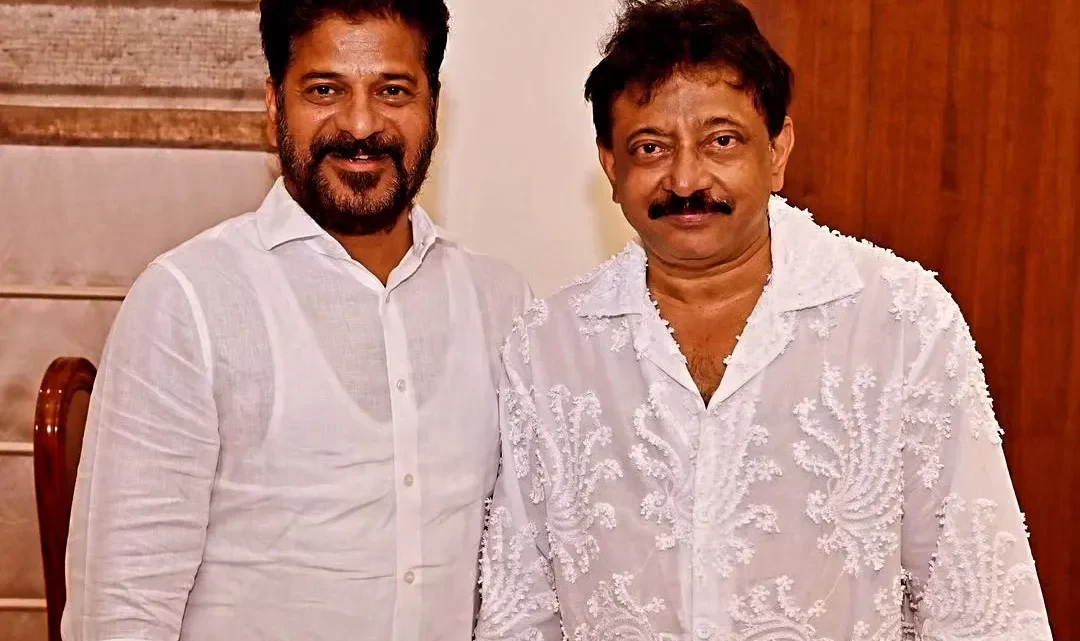
Ram Gopal Varma Biography: Wife, Age, Kids, Net Worth, Movies, Height, Parents
Ram Gopal Varma (born on July 7, 1962, in Hyderabad, India) is a 64-year-old Indian film director, producer, and screenwriter widely regarded as one of the most audacious and influential filmmakers in Indian cinema.
Known by his initials RGV, he rose to prominence in the late 1980s and cemented his reputation through the 1990s and 2000s with a string of critically acclaimed and commercially successful films that redefined the grammar of Telugu and Hindi cinema.
Trending Now!!:
Varma made his directorial debut with the Telugu thriller Siva (1989), a visceral, kinetic crime drama that became a landmark in Telugu cinema and was later remade in Hindi.
He transitioned to Bollywood with Rangeela (1995), a vibrant musical drama that launched Urmila Matondkar as a star, followed by the gangster epic Satya (1998), which is considered one of the finest Hindi films ever made. His crime universe deepened further with Company (2002) and Sarkar (2005), the latter of which drew comparisons to The Godfather.
Beyond crime dramas, Varma explored supernatural horror with Raat (1992) and Bhoot (2003), both of which became genre touchstones in Indian cinema. He is known for his unconventional camera techniques, stark realism, and unflinching storytelling that often provokes as much as it entertains.
In later years, Varma has remained a polarising figure, drawing both fierce admiration and sharp criticism for his eclectic and occasionally controversial output. He is equally outspoken on social media, where he maintains a large following and freely shares his unfiltered views on cinema, society, and life.



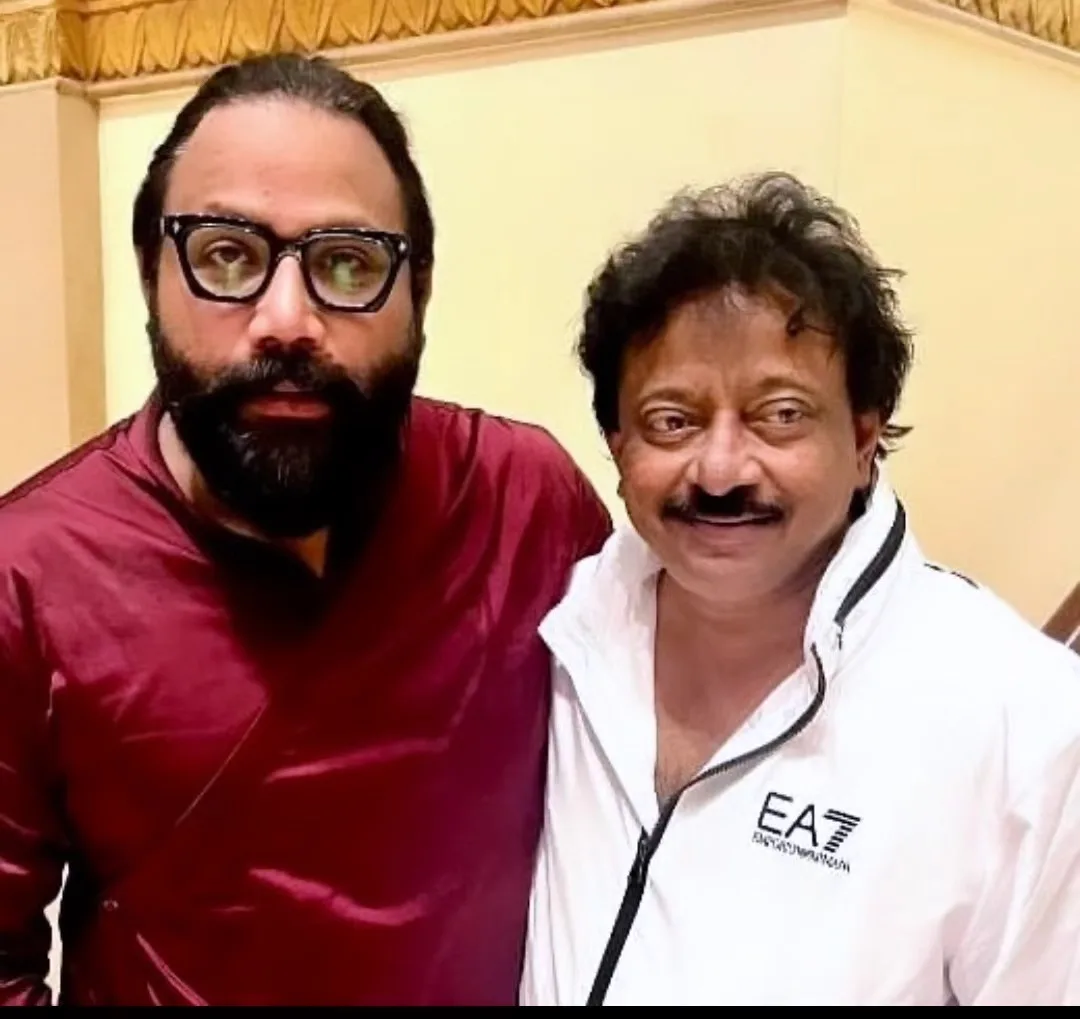
| Ram Gopal Varma | |
|---|---|
|
|
| Wiki Facts & About Data | |
| Name: | Ram Gopal Varma |
| Born: | July 7, 1962 (age 64 years old) |
| Place of Birth: | Hyderabad, Andhra Pradesh (now Telangana), India |
| State Of Origin: | Telangana, India |
| Nationality: | Indian |
| Ethnicity: | Telugu Dravidian |
| Education: | Bapatla Engineering College, Bapatla, Andhra Pradesh (Civil Engineering) |
| Height: | 175 cm (5 feet 9 inches) |
| Religion: | Hinduism |
| Parents: | Krishnam Raju Varma, Suryamma |
| Siblings: | Varma Koti, Varma Vijaya |
| Spouse: | Ratnavathi Varma (divorced) |
| Relationship: | Urmila Matondkar (rum.), Antara Mali (rum.), Naina Ganguly (rum.) |
| Children: | Revathi Varma, Naveen Varma |
| Occupation: | Film Director, Film Producer, Screenwriter |
| Net Worth: | $5 million-$10 million |
Early Life & Education
Ram Gopal Varma was born on July 7, 1962, in Hyderabad, which was then part of Andhra Pradesh and is now the capital of Telangana, India. He is 64 years old. His zodiac sign is Cancer.
Varma belongs to the Telugu Hindu community, and like the majority of Telugus from Andhra Pradesh and Telangana, he practices Hinduism. His ethnicity is South Asian, specifically of Telugu Dravidian heritage.
He was born into a middle-class Telugu family. His father, Krishnam Raju Varma, and his mother, Suryamma, raised him alongside his siblings, Varma Koti and Varma Vijaya.
Varma completed his schooling in Hyderabad before enrolling at the Bapatla Engineering College in Bapatla, Andhra Pradesh, where he pursued a degree in civil engineering. By his own admission, he was far more interested in cinema than in academics during his college years.
He spent a significant portion of his time obsessively watching films, which he has credited as his real education in storytelling and filmmaking.
After completing his degree, he worked briefly at his family’s civil engineering business before abandoning that path entirely to pursue his passion for cinema, opening a video cassette rental store in Hyderabad, which further deepened his immersion in film culture and set him on the path to becoming a director.
Career
Ram Gopal Varma launched his filmmaking career in Telugu cinema with the 1989 action thriller Siva, which announced his arrival with extraordinary force.
Shot with a restless, kinetic energy that Telugu audiences had never quite seen before, Siva starred Nagarjuna Akkineni and became a massive commercial success and a defining moment in the history of Telugu cinema.
The film’s raw portrayal of student politics, violence, and moral ambiguity set the template for what would become Varma’s signature style: unflinching realism, immersive camerawork, and characters who exist in moral grey zones. A Hindi remake of the same title followed in 1990, extending his reach beyond the Telugu film industry.
He followed Siva with a series of Telugu films that reinforced his reputation as a filmmaker unafraid to push boundaries. Kshana Kshanam (1992), a slick romantic thriller starring Venkatesh and Sridevi, demonstrated his range and his ability to blend tension with humour.
Gaayam (1993) returned to the crime drama territory he clearly favoured, once again drawing a strong audience response. Throughout this period, Varma was building a cinematic vocabulary distinctly his own, drawing on Hollywood influences while rooting his films firmly in the social textures of urban India.
His transition to Bollywood proved seamless and spectacular. Rangeela (1995), a vibrant, music-drenched romantic drama starring Aamir Khan, Jackie Shroff, and Urmila Matondkar, became one of the biggest Hindi hits of the decade.
The film was a showcase of energy and style, with composer A. R. Rahman’s soundtrack becoming a cultural phenomenon. Urmila Matondkar’s transformation under Varma’s direction was widely celebrated, and the film established him as a major force in Bollywood.
Daud (1997) followed, a fast-paced action comedy that divided audiences, but Varma recalibrated sharply with Satya (1998), the film widely considered his masterpiece. A gritty, deeply humanistic portrait of Mumbai’s underworld, Satya was co-written with Saurabh Shukla and featured a script developed in collaboration with Anurag Kashyap.
The film introduced audiences to Manoj Bajpayee in a career-defining performance as Bhiku Mhatre and earned widespread critical acclaim for its authenticity, its layered characters, and its refusal to glamorize crime. Satya is consistently ranked among the greatest Indian films ever made and is credited with inspiring an entire generation of Indian filmmakers working in the crime genre.
Varma followed Satya with Kaun? (1999), a taut psychological thriller starring Urmila Matondkar that demonstrated his command of suspense and confined-space storytelling. Mast (1999) and Jungle (2000) were comparatively lighter efforts, but Company (2002) brought him back to the peak of his powers.
A continuation of the Mumbai underworld universe he had established in Satya, Company starred Ajay Devgn, Vivek Oberoi, and Mohanlal in a sprawling examination of organized crime, loyalty, and betrayal. The film was another critical and commercial triumph and further cemented his status as India’s foremost chronicler of the criminal underworld.
Parallel to his crime dramas, Varma carved out a significant reputation in the horror genre. Raat (1992) had been an early indication of his interest in the supernatural, and Bhoot (2003) confirmed his mastery of it. Starring Urmila Matondkar and Ajay Devgn, Bhoot was a genuinely unsettling supernatural horror film that became a major box office success and is still regarded as one of the finest horror films in Indian cinema’s history.
Sarkar (2005), his loose adaptation of The Godfather transplanted into the world of Maharashtra’s political underworld, starred Amitabh Bachchan in a towering performance and was both a critical and commercial success. The film spawned a franchise, with Sarkar Raj (2008) and Sarkar 3 (2017) following as sequels. Sarkar Raj in particular, which brought Aishwarya Rai Bachchan into the fold alongside Amitabh Bachchan and Abhishek Bachchan, was received warmly by critics and audiences alike.
Varma also ventured into biopics and real-event reconstructions with films like Ab Tak Chhappan (2004), based on the life of encounter specialist Daya Nayak, and Rakta Charitra (2010), a two-part Telugu and Hindi bilingual based on the life of politician Paritala Ravi. Both projects reflected his ongoing fascination with the intersection of crime, power, and the state.
In later years, Varma’s output became more erratic and his films more controversial in nature, drawing mixed responses from critics and audiences. He produced a steady stream of low-budget productions under his banner Ram Gopal Varma Productions, many of which were released directly to digital platforms.
Films such as Vangaveeti (2016), Officer (2018), and Ladki (2023) attracted attention but rarely the unanimous acclaim of his earlier work. His documentary-style film on the Nirbhaya case, Murder (2023), generated significant controversy.
Throughout his career, Varma has also functioned as a producer and launchpad for talent, with his production house, Factory, having introduced or significantly elevated the careers of directors such as Anurag Kashyap, Sriram Raghavan, and Suparn Verma, as well as actors including Vivek Oberoi and Antara Mali. His contribution to Indian cinema as both a creative force and an industry catalyst remains substantial and enduring.
Social Media
- Wikipedia: Ram Gopal Varma
- X: Ram Gopal Varma (@RGVzoomin)
- Instagram: RGV (@rgvzoomin)
- IMDb: Ram Gopal Varma
Personal Life
Ram Gopal Varma was born on July 7, 1962, making him 64 years old.
Varma stands at approximately 175 cm (5 feet 9 inches) tall.
He was previously married to Ratnavathi Varma, also known as Ratna, with whom he shared a considerable portion of his personal life before the marriage ended in separation. The couple had two children together, a daughter, Revathi Varma, and a son, Naveen Varma. Details of the timeline and circumstances of their separation have not been publicly confirmed, as Varma has consistently kept the specifics of his domestic life out of the press.
Varma has never been shy about his admiration for women, and his name has been linked to several actresses and public figures over the years, though none of these associations has been officially confirmed as romantic relationships.
His public closeness with Urmila Matondkar, who starred in several of his films through the 1990s and early 2000s, attracted considerable media speculation, though both parties denied any romantic involvement and described their relationship as a close professional and personal friendship. His name has similarly been linked at various points to Antara Mali, who appeared in his productions in the early 2000s, though again neither party confirmed a relationship.
In later years, Varma developed a highly publicized association with actress and model Naina Ganguly, who appeared in several of his productions. Whether this association extended into a personal relationship has not been publicly confirmed.
Varma has remained candid about his unconventional views on love, relationships, and marriage, frequently expressing on social media and in interviews that he does not believe in traditional romantic constructs, a stance that has made him one of Bollywood’s more provocative public voices on personal matters.
Net Worth
Ram Gopal Varma has accumulated considerable wealth over a career spanning more than three decades as one of Indian cinema’s most prolific directors and producers.
Through box office successes, production ventures, digital releases, and his production banner Factory, Varma has built a substantial financial portfolio.
His net worth is estimated at $5 million to $10 million, though the exact figure has not been publicly disclosed or officially verified.
Filmography
Films Directed
Telugu Films
- Siva (1989)
- Kshana Kshanam (1992)
- Gaayam (1993)
- Gulabi (1995)
- Anaganaga Oka Roju (1997)
- Rakta Charitra (2010)
- Vangaveeti (2016)
- Kamma Rajyam Lo Kadapa Reddlu (2019)
- Power Star (2021)
Hindi Films
- Siva (1990)
- Rangeela (1995)
- Daud (1997)
- Satya (1998)
- Mast (1999)
- Kaun? (1999)
- Jungle (2000)
- Pyaar Tune Kya Kiya (2001)
- Company (2002)
- Bhoot (2003)
- Ab Tak Chhappan (2004)
- Naach (2004)
- Sarkar (2005)
- Darling (2007)
- Aag (2007)
- Contract (2008)
- Sarkar Raj (2008)
- Phoonk (2008)
- Rann (2010)
- Rakta Charitra 2 (2010)
- Not a Love Story (2011)
- Department (2012)
- Bhoot Returns (2012)
- Table No. 21 (2013)
- Satya 2 (2013)
- The Attacks of 26/11 (2013)
- Ice Cream (2014)
- Guns and Thighs (2016)
- Sarkar 3 (2017)
- Officer (2018)
- RGV Rowdy (2019)
- Climax (2020)
- Naked (2020)
- Ladki (2023)
- Murder (2023)
Films Produced
- Raat (1992)
- Govinda Govinda (1993)
- Antham (1993)
- Drohi (1994)
- Rangeela (1995)
- 1942: A Love Story (1994)
- Dil Se (1998)
- Kaun? (1999)
- Mast (1999)
- Jungle (2000)
- Ek Hasina Thi (2004)
- Phoonk 2 (2010)
- Ab Tak Chhappan 2 (2015)
Television
- Ram Gopal Varma Ki Aag (2007, TV adaptation)
- Various digital and streaming productions released through his banner from 2018 onwards
What People Ask
NOTICE!! NOTICE!! NOTICE!!
At TheCityCeleb, we strive to provide accurate and up-to-date biographies and entertainment news, focusing on celebrities. Our editorial team researches information from reputable sources, including interviews, official statements, and verified media.If you spot an error or have additional details, please contact us at editor@thecityceleb.com. We value your feedback and are committed to maintaining trustworthy content.