Tajudeen Baruwa Biography: Age, Wife, Children, Net Worth, State of Origin, Religion, Parents, NURTW
Biography
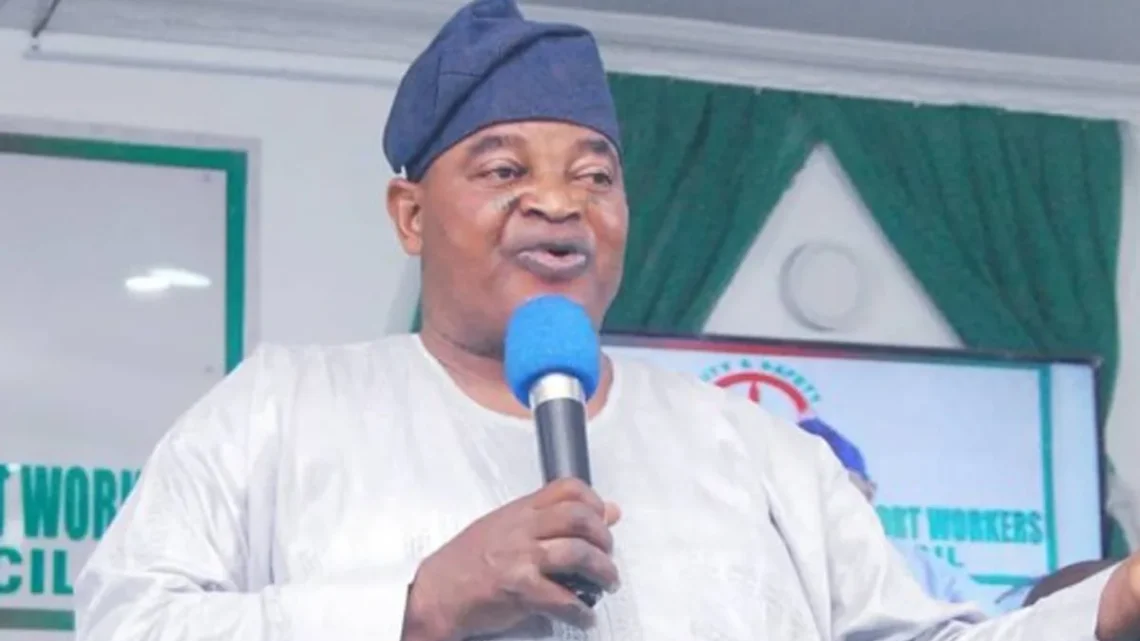
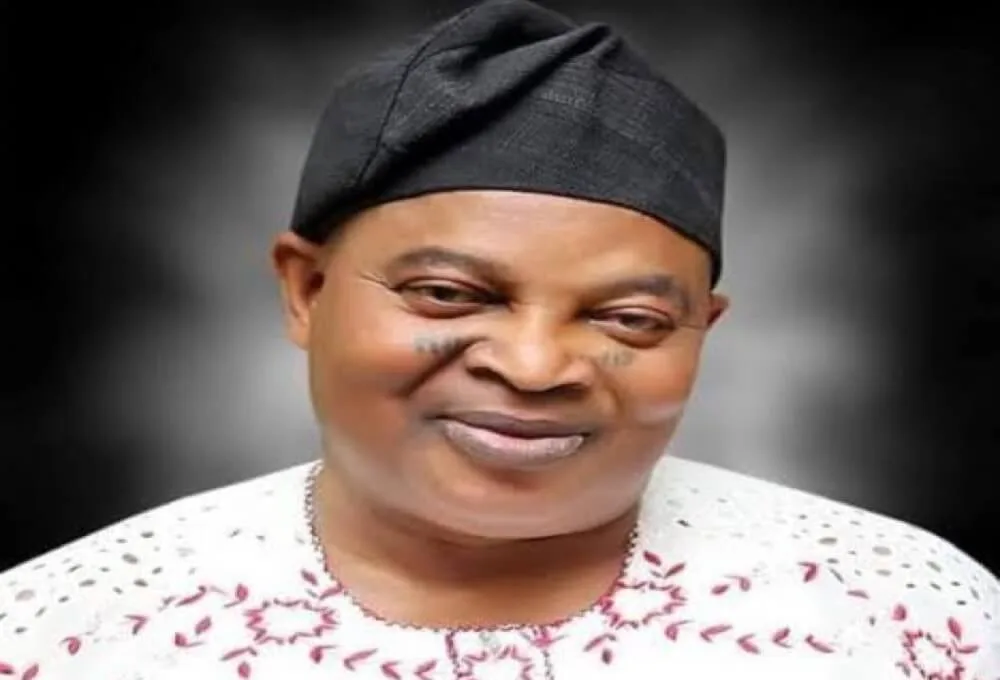
Prof. Tajudeen Ibikunle Baruwa is a Nigerian trade union leader and the court-recognized President of the National Union of Road Transport Workers (NURTW), one of Nigeria’s most powerful and politically significant labour organizations.
Baruwa was unanimously re-elected to serve a second four-year term as NURTW president, heading a 17-member National Administrative Council to administer the union’s affairs. His re-election followed a Special Zonal Delegates Conference held on May 24, 2023, which the courts later validated, and was formally ratified at the 10th Quadrennial National Delegates Conference held at Lafia, Nasarawa State.
Trending Now!!:
His presidency has been the subject of a prolonged legal battle. Both the National Industrial Court, in a ruling delivered by Justice O.O. Oyewumi, and the Court of Appeal in Abuja, in a November 2024 judgment, affirmed Baruwa as the duly elected president of the union, with the appellate panel dismissing a rival faction’s appeal as lacking merit and awarding costs against the appellants.
The dispute came to a dramatic head in March 2026. Baruwa assumed physical control of the NURTW national secretariat in Abuja, removing rival factional leader Musiliu Akinsanya, popularly known as MC Oluomo, citing the two court judgments delivered in his favour as the legal basis for the action.
He was subsequently arraigned by the FCT Police Command alongside the union’s factional General Secretary and five others over the secretariat takeover, with the police alleging the court order was enforced without the presence of court sheriffs.
The crisis has underscored deep fault lines within the NURTW, a union that controls road transport operations across Nigeria, and raised broader questions about the enforcement of court judgments in the country’s labour and civil disputes.
| Nigerian trade union leader | |
| Tajudeen Baruwa | |
|---|---|
 | |
| Wiki Facts & About Data | |
| Real Name: | Tajudeen Ibikunle Baruwa |
| Stage Name: | Tajudeen Baruwa |
| Born: | 19 April 1965 (age 60 years old) |
| Place of Birth: | Ilogbo, Ado-Odo/Ota, Ogun State, Nigeria |
| State Of Origin: | Ogun State |
| Nationality: | Nigerian |
| Education: | N/A |
| Height: | N/A |
| Parents: | Mr. and Mrs. Ibikunle |
| Siblings: | N/A |
| Spouse: | Married |
| Girlfriend • Partner: | Not Dating |
| Children: | N/A |
| Occupation: | Trade Union Leader |
| Net Worth: | $300,000-$1.2 million (USD) |
Early Life & Education
Tajudeen Ibikunle Baruwa was born on April 19, 1965, in Ilogbo, a community in the Ado-Odo/Ota Local Government Area of Ogun State, southwestern Nigeria. He is Yoruba by ethnicity, rooted in the cultural traditions and communal values that define Yoruba society in Nigeria’s southwest.
His faith is Islam, a fact reflected in his widely used title of Alhaji, a designation that in Nigerian convention identifies a Muslim who has completed the Hajj pilgrimage to Mecca.
He was born into the family of Mr. and Mrs. Ibikunle, who belong to the Kushoro royal family of Ilogbo. Despite the royal lineage, Baruwa’s upbringing was modest rather than privileged. His family background was shaped by the everyday rhythms of traditional Yoruba life, where values such as discipline, hard work, respect for elders, and a strong sense of communal responsibility were passed down not through wealth but through example.
Those who have profiled him in the Nigerian press are consistent on this point: he did not grow up with a silver spoon, and his subsequent rise is understood, even by his own supporters, as a product of personal determination rather than inherited advantage. No public information is available regarding siblings.
Baruwa completed both his primary and secondary education within Ado-Odo/Ota, remaining close to his roots in Ogun State through his formative years. When he finished secondary school, the path to university education that many of his peers might have followed was closed to him by financial constraints. Rather than wait for circumstances to change, he made a decision that would define the entire course of his life: he moved to Lagos and entered the workforce at the most basic level available to a young man with energy, ambition, and little else.
He began as a bus conductor in the Ikeja area of Lagos, a role that placed him at the very bottom of the transport industry’s hierarchy. It was unglamorous, demanding work, but it gave him something that no lecture hall could fully replicate: an intimate, ground-level understanding of how Nigeria’s road transport ecosystem actually functions.
From park politics to passenger relations, from the mechanics of daily operations to the informal power structures that govern motor parks across the country, Baruwa absorbed it all from the inside. He progressed from conductor to driver, and from driver to a more active role in park operations and union organising, steadily accumulating the practical knowledge and social capital that would eventually propel him into the national leadership of the NURTW.
Career
Tajudeen Baruwa’s career began at the most fundamental level of Nigeria’s road transport industry. After relocating to Lagos from Ogun State following his secondary education, he started out as a bus conductor in the Ikeja area, learning the rhythms of motor park life from the ground up.
That experience gave him an early and thorough education in the economics of transport, the informal hierarchies of Nigerian motor parks, and the dynamics of the working-class men and women who kept the sector running. From conductor, he progressed to driver and then gradually into park administration and union organising, building a reputation, a network, and a base of loyalty one garage at a time.
His formal union career began in Ogun State, where he eventually became the NURTW state council chairman. He also served as zonal chairman of the union’s South-West zone during the period of his Ogun State chairmanship. The role placed him at the intersection of state-level transport politics and regional union governance, a vantage point from which he cultivated relationships that would later prove essential to his national ambitions. From the state level, he moved upward to the national office.
He served as the NURTW’s national treasurer for more than 15 years, making him one of the longest-serving national officers in the union’s recent history before his ascent to the presidency. That extended tenure in the union’s financial leadership gave him an intimate understanding of its internal machinery, revenue flows, political fault lines, and the personalities that shaped its decisions at every level.
By 2011, while still serving as national treasurer, he was already influential enough to be accused by rival factions of attempting to shape the outcome of elections in the Ogun State council, a reflection of how deeply embedded his influence had become within the union’s structures.
The culmination of Baruwa’s long career within the NURTW came in 2019. The position of national president was zoned to the South-West, and Baruwa emerged as the region’s candidate, backed by leaders and stakeholders across Yorubaland. The election itself was not without drama. After two botched attempts to select a candidate ended in a stalemate, the union ultimately resolved the contest between Baruwa and his rival through a lucky dip, with Baruwa coming out the winner.
On August 29, 2019, the outgoing NURTW president, Alhaji Najeem Usman Yasin, inaugurated Baruwa as the 8th president of the union at a well-attended ceremony. At his inauguration, he was unambiguous about the weight of the moment, declaring: “I am highly honoured and overwhelmed as I stand before you today as the new and 8th president of our great union. Today marks a turning point and a new dawn in the administration of the union.”
His first term was immediately tested by conditions beyond anyone’s control. Shortly after assuming the union’s leadership, the COVID-19 pandemic swept the world, and the transport sector was among those most severely affected by the lockdowns that followed, limiting what his administration could accomplish in its early phase.
Nevertheless, observers noted that his tenure brought a period of relative calm to a union historically prone to factional bloodshed. Under his presidency, the union conducted peaceful state delegate conferences across its councils, a feat considered significant given that such exercises had previously been marked by violence and deadly confrontations.
In May 2023, Baruwa was re-elected to a second four-year term as NURTW president by a unanimous decision at the Special Zonal Delegates Conference, and was subsequently sworn in to lead a new 17-member National Administrative Council at the 10th Quadrennial National Delegate Conference held in Lafia, Nasarawa State.
His re-election was uncontested, a show of confidence by the union’s broader delegate base. The period that followed, however, proved to be the most turbulent of his career. Opposing forces within the union, led by former president Alhaji Najeem Usman Yasin and Baruwa’s own former vice, Tajudeen Agbede, moved to dissolve his executive and form a caretaker committee, claiming his tenure had expired. The factional crisis deepened rapidly, pulling in powerful political actors and eventually becoming entangled with the ambitions surrounding the 2027 general elections.
Baruwa’s response to the challenge to his authority was to pursue it through the courts with methodical persistence. On March 11, 2024, Justice O.O. Oyewumi of the National Industrial Court in Abuja ruled in his favour, reinstating him as the re-elected president of the NURTW and declaring unconstitutional the delegates’ conference that had been used to produce a rival acting president.
The court found no legal basis for the invocation of the doctrine of necessity that his opponents had relied upon to justify their actions. His rivals appealed the ruling but failed at the appellate level. The Court of Appeal in Abuja, in a judgment delivered on November 8, 2024, upheld the National Industrial Court’s decision, dismissed the appeal as lacking merit, and awarded costs of N100,000 against the appellants.
The court’s three-member panel was unequivocal: Baruwa was the legitimate president of the NURTW, and no legal vacancy existed in the office. Despite these rulings, the rival faction pressed on. In November 2024, delegates from four South-West states gathered in Osogbo, Osun State, and elected Musiliu Akinsanya, widely known as MC Oluomo, as national president, a move Baruwa publicly condemned as an affront to the judiciary.
The standoff reached its most dramatic point on March 23, 2026. Armed with certified copies of both court judgments and backed by supporters drawn from across the country, Baruwa led his faction to the NURTW national secretariat in Garki II, Abuja, to enforce what he maintained was a lawful reclamation of the union’s headquarters.
He told journalists assembled at the secretariat that his actions were backed by the two court judgments and that the union had formally notified the Nigerian Police in advance, submitting copies of the rulings to facilitate a smooth process. What followed was anything but smooth. Chaos erupted outside the secretariat, a supporter was reportedly shot, teargas was deployed to disperse the crowd, and Baruwa himself was placed under arrest by the same police force he had formally notified.
He was subsequently arraigned before Magistrate Court 1 in Wuse Zone 2 alongside the union’s factional General Secretary and five others. MC Oluomo returned to the building the following day under military and police escort, reasserting physical control of the premises.
As of March 2026, the NURTW leadership crisis remains unresolved, with Baruwa holding the weight of two court judgments on one side and the reality of physical exclusion from the secretariat on the other, a standoff that has come to represent one of the most glaring examples in recent Nigerian history of the gap between what courts order and what security agencies choose to enforce.
Personal Life
Tajudeen Baruwa was born on April 19, 1965, making him 60 years old.
He is married and a father, though he has consistently kept the details of his personal life away from public scrutiny.
The names of his wife and children have not been disclosed in any public records, reflecting his preference for privacy in domestic matters despite his many years as a prominent figure in Nigeria’s labour movement.
Net Worth
Tajudeen Baruwa‘s net worth is estimated to fall between ₦500 million and ₦2 billion, roughly equivalent to $300,000 to $1.2 million USD. His wealth is largely attributed to decades of active participation in the road transport business, investments built over a long career that began at the grassroots and expanded as his influence within the NURTW grew.
As a transporter, union leader, and businessman based in Ogun State, he has, over the years, accumulated interests across the transport sector and broader commercial ventures. He is known to maintain a substantial residence in the Balogun area of Ota, Ogun State, which further indicates his financial standing.
As with many Nigerian labour leaders of his stature, his exact assets remain privately held and have not been the subject of any official public disclosure, so the figures in circulation represent informed estimates rather than verified declarations.
What People Ask
NOTICE!! NOTICE!! NOTICE!!
At TheCityCeleb, we strive to provide accurate and up-to-date biographies and entertainment news, focusing on celebrities. Our editorial team researches information from reputable sources, including interviews, official statements, and verified media.If you spot an error or have additional details, please contact us at editor@thecityceleb.com. We value your feedback and are committed to maintaining trustworthy content.