How Social Trends Spread Through the Internet: From Spark to Global Phenomenon
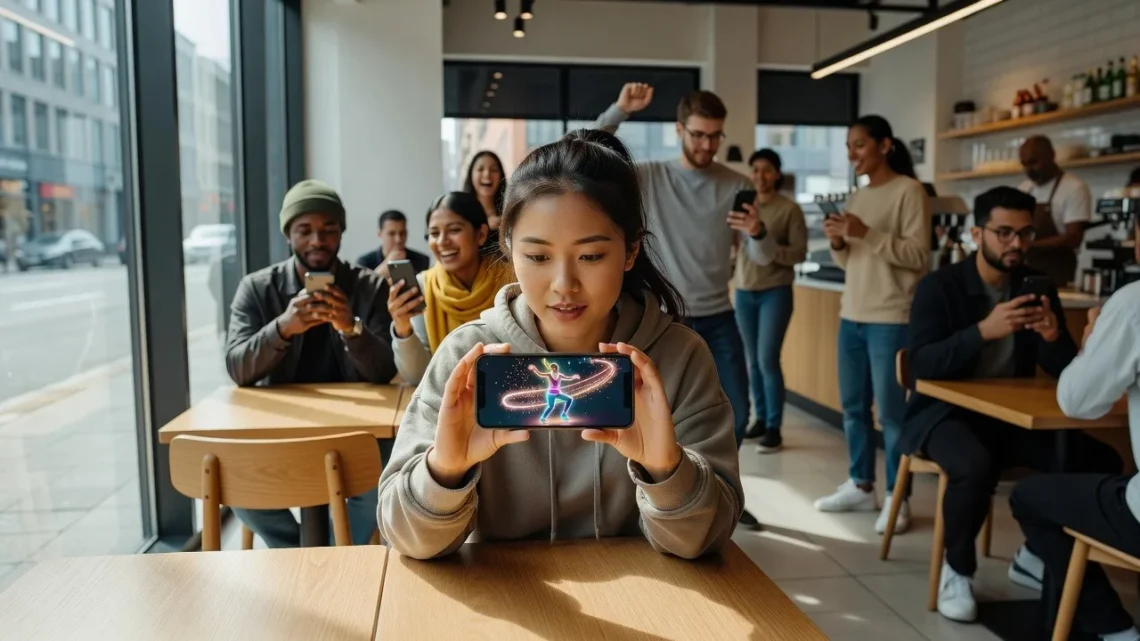
A single dance challenge filmed in a bedroom can reach billions of people within days. Such rapid transformations reveal predictable patterns once you examine the underlying mechanics.
Researchers now treat internet trends like contagious phenomena that spread through digital populations according to specific rules of emotional resonance, network structure, and algorithmic triggers.
Trending Now!!:
This framework helps creators and marketers anticipate rather than react to the next cultural wave in 2026.
How Marketers Can Ride Trending Waves
Brands damage their reputation when they chase irrelevant trends. Successful teams evaluate alignment with core values and audience expectations before participation.
They monitor early signals from niche communities and track engagement velocity in real time. This disciplined approach separates strategic moves from desperate attempts at relevance.
The most successful brands treat trend participation as a calculated move rather than a race to copy whatever is currently popular. Timing matters, but so does understanding how each platform evaluates and distributes content.




For businesses promoting services such as Los Angeles escorts, the stakes are particularly high: a poorly judged post can trigger account restrictions or damage the brand’s reputation. Knowing how to adapt trends without crossing platform boundaries therefore provides a genuine competitive advantage.
Teams in regulated verticals maintain strict compliance checklists. They test adaptations in controlled environments first. Real-time analytics guide decisions to amplify or withdraw.
The goal remains adding genuine value to the conversation rather than hijacking attention. Those who master these mechanics convert cultural moments into sustained audience growth without crossing regulatory boundaries.
What Makes a Trend Actually Spread
Popular posts often disappear after 48 hours. Real trends reshape conversations and inspire adaptations for weeks or months. Memetic fitness determines this difference. The concept describes how effectively an idea copies itself and mutates to survive in new social environments.
Emotional contagiousness separates winners from also-rans. Jonah Berger and Katherine Milkman examined thousands of New York Times articles. Their study revealed that emotional arousal level predicts virality more accurately than content production quality. Pieces evoking awe, anger, or anxiety achieved 2-3 times more shares than neutral content.
Three elements must converge for ignition. The idea first needs deep resonance with a core group. Efficient distribution channels then carry it outward. Network effects finally amplify exposure through repeated sharing. Without this alignment, even polished content stays confined to small circles. Trends that combine these factors cross the critical threshold from interesting to ubiquitous.
The Psychology Behind Sharing
Humans share content to fulfill deep psychological needs. High-arousal emotions trigger this behavior most reliably. Anger, awe, anxiety, and amusement create physiological states that demand social action. Content evoking these feelings spreads farther and faster across networks.
Jonah Berger catalogued these patterns in large-scale studies. Duncan Watts mapped how individual decisions scale into collective outbreaks through computational models. Nicholas Christakis demonstrated the contagious nature of behaviors and emotions across three degrees of separation in real social graphs.
Social proof accelerates the process. Users observe peers engaging and copy the action. FOMO adds pressure — the visible participation of others creates urgency to join before the moment passes. These forces compound as engagement metrics rise publicly.
People also employ shares as status and identity signals. A user selects specific trends to broadcast belonging to certain tribes or to display cultural awareness. This signaling mechanism explains why niche memes sometimes leap into mainstream visibility when they align with broader identity needs. The combination of emotional drive and social function makes sharing a predictable human response rather than random behavior.
How Platforms Shape What Goes Viral
Algorithms determine which sparks become infernos. TikTok’s For You Page evaluates content within minutes and distributes it to new users based on early engagement signals. Instagram Reels blends social connections with recommendation engines. The X algorithm prioritizes certain conversation types while YouTube Shorts optimizes for watch time patterns.
The landscape shifted dramatically after 2018 through 2020. Algorithmic amplification replaced the social graph as the primary growth driver especially on TikTok.
This shift diminished dependence on influential friends and elevated raw viewer resonance. Most global trends begin with a seed audience representing merely 0.5 to 2 percent of eventual reach. That initial cohort provides the validation necessary to trigger broader distribution.
Distribution velocity then decides whether content crosses the algorithmic tipping point. Once systems detect consistent positive signals they push material to exponentially larger audiences. Trends now move faster but also burn out more quickly under these mechanics.
Network Theory and Digital Contagion
Ideas travel through social structures in measurable ways. Strong ties connect close friends and family. Weak ties link acquaintances across different communities. Updated analysis of Mark Granovetter’s theory shows weak ties prove ten times more critical when trends move from subcultures into mass awareness.
Bridging capital — connections between separate groups — functions as the critical pathway. Information cascades develop when individuals observe others adopting an idea and follow suit regardless of their private information. Threshold models assign each person a personal adoption level. Once enough neighbors participate, the individual crosses their threshold.
A trend often begins inside a dense cluster of highly connected users. Success depends on whether it reaches effective bridges to adjacent communities. When these connections activate, the idea achieves exponential spread.
Most global phenomena trace back to small seed groups of dedicated early participants. The right bridges transform localized interest into widespread contagion. This network perspective explains why some trends appear suddenly despite modest origins.
The Lifecycle of Internet Trends
Every trend follows a distinct trajectory with six identifiable stages. The spark represents initial creation and first exposure inside a niche group. Ignition occurs when the concept breaks beyond originators and attracts algorithmic interest. Acceleration delivers explosive growth as mainstream audiences discover it.
Peak brings maximum visibility with parodies, commercial adaptations, and media coverage. Saturation follows when repetition generates fatigue across the audience. Decline or resurgence concludes the cycle — either the trend fades or evolves into new variations.
Timelines vary by network. TikTok cycles complete in two to six weeks. Instagram trends typically last one to three months. X phenomena around news events can peak and decline in days. Creators adjust tactics accordingly.
Early stages reward raw authenticity and rapid experimentation. Acceleration phase benefits from quick variations and duets. Peak demands commentary or clever brand integration that adds value. Later stages require either fresh angles or graceful exit.
Trends that successfully adapt to different cultural contexts survive three to four times longer than rigid versions. This flexibility allows the core idea to mutate while retaining recognizable elements across regions and demographics. Understanding these phases lets creators time their involvement for maximum impact and minimal backlash.
The Future of Trend Propagation
Artificial intelligence already generates variations of trending formats within hours of detection. Multimodal content that combines video, audio, text, and augmented reality elements will dominate future waves. These complex creations challenge traditional measurement approaches but follow the same emotional and network principles.
Closed communities on Discord, Telegram and private Instagram groups now function as primary incubation chambers. Trends often mature within these closed groups before surfacing on public feeds. Audience fragmentation intensifies as users retreat into smaller interest-driven circles. Regional trends gain strength against uniform global templates.
Regulatory pressure on major services may reshape amplification mechanics. New rules could slow distribution velocity or demand greater transparency around recommendation logic. Core drivers like emotional arousal, network bridges and psychological incentives will endure.
Trends that cross cultural boundaries through adaptive mutations will continue to outlive rigid versions by significant margins. Analysts who master these foundational patterns will anticipate shifts instead of documenting them after the fact.