
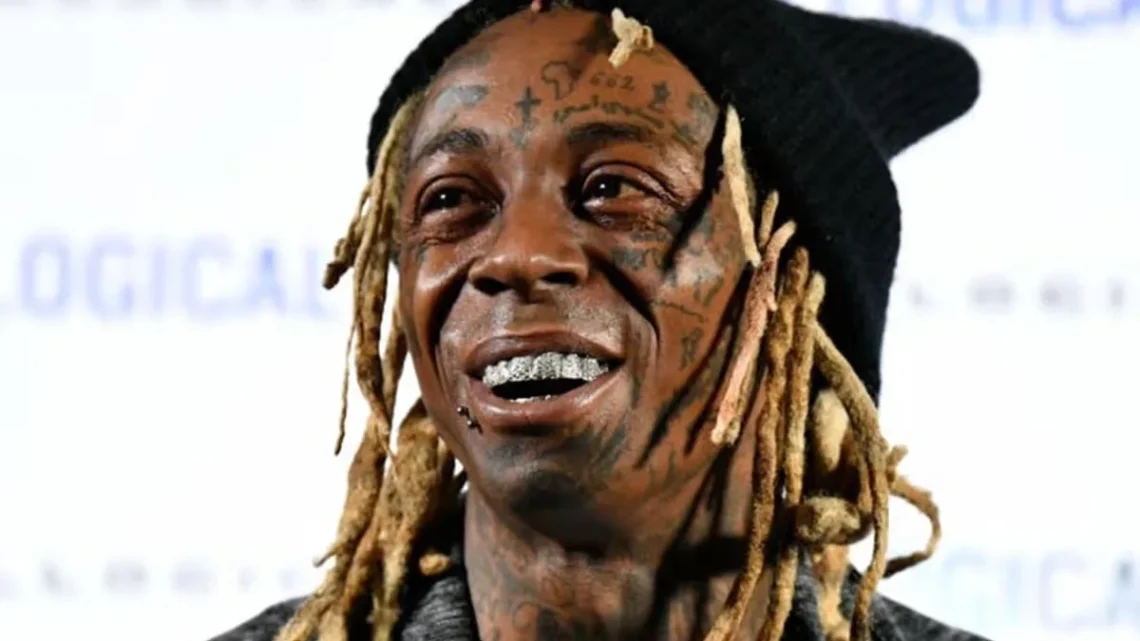
Lil Wayne Beats Former Bodyguard in Court, Gets Nearly $30,000 in Sanctions
A Los Angeles judge has entered judgment in the rapper’s favour, ordering the ex-security staffer to pay nearly $30,000 in monetary sanctions after a lawsuit stemming from a 2021 confrontation at the rapper’s Hidden Hills home collapsed in court.
A legal dispute that began with accusations of a semiautomatic rifle, a punch to the ear, and claims of emotional ruin has ended the way Lil Wayne’s legal battles often do: with the rapper walking away intact and the other party picking up the bill.
Trending Now!!:
A Los Angeles judge entered judgment on Wednesday in favour of Wayne, whose legal name is Dwayne Michael Carter Jr., and against his former bodyguard, Carlos Christian, who had filed an assault-with-a-firearm lawsuit against the rapper.
The case spent over two years grinding through the Los Angeles County Superior Court system before arriving at a conclusion that left Christian not only empty-handed but financially worse off than when he filed.
Christian not only lost the case outright but has also been ordered to pay $29,225 in monetary sanctions. The court had previously awarded Wayne $26,000, then tacked on another $3,225 when it dismissed Christian’s lawsuit entirely.
The origins of the dispute trace back to the final weeks of 2021. The incident took place on December 1, 2021, at Wayne’s residence, and law enforcement and media were already aware at the time that the rapper had been accused of pulling an assault rifle on a member of his security team.




According to a law enforcement source, the weapon in question was an AR-15. Christian claimed the confrontation erupted after Wayne accused him of leaking photos and demanded that he leave the property.
Christian alleged in a seven-page complaint that Wayne pointed a semiautomatic firearm directly at him “as a threat,” then struck him in the ear with his fist “while waving around the semiautomatic rifle.” Christian said he feared he was on the verge of being shot. “It reasonably appeared to plaintiff that Lil Wayne was about to carry out the threat,” the paperwork filed in Los Angeles County Superior Court read.
He further claimed he “suffered severe emotional distress, requiring him to seek mental health treatment for Post-Traumatic Stress Disorder (PTSD) stemming directly from this incident.” He sought compensatory and punitive damages for medical expenses, lost wages, and the impact on his earning capacity.
Wayne denied any wrongdoing entirely. His attorney argued that Christian had suffered no injuries at his hands and that Christian “failed to exercise reasonable care and diligence to mitigate his alleged damages.” Wayne insisted he acted in self-defense.
Sources close to the rapper also told investigators at the time that he did not even own a gun. No criminal charges were ever filed. While Wayne denied pulling a weapon at all, his legal team acknowledged the situation turned physical and framed his conduct as an act of self-preservation, writing that Christian’s claims were “barred or reduced in whole or in part by [Carlos’] acts and/or negligence.”
Christian’s own conduct during the case did not help his cause. He initially contacted law enforcement after the incident but unexpectedly changed his mind about pursuing charges, only to later reverse that decision again. The shifting account caught observers off guard, particularly since he was the one who had originally brought in law enforcement, and the inconsistencies were seen as potentially undermining his credibility in court.
The case also hit a procedural wall early on. Christian was required to prove he had filed his complaint before the two-year statute of limitations ran out, claiming he submitted the lawsuit electronically at noon on December 1, 2023, the very last day he was eligible to do so. The court allowed the case past that threshold, but the merits ultimately proved no more favourable to him.
Wayne’s legal team further requested that Christian submit to a mental health evaluation, citing the PTSD claims sitting at the center of his lawsuit. When Christian failed to comply with earlier requests to sit for the examination, Wayne’s attorneys asked the court to impose $4,475 in sanctions against him. That demand turned out to be a preview of a far heavier financial outcome.
In constructing his case, Christian had pointedly raised Wayne’s criminal history involving firearms, noting that in 2007 the rapper was arrested and charged with criminal possession of a weapon and criminal possession of a loaded weapon, charges to which he later pleaded guilty and served a sentence.
He also cited a 2010 case stemming from a 2008 Arizona arrest on drug and firearm possession charges, which resulted in three years’ probation, and a 2020 guilty plea related to illegally possessing a loaded gold-plated .45-caliber handgun. The attempt to paint a pattern of behaviour did not move the court.
Dwayne Michael Carter Jr. was born September 27, 1982, in New Orleans, Louisiana, and built a career as a rapper, singer, songwriter, record executive, actor, and entrepreneur. Growing up in the poverty-stricken Hollygrove neighbourhood of New Orleans, he caught the attention of Cash Money Records co-founder Bryan “Birdman” Williams, who signed him to the label and served as his early mentor.
His career began in 1995 at age 12, making him the youngest member of Cash Money Records at the time. He went on to become one of the most commercially successful artists in hip-hop history, selling more than 120 million records globally, including 70 million digital tracks and 20 million albums.
In April 2021, just months before the confrontation at the center of this case, Wayne had purchased a mansion in the exclusive Hidden Hills enclave of Los Angeles for $15.4 million, a neighbourhood favoured by celebrities for its privacy and controlled access. The fact that a dispute allegedly rooted in leaked photos would ignite inside those gates shortly after the purchase added a layer of irony to a case that was already difficult to ignore.
The bodyguard lawsuit was not the only legal front Wayne had been managing. He and his former attorney, Ron Sweeney, spent more than seven years locked in a dispute over a contested contingency fee arrangement that had originally entitled Sweeney to 10 percent of Wayne’s profits. On October 13, 2025, Judge James D’Auguste ruled that the verbal contingency fee agreement was void, bringing to a close a dispute that had once threatened to cost Carter up to $20 million.
With judgment now entered and sanctions ordered in the Christian matter, the former bodyguard walks away from the case without a settlement and with nearly $30,000 owed to the man he sued.
For Wayne, the ruling shuts another courtroom door and reinforces what his camp maintained from the beginning: that whatever happened inside that Hidden Hills home in December 2021, it did not amount to actionable wrongdoing on his part.
Representatives for Christian had not issued a public statement as of publication. Lil Wayne’s legal team declined to comment beyond the court record.