
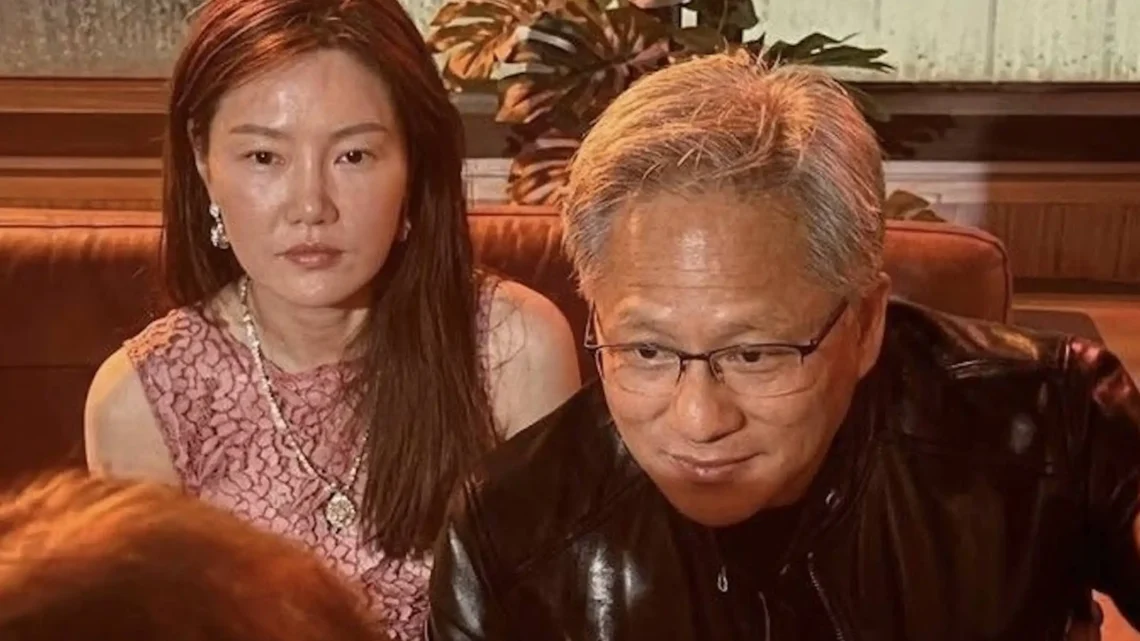
Nvidia Hit With Shareholder Lawsuit Over Jensen Huang’s Affair With Alleged Chinese Spy
A proposed class action accuses Nvidia and its chief executive of misleading investors, as the F.B.I., Congress and the company’s own board examine a relationship that has unsettled Washington and Wall Street.
A shareholder filed a proposed class-action lawsuit on Monday accusing Nvidia and its chief executive, Jensen Huang, of misleading investors about his relationship with a businesswoman whom American officials are said to suspect of working for Chinese intelligence.
The complaint, brought by a retail investor, Mark Kistenmacher, in federal court in San Jose, Calif., contends that the company and Mr. Huang never disclosed the affair and made false statements about Nvidia’s dealings with Megaspeed International, a Singapore data center company that the woman helped run. The suit says those dealings carried a material risk to the company’s reputation and business prospects.
Trending Now!!:
Mr. Kistenmacher is seeking to represent anyone who bought Nvidia shares between Oct. 9, when the pair’s socializing in Taiwan first became public, and Nov. 8, when the company said its board was investigating reports that Mr. Huang had been the target of a foreign intelligence effort.
Investors would not have paid the prices they did, or bought at all, had they known the truth, the complaint argues. It asks for unspecified damages and a jury trial. The case was filed with Rosen Law Firm. Nvidia did not immediately respond to a request for comment.
Mr. Huang has acknowledged the affair. In a message to employees on Sunday and an open letter later posted on the company’s website, he apologized to his wife, his children and Nvidia. “I was unfaithful to my wife,” he wrote, adding that his actions hurt his family and that he takes full responsibility. He said he supports the board’s investigation, will cooperate fully and remains committed to protecting the company and American national security.
The woman at the center of the case is Alice Huang, who also goes by Huang Le. She is a Chinese citizen and is not related to Mr. Huang; the surname is common. Her biography says she worked as a television reporter in China before rising to a senior post at Megaspeed International.




She met Mr. Huang at an Nvidia event in early 2024, and the two were seen together at a party during the Computex trade show in Taiwan that year, after Megaspeed had committed to buying roughly $2 billion of Nvidia processors.
Megaspeed emerged in 2023 as an offshore unit of 7Road, a Chinese gaming and cloud computing company with state-linked backing. It bought more than $4.8 billion of Nvidia chips over two years, much of it through the American subsidiary of Inspur, a company sanctioned for aiding the Chinese military.
The Commerce Department is investigating whether Megaspeed helped move restricted chips into China, and the Singapore police say their own inquiry continues. Megaspeed maintains that it complies with the law and that earlier reviews found no violations. Nvidia says its compliance team examined the company and found nothing illegal.
American intelligence officials concluded that Ms. Huang was gathering information for Beijing. Mr. Huang surfaced in her intercepted communications through a process known as unmasking, which allows agencies to identify an American caught up in surveillance of a foreign target.
She is said to have tried to use his access to American policymakers to learn company secrets and to push him toward lobbying for the sale of advanced processors to China; how much influence she actually had remains unclear.
An intelligence memo describing the relationship circulated among administration officials last spring, and President Donald Trump was reportedly briefed on the findings in 2025 without moving to warn Mr. Huang.
Before the admission, Nvidia described Mr. Huang’s interactions with Ms. Huang as ordinary, part of the routine work of meeting customers. The lawsuit calls such statements misleading because the relationship was under way when they were made.
China’s Foreign Ministry and its embassy in Washington have rejected the allegations as unsubstantiated smears. Ms. Huang did not respond to requests for comment. Singapore’s Ministry of Home Affairs said on Oct. 31 that it had not investigated her alleged links to Chinese intelligence or her relationship with Mr. Huang.
Mr. Trump said Monday that Mr. Huang told him he “had absolutely no idea that the person in question was a spy,” and that the F.B.I. is looking into the matter. The president said he did not think Mr. Huang had cause for worry.
On Capitol Hill, Senators Chris Coons and Mark Warner and Representative Hakeem Jeffries, all Democrats, have signaled interest in a deeper inquiry, and Republican chairs of House committees have asked Mr. Huang to brief them on the company’s protections against espionage by foreign adversaries, with a Nov. 11 deadline to respond.
The Nvidia board has retained confidence in Mr. Huang and his leadership team, saying it has no reason to believe that national security or company secrets were compromised. It has also promised to put American national and economic security first as an independent investigation proceeds.
The turmoil arrives at a delicate moment for a company that supplies the chips behind the artificial intelligence boom and reached a market value above $5.7 trillion at its October peak. Nvidia’s shares fell 4.3 percent on Monday, or $7.97, erasing about $190 billion in market value, and the stock has dropped about 21 percent over the past month. Its market value now sits just above $4.5 trillion.
Not all of that decline traces to the scandal: a broad selloff in A.I. stocks began earlier in the month, and Advanced Micro Devices fell more than 17 percent on a single day. The analyst Dan Ives has said Mr. Huang losing his job is possible, though no such decision has been announced.
Mr. Huang spent years arguing in Washington that selling American technology in China strengthens the country’s competitive position and discourages Beijing from building more capable alternatives.
Last year he persuaded the administration to permit more exports, and Nvidia later agreed to sell limited quantities of its second-most powerful chips there. The suspected espionage adds a personal dimension to the debate over export controls, and critics say it raises questions about how closely the company tracks where its products end up.
The new suit is not the company’s only legal exposure. A federal judge certified an investor class in March in a separate case accusing Nvidia and Mr. Huang of understating cryptocurrency-driven graphics chip sales in 2017 and 2018, after the Supreme Court declined to halt it in 2024.
The company paid a $5.5 million penalty to the Securities and Exchange Commission in 2022 over related disclosures, without admitting or denying the findings.
None of the claims in the new complaint has been tested in court, and the assessment of Ms. Huang’s activities remains a conclusion attributed to intelligence officials, not a judicial finding. Mr. Huang has not been charged with any crime.