
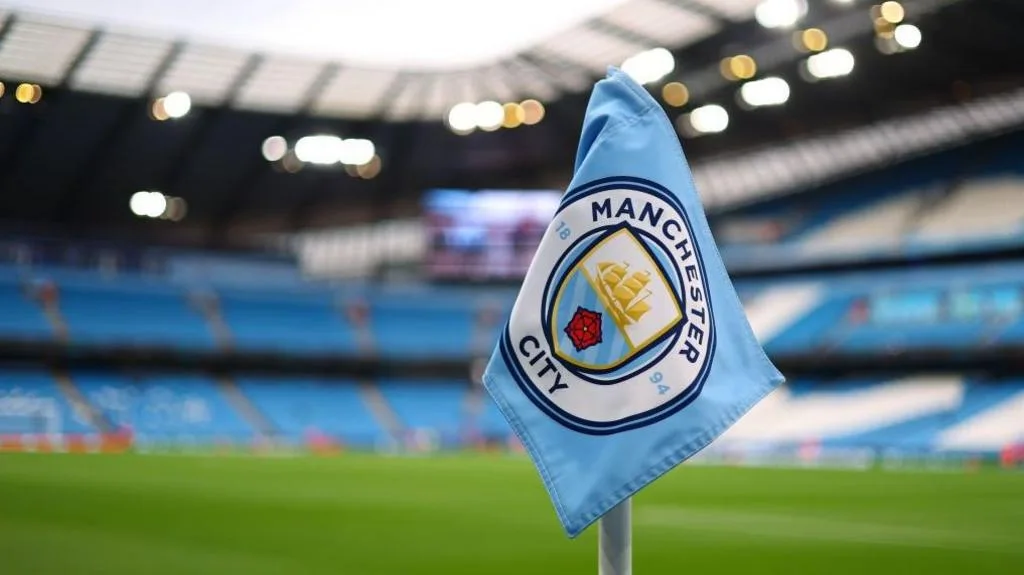
The Premier League Has Its Verdict Against Manchester City, but Its Own Conduct Is Now on Trial
The Premier League has the verdict it spent years pursuing, yet the road to it has exposed a regulator that looks slower, less consistent and more conflicted than its polished global brand would ever admit.
On Tuesday, September 29, an independent commission found Manchester City guilty of every financial charge and of all but one of the charges relating to failure to cooperate, which means 114 of the 115 counts were proved.
Trending Now!!:
The league says the club used sham sponsorship arrangements and other circular schemes across nine seasons, from 2009-10 to 2017-18, to inflate revenue and suppress costs by more than £900 million, with over £830 million of that described as secret funding from its Abu Dhabi owners.
Chief executive Richard Masters called it the most significant decision in the competition’s history. Nothing about those findings should be waved away, and a club found to have misstated its accounts to regulators deserves no sentimental defence. The criticism in this piece is aimed at the institution that brought the case, because a verdict can be correct and the process behind it can still be indefensible.
Begin with the calendar. The investigation followed leaked documents published by Der Spiegel in 2018; the charges did not arrive until February 2023, nearly four and a half years later, and the hearing was set to open on September 16, 2024, with the stated aim of reaching a final outcome, appeals included, by the end of the 2024-25 season.
Officials were still talking publicly about a ruling in March at one stage, yet the written decision only landed this week, just over two years after the hearing began. City’s own statement speaks of eight years of respecting due process. That figure, whatever one thinks of the club, is an indictment of a rulebook whose enforcement machinery needs the best part of a decade to reach a first-instance answer on conduct stretching back to 2009. A deterrent that arrives 17 years after the earliest alleged breach does not deter; it documents.




Consistency is the second problem. Everton were docked a record ten points in 2023, later reduced to six, for overspending across a single three-year period, and Nottingham Forest lost four points that same season. Those cases were resolved within months. City’s case, involving alleged concealment rather than overspending alone, took years, and the cost of that gap is now being measured in pounds.
This year Everton were ordered to pay Burnley more than £35 million after Burnley argued it would have survived relegation in 2021-22 had Everton been punished in that season. Delay converts a sporting sanction into a legal liability, and Sky Sports reports that lawyers are already working with Premier League clubs on the prospect of further litigation against City.
Every season that passes without a decision widens the pool of clubs that can claim they were cheated of a league position, a European place or a prize money tier, and the league’s own sluggishness is the reason the claim exists.
The structure of the process is the third problem, and it is the one City will lean on hardest. The league writes the rules, investigates alleged breaches, brings the charges and hears the case before panels constituted under its own rulebook, with appeals handled under the same framework and no route to the Court of Arbitration for Sport.
City’s statement says the club respected due process for eight years on the basis that the league’s Board and Executive would behave as an independent, impartial regulator free from partisan influence, and City chief executive Ferran Soriano has described the case as a conspiracy theory built on a single false accusation. Those claims are unproven, and the commission plainly rejected the club’s evidence, but the architecture invites exactly this suspicion.
There is also an uncomfortable precedent. In 2020 UEFA banned City from European competition for two seasons, and the Court of Arbitration for Sport overturned the ban, largely because most of the alleged breaches fell outside a five-year limitation period, leaving only a €10 million fine for failing to cooperate. Separately, City’s challenge to the associated party transaction rules forced changes to parts of that framework, even if both sides later claimed victory. A regulator whose record in neutral forums is that mixed has to be unusually careful about its record in its own forum.
The sanctions stage is where the lack of preparation shows most clearly. Rule W64 lets the commission fine a club, deduct points or expel it, and a clause allowing any other order it thinks fit leaves even the stripping of titles open in theory.
There is no published tariff. Football finance analyst Kieran Maguire has argued the penalty should be roughly ten times what Everton and Forest received, and one US outlet calculated that even a 40-point deduction would have left City 18th last season. City have until Friday, October 2, to lodge their appeal and have said they will. The sanctions hearing will be private, the appeal will go to a fresh three-person panel, and no date has been set for it.
This leaves the league with a dilemma of its own making. Punish City before the appeal is heard and the club could be relegated, only for the verdict to be overturned later, while waiting for the appeal means City may keep points that cost rivals their top-flight status or a European place.
Meanwhile, City completed what was described as the biggest spend in a single transfer window this month, about £460 million, including Enzo Fernandez in a deal worth roughly $169 million, and Erling Haaland, who signed a nine-year contract in 2025, leads the line for a side currently top of the table. The league allowed a club facing the most serious charges in its history to reshape its squad on that scale without any interim safeguard, and no sporting competition should be run that way.
City’s downside is almost without parallel in English football. A heavy points deduction would end title ambitions this season and could threaten qualification for the Champions League, which supplies a large share of the club’s elite revenue. Relegation would remove central distributions that run well above £100 million a year for every top-flight club, upend the broadcast and matchday economics built around the Etihad Stadium, and could trigger the performance clauses commonly found in elite sponsorship and player contracts.
It remains unclear whether Haaland, Rayan Cherki, Jeremy Doku or Iliman Ndiaye hold exit clauses tied to heavy sanctions. Retrospective title stripping looks unlikely, with Tony Pulis, whose Stoke side lost the 2011 FA Cup final to City, saying he does not expect trophies to change hands but still feels cheated; yet money is a different matter, because compensation claims from rivals could prove very expensive.
The upside lies in the appeal. British media reports say City could also challenge the fairness of the process in England’s High Court, and a successful challenge on process, even one that leaves some findings standing, would hand the club the argument it has been making for years: that the regulator is the problem.
The league has its own ledger of gains and losses. Should the commission’s findings survive, the league will have shown that its rulebook can reach the biggest club in the country, strengthening its hand with broadcasters whose multibillion-pound contracts depend on the perception of a fair contest, and with the statutory football regulator now taking shape for the English game, which will be watching how well the league polices itself.
Were the appeal to dilute the findings or soften the sanction, the league would have spent eight years and considerable legal expense to produce a split decision, handed Everton and Forest supporters a fresh grievance about proportionality, and left a vacuum for the state regulator to fill. A sanction that is delayed, litigated and then discounted would damage the league more than an acquittal would have, because it would suggest that enforcement scales with the size of the accused.
Reputation is the final casualty, and both bodies are bleeding. City have spent more than a decade building a brand that sells footballing excellence to a global audience and the sponsors who follow it, and the 2011 FA Cup, the club’s first trophy in 35 years, and the 2012 league title both fall inside the period the commission examined. Rival supporters will not need a footnote.
The club’s insistence on innocence, in the face of a finding that it clearly intended to circumvent the rules, forces commercial partners into a public choice between loyalty and brand safety, and the owners behind the project, who have invested heavily in the idea of Abu Dhabi as a modern sporting and commercial power, face a reputational cost no appeal can fully reverse.
The league’s damage is different but no smaller. Its product is sold from Manchester to Lagos as the most competitive and credible league on earth, and credibility is exactly what a long, secretive and leak-prone process puts at risk.
Reports of the outcome circulated days before the official announcement; the sanctions hearing will stay private, and the average supporter is left reading fragments of a story involving the sport’s biggest brand. The league is being accused of partiality by the defendant, slowness by rivals and opacity by neutrals, which is a rare achievement for an organization that insists it is world-class.
The fix is not complicated. Publish a sanctions tariff before the next case, impose fixed deadlines on every stage from charge to appeal, allow interim measures when a case threatens a live season, and give an independent body, not the league’s own executive, the power to prosecute.
Without those changes, the Premier League risks being remembered for catching City late, after nine seasons of conduct the commission now says broke the rules, and for proving that its rulebook works only once the damage is done. City may well deserve punishment. The league, on this evidence, deserves scrutiny of equal weight.