
Tinubu Settles on Hamzat for Lagos, Yayi for Ogun, and Alli for Oyo as APC Locks In 2027 South-West Governorship Choices
After two rounds of closed-door meetings at the President's Lagos residence on Sunday, the ruling party appears to have made its most consequential electoral decisions in the South-West, sidelining several heavyweight contenders while leaving behind a trail of unresolved tensions in Ogun and quiet anxieties in Lagos.
It was the kind of meeting that determines the political fate of millions of people without any of those millions being in the room.
On Sunday night, as the Eid el-Fitr celebrations wound down across Nigeria, President Bola Ahmed Tinubu hosted a second, more pointed gathering at his Lagos residence, this one focused not on prayers and pleasantries but on the hard arithmetic of candidate selection.
Trending Now!!:
According to sources with knowledge of the matter, the President and party stakeholders from Lagos, Ogun, and Oyo held a meeting to take critical decisions ahead of next year’s general elections, following an earlier gathering of APC governors at Eko Hotel in Victoria Island.
By the time those conversations concluded, the All Progressives Congress had, at least provisionally, answered one of the most consequential questions in Nigerian politics ahead of 2027: who will carry its banner into the three South-West governorship elections that will define the region’s next political chapter.
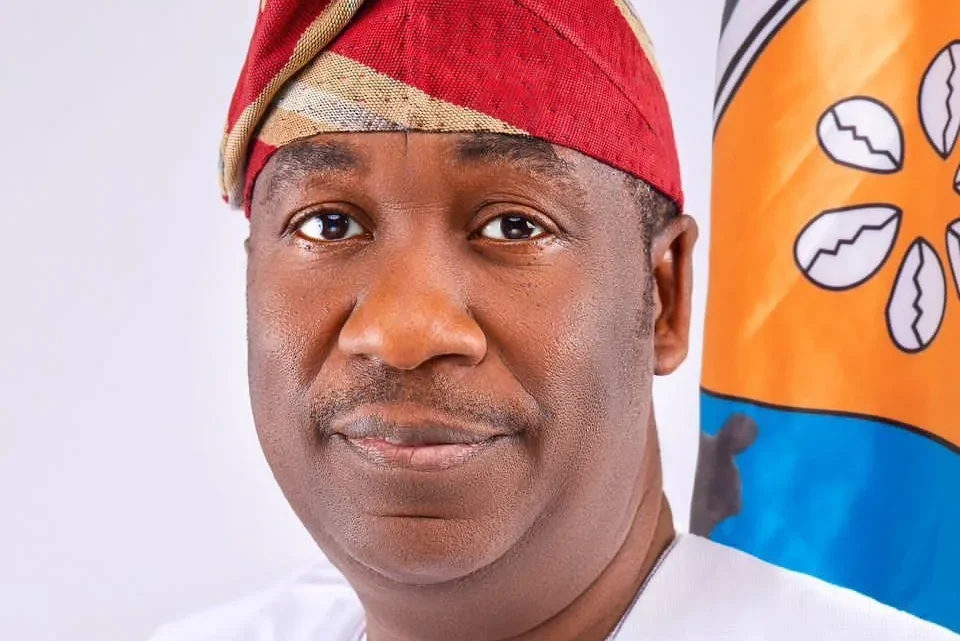
The choices that emerged from that Sunday session were Deputy Governor of Lagos State, Obafemi Hamzat (Femi Hamzat), for Lagos; Senator Solomon Olamilekan Adeola, popularly known as Yayi, for Ogun State; and Senator Sharafadeen Alli, representing Oyo South, for Oyo State. The decisions were not ratified through any formal party process and remain subject to revision, but in Nigerian political culture, when a sitting president in his home region makes a preference known in a room full of governors and party leaders, the outcome of subsequent primaries tends to be a formality.
A source who spoke on condition of anonymity confirmed that the choices were arrived at after prolonged discussion with the President, taking into account the collective opinions of those present and the popularity of the candidates in their respective states.
Among those present at the meeting were Femi Gbajabiamila, the President’s Chief of Staff; Senate Leader Opeyemi Bamidele; Governors Babajide Sanwo-Olu of Lagos, Dapo Abiodun of Ogun, and Biodun Oyebanji of Ekiti; and the Executive Chairman of the Nigeria Revenue Service, Zaccheaus Adedeji (Zacch Adedeji), among other senior stakeholders. The room was full. The decisions, by all accounts, were not easy.
For Lagos, the emergence of Hamzat as the consensus choice carries a significance that goes well beyond the man himself. If the decision stands, Hamzat would become the first deputy governor to directly succeed his principal as governor since Nigeria’s return to democratic governance in 1999.
That distinction alone makes his selection remarkable, but it does not fully capture the political weight of what was navigated to arrive at it. The field of men who wanted this seat was wide, accomplished, and well-connected. Former Governor Akinwunmi Ambode, House Chief of Staff Femi Gbajabiamila, Minister Tokunbo Wahab, House Speaker Mudashiru Obasa, Senator Tokunbo Abiru, former opposition candidate Abdul-Azeez Olajide Adediran, known as Jandor, and Hakeem Muri-Okunola, the President’s principal secretary, had all been associated with the Lagos governorship conversation in various forms. The party will now be tasked with compensating these figures in ways significant enough to maintain their loyalty through a campaign season.
Hamzat, born on September 19, 1964, in Lagos, is the son of the late Oba Mufutau Olatunji Hamzat, who served as a Lagos State Commissioner for Transportation between 1979 and 1983 and later became a senatorial district leader of the Action Congress. His credentials are formidable by any standard.
He earned a degree in Agricultural Engineering from the University of Ibadan in 1986, a master’s in the same field in 1988, and a PhD in System Process Engineering from Cranfield University in England in 1992, completing the doctorate within three years, making him the first student in his department to do so. Before entering government, he worked at institutions including Merrill Lynch, Morgan Stanley, and Oando Plc, where he served as Chief Information Officer.
His public service career began in August 2005 when he was appointed Commissioner for Science and Technology by then-Governor Bola Ahmed Tinubu, a position he retained when Babatunde Fashola assumed office in 2007.
He later served as Commissioner for Works and Infrastructure under Fashola, overseeing landmark projects including the Lekki-Ikoyi Link Bridge. In 2019, after withdrawing his own governorship bid to support Sanwo-Olu, he was sworn in as deputy governor, a role he has held through two consecutive terms.
Yet his selection is not without its critics. A segment of Lagos residents and some party observers have raised quiet concerns that Hamzat, as a Muslim of Yoruba descent with a reputation for inclusivity, may not prioritize the interests of Lagos indigenes as aggressively as some factions would prefer.
That concern reflects a broader tension in Lagos politics, one that surfaced publicly just days ago when a group of Lagos State Prominent Indigenes called on the APC to reserve the governorship position for qualified indigenous candidates, also declaring support for President Tinubu’s second term at a meeting held on March 18, 2026.
Hamzat’s supporters dismiss such concerns as misplaced, pointing to his deep Lagos roots and his father’s legacy in the state’s governance architecture. The debate, however, is unlikely to go away quietly.
In Ogun State, the picture is complicated by a more visible disagreement at the top. Governor Dapo Abiodun, who was present at Sunday’s meeting, had reportedly preferred Senator Shuaib Afolabi Salisu, who represents Ogun Central in the Senate, as his candidate of choice. The party instead settled on Senator Yayi, whose full name is Olamilekan Adeola and who chairs the powerful Senate Appropriations Committee as the representative of Ogun West.
The compromise has left Abiodun in the uncomfortable position of seeking alternative compensation for his preferred candidate, a task made more delicate by the fact that former Governor Ibikunle Amosun, once an adversary of Abiodun, has reportedly been cleared by the presidency for a prominent position that Senator Salisu had been considered for. In Nigerian politics, the management of such disappointed expectations is often as consequential as the candidate selection itself.
In Oyo State, the choice of Sharafadeen Alli appears to have generated far less internal resistance than the decisions in the other two states. His selection carries the backing of the majority of APC stakeholders in Oyo, as well as the endorsement of the Olubadan of Ibadan, Oba Adewolu Ladoja Ladoja, the former governor under whom Alli served as Secretary to the State Government and later as Chief of Staff.
Alli, born on April 20, 1963, in Ibadan, and trained as a lawyer at the University of Ibadan, has spent decades in public life, from serving as a local government chairman in the early 1990s to eventually winning his Senate seat on the APC platform in 2023. His relationship with Ladoja, who is now the Olubadan, lends his candidacy a traditional authority that resonates across Ibadan’s dense political landscape.
The meeting also reportedly discussed the position of Power Minister Bayo Adelabu, who had been named as a potential Oyo governorship aspirant, with sources indicating that stakeholders concluded he does not enjoy the popularity needed to defeat the candidate of incumbent Governor Seyi Makinde in a general election.
For Adelabu, a man who returned to the APC fold after contesting the 2023 governorship on the Accord platform, that assessment from within his own party represents a significant setback, even if no public announcement has been made.
INEC has scheduled the 2027 governorship elections for February 6, 2027, with party primaries expected to be concluded by the end of May 2026. The APC has long favoured the consensus model for candidate selection, a process that concentrates enormous power in the hands of party leadership and, in the South-West, ultimately in the hands of the President.
Sunday’s meeting was Tinubu exercising that power in his most direct political theatre. Whether the choices announced in his Lagos sitting room survive the months of lobbying, horse-trading, and quiet pressure that Nigerian pre-primary politics always generates is, for now, the only question that remains genuinely open.
The APC National Secretariat did not respond to a request for comment. Sources quoted in this report spoke on condition of anonymity as they were not authorized to speak on the matter publicly.