Tourist Traffic in Orlando: Why Florida Crash Claims Get Complicated Fast
Orlando’s road network carries a population that mostly does not live there. On any given week, a substantial share of drivers on I-4, along International Drive, and around the attraction corridors are operating unfamiliar rental vehicles, navigating by phone, and making lane decisions two seconds later than a local would.
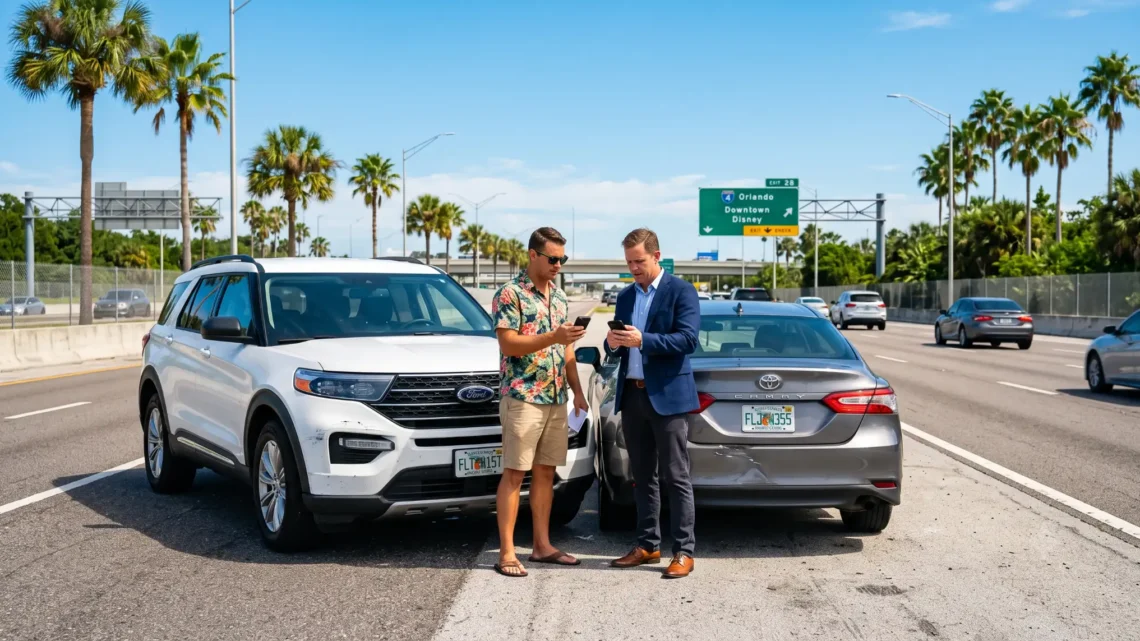
That produces a particular crash profile. Low-speed impacts at interchanges, sudden braking for missed exits, parking structure collisions, and shuttle and rideshare incidents at loading zones.
Trending Now!!:
It also produces a claims profile that is unusually messy, because the people involved leave. Within seventy-two hours the other driver can be in another state or another country, the rental car is back in a fleet, and the only durable record is whatever was captured at the scene.
Florida’s Insurance System Is Its Own Obstacle
Before any question of who caused the crash, Florida routes the first medical bills through a no-fault system with conditions attached.
PIP and the fourteen day rule
Florida requires Personal Injury Protection, which pays 80 percent of reasonable medical expenses and 60 percent of lost gross income, up to $10,000. The condition that catches people is that initial services and care must be received within fourteen days of the crash. Miss that window and the medical benefit is generally lost.
For a visitor who flies home and sees a doctor the following week, this is the single most common way a Florida claim is damaged before it starts.




The emergency medical condition determination
The $10,000 figure is not automatic. Full benefits require a qualifying provider to determine that the injured person had an emergency medical condition. Without that determination, reimbursement is limited to $2,500.
That is a substantial difference, and it turns on documentation rather than on how the person actually feels.
Then a threshold gates the rest
Recovery for pain and suffering requires an injury involving significant and permanent loss of an important bodily function, permanent injury within a reasonable degree of medical probability, significant and permanent scarring or disfigurement, or death. Florida sets a high bar, and many genuine injuries do not clear it.
The Parties Are Rarely Simple
A local fender bender involves two drivers. An Orlando tourist crash frequently does not.
Rental vehicles add layers
A rental introduces the renter’s home policy, any coverage purchased at the counter, the credit card benefit that may apply, and the rental company itself. Sorting which responds, and in what order, takes time that the fourteen-day clock does not allow for.
Out-of-state and foreign drivers
An at-fault driver insured in another state brings their own policy limits and terms. An international visitor may have coverage arranged entirely through a rental agreement. Locating and serving these parties later is materially harder than locating a neighbor.
Commercial vehicles are everywhere
Hotel shuttles, tour operators, attraction transport, and delivery vehicles carry commercial policies and professional claims handling that responds within hours.
Evidence Leaves on a Plane
This is the practical core of the problem.
Get the report and the details at the scene
Florida crash reports are available through the state, and the traffic crash report process is the route to the official record. It is not a substitute for collecting information yourself, because the report will not contain the witness who walked away.
Photograph the rental agreement
If the other vehicle is a rental, the agreement identifies the renter, the company and the coverage elected. That single photograph resolves questions that otherwise take months.
Witnesses are tourists too
Anyone who saw the collision is likely leaving the state within days. A name and phone number captured at the scene is worth more here than almost anywhere else in the country.
Comparative Fault Changed in Florida
Anyone working from older guidance should update their understanding, because the rule reversed recently.
The 51 percent bar
Florida previously applied pure comparative negligence, under which a claimant could recover a reduced amount at any fault level. Under the law as amended in 2023, a claimant found greater than 50 percent at fault for their own harm may not recover any damages at all.
The deadline also shortened
The limitations period for negligence actions was reduced to two years. Guidance written before 2023 commonly cites four, and that is no longer correct.
According to Matthew A. Rabin, Partner and Managing Attorney at RTRLAW, Florida tourist crash files fail disproportionately at the front end rather than in negotiation, because the fourteen-day treatment rule and the emergency medical condition determination are both resolved before most visitors have unpacked. Injured travelers frequently contact an Orlando car accident lawyer from home for that reason, since the earliest requirements are the ones with no flexibility in them.
What Protects a Claim From a Thousand Miles Away
Seek medical evaluation within fourteen days, wherever you are. A visit at home still counts, and the date is what matters.
Photograph everything at the scene, including the other driver’s license, insurance card and rental agreement. Note the state that issued the license, because it determines which policy rules apply.
Request the crash report once it becomes available, and check it for errors while correction is still realistic. The Florida driving safety materials are also worth a look before a driving vacation, largely because the corridors that generate the most incidents are predictable.