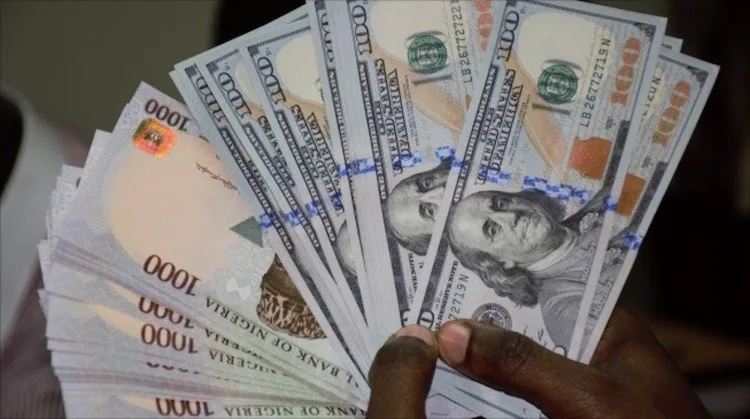
Aboki Naira to Dollar Black Market Exchange Rate Today, 29th August 2026
The naira held a familiar pattern against the United States dollar on the parallel market, popularly known as the black market or aboki rate, on Saturday, 29th August 2026.
Currency dealers in Lagos, Abuja, Kano and other major commercial hubs quoted the dollar for selling at approximately ₦1,410 to ₦1,415, with buying rates ranging between ₦1,400 and ₦1,410, figures that keep the naira within the narrow band it has traded in through most of the week.
Trending Now!!:
Weekend trading on the street market typically sees thinner volumes compared to weekdays, and today was no exception. Street traders attributed the calm to reduced footfall from corporate buyers and importers, who dominate weekday demand, leaving Saturday’s activity driven mostly by individuals settling personal obligations such as school fees, medical bills and small remittances abroad.
A Bureau De Change operator in Lagos noted that supply had remained fairly steady through the week, which helped keep the rate from swinging sharply in either direction.
Anyone converting dollars to naira at today’s rate would get roughly ₦141,000 for 100 dollars, about ₦705,000 for 500 dollars, and close to ₦1,410,000 for 1,000 dollars, though the exact figure depends on the specific dealer and location. Rates in Lagos, Abuja, Kano and Port Harcourt can differ slightly depending on local demand and the volume being exchanged, so it is worth comparing a few sources before finalizing a transaction.
The gap between the parallel market and the official Nigerian Foreign Exchange Market, where the naira has traded closer to the ₦1,400 mark in recent sessions, remains relatively narrow compared to the wide premiums recorded in previous years.




Analysts have credited the Central Bank of Nigeria’s continued liquidity interventions and steadier foreign reserve inflows for the tighter spread, even as the parallel market continues to serve retail demand that the formal banking channels cannot always meet on short notice.
Financial experts continue to advise Nigerians to exercise caution when trading on the parallel market, since it operates outside the formal banking system and remains unregulated by the Central Bank of Nigeria. Those who need foreign currency for legitimate purposes are generally encouraged to explore licensed Bureau De Change operators or their commercial banks first, and to treat street rates strictly as informal indicators of market sentiment rather than fixed, guaranteed prices. Prices quoted here reflect a snapshot from Saturday and can shift within hours based on demand and supply conditions.