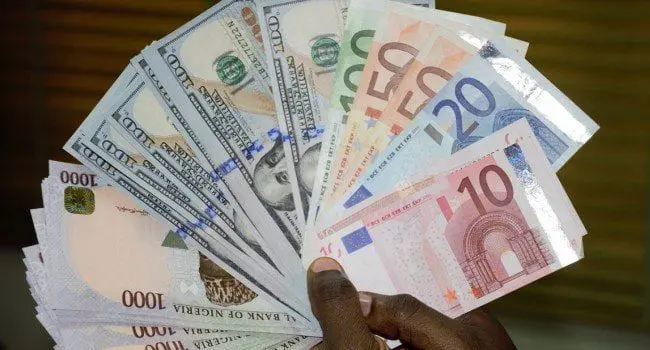
Aboki Naira to Dollar Black Market Exchange Rate Today, 31st August 2026
The naira held steady against the United States dollar on the parallel market, popularly known as the black market or aboki rate, on Monday, 31st August 2026. Currency dealers in Lagos, Abuja, Kano and other major commercial centers quoted the dollar at approximately ₦1,410 for selling, with buying rates hovering around ₦1,400, figures that keep the local currency within the narrow band it has traded in through most of the month.
The rates represent a slight uptick of about 1.44 percent from the previous session, according to tracking platforms that compile figures from street dealers and bureau de change operators across the country. Traders attributed the marginal movement to routine demand from travelers, importers and individuals settling foreign obligations such as school fees and medical bills, rather than any dramatic shift in market sentiment.
Trending Now!!:
Interestingly, the parallel market premium over the official window has widened in recent days even as the naira strengthens elsewhere. At the Central Bank of Nigeria’s official window, the dollar closed around ₦1,337.29, reflecting a gap of roughly ₦73 between the regulated and unregulated segments. This divergence comes despite recent reports that the naira has extended its rally at the official market, with the country’s external reserves climbing to $53.31 billion, a development analysts say should ordinarily support tighter alignment between both markets over time.
For anyone converting dollars to naira at today’s black market rate, 100 dollars would fetch roughly ₦141,000, while 500 dollars would convert to about ₦705,000 and 1,000 dollars would bring in close to ₦1,410,000. These figures fluctuate by location and by the volume being exchanged, and rates quoted in Lagos can differ slightly from those in Abuja, Kano, or Port Harcourt depending on local demand at any given time.
Beyond the dollar, other major currencies also traded within familiar ranges on the parallel market. The British pound sold for around ₦1,900, the euro exchanged at approximately ₦1,605, and the Canadian dollar traded near ₦1,022. Each of these figures reflects a slight movement from the previous day, underscoring the general stability that has characterized the parallel market in recent weeks despite periodic volatility in the official window.
Financial experts continue to advise Nigerians to exercise caution when trading on the parallel market, given that it operates outside the formal banking system and remains unregulated by the Central Bank of Nigeria. They recommend that anyone in need of foreign exchange first explore available options through licensed banks and authorized bureau de change operators before turning to street dealers, and to always confirm current rates with multiple sources given how quickly prices can shift within a single trading day.