Digital Wallets: Where Your Data Goes When You Tap to Pay
A token keeps the card number from the cashier, but the merchant, the card network, the bank and the wallet company each keep a version of the purchase, and only some of those copies are yours to switch off.
A phone held against a terminal for a second hides the card number from the cashier, and that is where most people’s picture of wallet privacy ends.
The purchase itself, with its amount, place and time, still lands in at least five separate systems, and each keeps what it needs for its own reasons.
Trending Now!!:
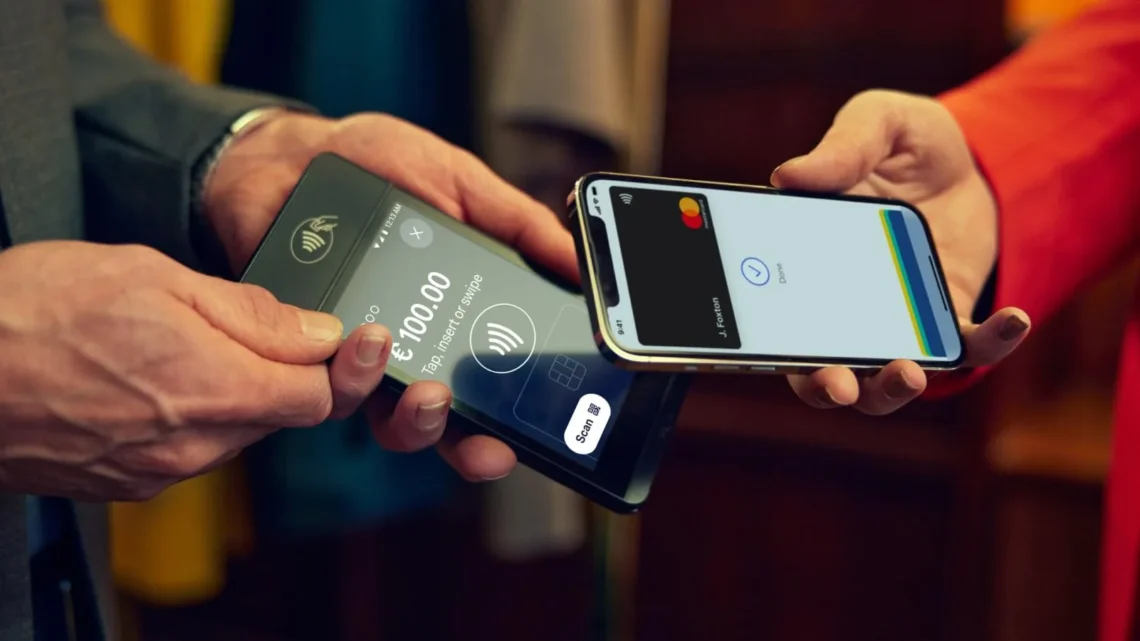
When a phone is tapped to pay, the wallet sends a one-time token in place of the card number. The merchant, its processor, the card network and the issuing bank each receive the details they need.
The wallet company keeps its own record, and how tightly that record ties to a person depends on the provider and the settings.
Wallet privacy therefore turns less on the card number, which is well protected, than on who holds the ledger of purchases.




What Actually Leaves the Phone
A wallet never copies the printed card number onto a terminal. When a card is added, the issuer or its authorized service provider creates a Device Account Number for that specific phone and sends it back encrypted.
On Apple devices, this number sits in the Secure Element, a certified chip isolated from the operating system. Apple states that it is never stored on its servers and never backed up to iCloud.
At the terminal, the phone first demands authentication: a fingerprint, a face scan, a passcode, or a double-click of the side button on a watch. Only then does the Secure Element release the Device Account Number plus a dynamic security code that is valid for that one transaction. Google Wallet works on the same principle and does not pass the real card number to the business.
The architecture comes from the payment tokenization standard maintained by EMVCo, the technical body run by the major card networks.
A token replaces the primary account number, the 16 digits on the card, with a substitute that is constrained to a specific merchant, device or payment scenario. A cryptogram, a one-time code generated for each payment, proves that the token is being used by the device it was issued to.
The practical effect is easy to state. A criminal who steals a retailer’s database of tokens holds something close to worthless, since a token cannot be replayed at another store or from another phone. This is the real security gain of wallets, and it is larger than most users realize.
It is a gain in protecting the number, not in hiding the purchase.
The Parties That See the Purchase
A hypothetical shopper who taps ten times a week makes about 520 purchases a year. Each can be recorded by the merchant, its processor, the card network, the bank and the wallet provider, which means up to 2,600 entries from a single year of coffee, fares and groceries. Some of those entries are anonymized, and some are not.
The Merchant and Its Processor
The merchant receives a token, an approval and an amount. The card number never appears. The store’s own register still records what was in the basket, though, and a loyalty number scanned at the same checkout can tie that basket to a name regardless of how the payment was made.
The processor, also called the acquirer, routes the request toward the network. It sees the token, the merchant, the amount and the time, which is enough for its own fraud screening and reconciliation.
The Card Network
The network is the party that can turn a token back into a real account. Apple describes the flow this way: its servers decrypt the payment data, identify the card’s payment network, and re-encrypt it with a key that only the network or providers authorized by the issuer can unlock.
The network then passes the request to the issuer. Networks see traffic from millions of transactions and run fraud scoring across it, so they hold a broad record of when and where a token was used.
The Issuing Bank
The bank sees the most complete version: the real account, the merchant name and category, the amount, the time, and the fact that a wallet token on a particular device made the payment.
Its own privacy notice governs that copy, covering retention, offers, analytics and sharing with affiliates. A wallet’s settings do not change any of it, and this is the point most users miss when they conclude that a wallet is private.
The Wallet Provider
The wallet company’s copy varies the most. During setup, Apple says card details, account information, device information, location at the time the card is added and device use patterns, such as the share of time a device is in motion, may be shared with the issuer and used in fraud assessments.
After setup, it says it retains anonymous transaction information for in-app payments: the approximate purchase amount, the app developer and name, the approximate date and time, and whether the payment completed.
In stores, it says it may receive anonymous data such as the time and place of the transaction. Apple adds that data, which can no longer be tied to a person, may be used to improve its products.
How Apple and Google Treat the Record
The two largest wallets start from different designs. Apple frames its transaction data as unlinked to the user and unrevealing of what was bought.
Google runs payments as an account-based service: when the Google Pay or Google Wallet apps are used, the Google account saves items and activity such as transactions and payment methods.
Google says it may use that transaction data to facilitate payments, show transaction history, resolve problems and provide other wallet features. The controls sit in the wallet’s data and privacy settings.
They include personalization within the wallet, use of wallet data to personalize other Google services, a wallet history switch, and a separate switch for using wallet data to personalize Google ads. Google states that the setting personalizing the payments experience from transaction activity is off by default.
Two further details matter. Google tells merchants whether a shopper has Google Pay so they can decide whether to offer it, and opting out of that disclosure can stop the wallet working with some merchants.
Google’s own developer disclosures for its wallet software also list device identifiers and location among the data collected for fraud prevention, which echoes what Apple describes.
Neither design leaks card numbers. The difference is structural: a wallet attached to an account that also runs search, maps and advertising makes the cross-product settings matter more. This is an interpretation of the architecture, not a finding of misuse, and the controls exist precisely so that users can choose.
Payment Apps That Hold Balances Are Different
Tap-to-pay wallets sit on top of a card relationship. Apps such as PayPal and Venmo are the payment relationship.
They hold balances, link bank accounts, and know both sides of a transfer, so they collect more: names, addresses, device information, IP addresses, funding details, and for some services, government identification.
PayPal’s privacy statement lists the categories of recipients for this data, including service providers, partners and merchants, payment networks and processors, credit reporting agencies, government entities and data brokers.
A category on that list is not proof that every record goes everywhere, since sharing depends on the service and the jurisdiction, but the breadth is the point. The statement also says that transaction information from a guest checkout may be linked to a PayPal account if the person opens one later.
The rule of thumb: a card inside a wallet adds one more record-keeper, while a balance-holding app replaces the bank in the middle and takes on the bank’s appetite for data.
Where the Law Stops
Regulators moved to supervise this corner of the market and then stepped back. The Consumer Financial Protection Bureau finalized a rule bringing large nonbank wallet and payment app providers, those handling at least 50 million transactions a year, under its supervision.
The rule would have allowed examiners to check compliance with the Electronic Fund Transfer Act and other consumer financial laws. Congress then overturned it under the Congressional Review Act, and the repeal was signed into law.
The consequence is narrower than it sounds. Providers remain subject to existing federal consumer protection statutes and to state privacy laws, but the bureau no longer has a route to routine examinations of the largest wallet operators. Consumer advocates argued during the debate that users of these apps were left with little recourse beyond complaining.
The protection that matters most in practice comes from the card underneath. Federal law caps a cardholder’s liability for unauthorized credit card use at $50, and debit protections under Regulation E depend on how quickly a problem is reported.
Money held as a balance inside a payment app can be treated differently, so the funding source matters. A suspicious transaction should go to the issuer immediately, and identity theft warrants a call to the bank and the relevant national consumer protection agency.
Outside the United States, privacy statutes such as the European Union’s GDPR give users rights to access and erase personal data held by wallet providers, which is a stronger baseline than most American users enjoy.
Misconceptions Worth Dropping
Tokenized does not mean anonymous. The token resolves to a real account at the network and the issuer, and every party that handles it can link it to a time, a place and an amount.
The wallet company does not see the card number, but that is true only at the moment of payment. During setup, the card number passes through the provider’s systems in encrypted form so the network can be identified and the token requested. Providers say they do not retain the original number, which is a statement about storage, not about transit.
A lost phone is not an open wallet. Payment requires authentication, and the major platforms offer remote lock and erase. The more realistic risk is a stolen card number being added to a criminal’s own wallet, which is why issuers verify new additions with one-time codes and extra checks.
Paying with a wallet button online is not identical to a tap. In apps and on websites, the wallet sends the Device Account Number and a dynamic code to the merchant, and the merchant may learn that the shopper has the wallet. The in-store tap is the version with the least information flowing to the seller.
A Practical Privacy Checklist
- Open the wallet’s data and privacy settings and read each toggle. In Google Wallet, review wallet history, personalization, cross-product use and ad personalization, and switch off whatever does not serve a purpose.
- Delete stored payment activity when it is no longer needed. In Google’s system, deleting tap activity also removes in-store taps from the device.
- On Apple devices, check the Safari privacy settings, where Apple Pay queries, the checks that let websites see whether the wallet is set up, can be disabled.
- Read the issuing bank’s privacy notice for sharing and marketing, and opt out of any offer program that uses transaction data.
- Remove cards and erase the device before selling or trading in a phone.
- Turn on instant transaction alerts in the bank’s app, since the issuer sees every purchase first and flags problems fastest.
- Keep loyalty accounts separate from payment habits when the goal is to keep a basket from being tied to a name.
A workable decision rule is to count the copies tied to a name. The bank always holds one, the merchant holds one when a loyalty number or emailed receipt is attached, and the wallet provider holds one only if history and personalization stay on.
Switching off the optional copies is the one part of the chain that sits entirely within the user’s control.
What People Ask