How Cities Are Redesigning Water Infrastructure for a Hotter Climate
As droughts deepen and downpours intensify, engineers are rethinking pipes, parks, and treatment plants to keep taps running through climate extremes.
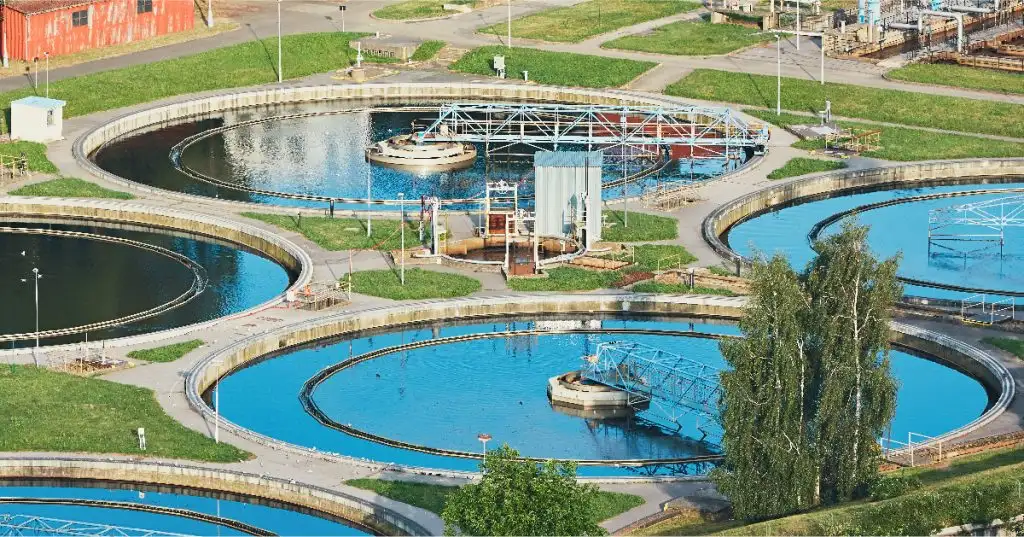
Municipal water systems built for a twentieth-century climate are failing under twenty-first-century heat. Cities are now redesigning water infrastructure through a combination of green stormwater systems, potable water reuse, desalination, and aggressive pipe replacement to withstand hotter, drier summers and more intense rainfall.
The shift is less about single fixes than about rethinking water as a system that must flex between drought and deluge.
Trending Now!!:
The scale of the problem has moved past theory. A Stanford-led study published in July 2026 in the journal Nature Sustainability modelled how climate change alone, independent of population growth, could nearly double household water bills in Santa Cruz, California, by midcentury, with the poorest residents seeing monthly costs climb from roughly $60 to $111 in the driest scenarios.
The researchers describe emerging “water affordability hotspots” nationwide as utilities are forced into costly upgrades just to keep taps running reliably. That single study crystallizes what water engineers have been warning about for years: climate adaptation is now a line item, not a hypothetical.
The Two-Front War: Too Little Water, Then Too Much
The defining engineering challenge of this era is that cities are no longer preparing for one kind of extreme. They are preparing for both drought and flood, often in the same year, sometimes in the same season.
A system oversized for flood control wastes capital that could go toward drought resilience, and a system optimized purely for water conservation can be overwhelmed when a heat-driven atmosphere dumps a month’s worth of rain in an afternoon.




That whiplash is not theoretical. Researchers studying urban water cycles have pointed to cities that swing between severe scarcity and torrential flooding within the same year, a pattern one recent sustainability report attributed directly to disrupted natural water cycles that historic grey infrastructure was never designed to absorb.
A hotter atmosphere holds more moisture, which means when it does rain, it rains harder. That single fact is reshaping how engineers size pipes, culverts, and reservoirs, because a system built to the rainfall statistics of 1985 is undersized for the storms of 2026.
Kongjian Yu, the Chinese landscape architect who pioneered the sponge city concept before his death in a plane crash in 2025, argued that Western drainage engineering made a category error: it treated stormwater as a hazard to evacuate as fast as possible rather than a resource to slow, absorb, and store. That distinction now sits at the center of how progressive cities approach redesign.
The Sponge City Model and Its Limits
China’s Sponge City Program, launched in 2015, remains the largest real-world test of nature-based urban water management, expanding from 16 pilot cities to more than 30 with the ambition of getting 80 percent of urban areas capable of absorbing and reusing up to 70 percent of rainfall by 2030.
The approach replaces or supplements traditional pipes and drains with permeable pavement, constructed wetlands, bioswales, and public parks engineered to flood on purpose, such as Turenscape’s Qunli Stormwater Park in Harbin and Yanweizhou Park in Jinhua, which double as recreation space and decentralized water treatment.
The uncomfortable finding, and one that gets less coverage than the program’s marketing, is that sponge infrastructure has not been a silver bullet. Chinese cities built with sponge features still suffered record-breaking floods between 2021 and 2023, prompting a real debate among engineers about whether green interventions can scale fast enough against accelerating extremes.
Yu’s own response was that the failures reflected half-hearted implementation rather than a flaw in the underlying logic, a defense that is easier to make than to prove. Arup’s Global Sponge City Snapshot has since scored major cities on their natural absorptive capacity, and even Shanghai, held up as a flagship example, scored only 28 percent, ranking less flood-resilient than New York or Mumbai on that measure.
The lesson for other cities is that sponge design is a genuine tool, not a replacement for grey infrastructure, and that retrofitting dense, already-built cities is a fundamentally harder problem than designing sponginess into a new district from scratch, which is largely what China was able to do.
American cities are adapting versions of the same idea at a smaller scale. New York’s East Side Coastal Resiliency project pairs nature-based elements with a hard flood wall to protect Lower Manhattan from storm surge. At the same time, curbside rain gardens in the Bronx are designed to relieve an overworked combined sewer system.
Atlanta’s Cook Park absorbs runoff that once regularly flooded the surrounding neighbourhood. Los Angeles has adopted sponge city language for projects that redirect water into landscaping instead of storm drains. The common thread across these projects is political rather than technical: sponge retrofits in the United States require coordination across agencies that historically have not worked together, a governance obstacle that is arguably harder to solve than the engineering itself.
Rethinking Where Drinking Water Comes From
Heat and drought are pushing cities to stop treating the water supply as a fixed input and start treating it as something that can be manufactured, close to home, from sources that were previously discarded.
Potable water reuse, which purifies treated wastewater to drinking water standards, has moved from pilot project to core strategy across the American Southwest. The distinction matters. Indirect potable reuse (IPR) routes purified water through an environmental buffer, an aquifer, reservoir, or river, before it is drawn back out and treated again.
Direct potable reuse (DPR) skips that buffer and introduces purified water straight into the supply system after advanced treatment. California’s State Water Resources Control Board issued formal DPR regulations in 2024, and San Diego, Los Angeles, and San Francisco have since begun developing implementation plans.
El Paso’s large-scale DPR facility, expected to be finished in 2026, will produce roughly 10 million gallons of drinking water daily from what was previously sewage, and public tours of the city’s earlier demonstration facility reportedly moved local support to 96 percent after residents saw and tasted the finished product.
That is a notable finding in its own right: public resistance to reused water tends to soften dramatically once the process is made visible rather than abstract, which is a communications lesson utilities elsewhere are still learning the hard way.
Colorado has followed California in formally adopting IPR regulations, and other states are actively drafting their own frameworks. Silicon Valley’s Advanced Water Purification Center, operated by Valley Water in partnership with San José and Santa Clara, is expanding to deliver a drought-proof, locally controlled supply blended with the region’s existing recycled water system.
Outside the United States, the clearest precedent remains Windhoek, Namibia, which has run direct potable reuse since the 1960s and stands as the longest continuously operating example anywhere in the world. In Europe, Barcelona’s metropolitan water authority turned to indirect reuse during the severe 2021 to 2025 drought, and a 2026 survey of area residents found 68 percent support for purified recycled water once people understood the severity of the shortage driving the decision.
Desalination remains part of the mix in coastal and arid cities. However, it is worth noting plainly that it is the most energy-intensive and expensive option on the table, which is why most cities pursue it only after conservation, reuse, and stormwater capture have been maximized.
Utilities that lean too heavily on desalination as a first resort, rather than a last one, tend to end up with the highest water bills in their region, a pattern the Stanford Santa Cruz study specifically flagged as a driver of the affordability gap between well-diversified systems and those dependent on a single expensive supply.
The Pipes Underneath Are the Quiet Crisis
None of the above matters if the delivery system itself cannot survive the stress. A water main breaks somewhere in the United States roughly every two minutes, and an estimated 6 million gallons of already-treated water are lost every single day to those failures, even as the western United States enforces restrictions during the driest twenty-year span in 1,200 years.
American drinking water distribution relies on more than 2 million miles of pipe, much of it laid during the infrastructure boom of the 1960s and 1970s and now well past its intended service life. The American Society of Civil Engineers gave the country’s drinking water infrastructure a C-minus in its most recent report card, and the price tag to fix it nationally is estimated to top $1 trillion, against federal investment that industry figures describe as covering only a few percent of total need.
The consequences of deferral are not abstract. In July 2026, a riveted steel water main installed in 1916, the same year William Mulholland ran Los Angeles’s water system, ruptured on Sunset Boulevard. He turned the Sunset Strip into a river.
The section had been scheduled for replacement but had not yet reached the front of the queue; at the city’s current pace of replacing roughly one mile of trunk line per year against roughly 100 miles rated as deficient, the math on when the rest gets replaced does not work in residents’ favour.
Extreme heat accelerates this kind of failure directly, causing pipe materials to expand, contract, and crack under thermal stress in ways engineers designing systems decades ago did not model for, while heat-driven ground movement and drought-shrunk soil add mechanical stress most municipal asset management plans still underweight.
The common misconception among city residents, and even some local officials, is that a water main break is primarily a plumbing failure. It is more accurately a capital planning failure decades in the making, the visible endpoint of a maintenance backlog that is politically easy to defer because pipes are invisible until the moment they fail catastrophically.
Where the Money Comes From, and Who Pays
The 2021 federal infrastructure law included roughly $30 billion for drinking water, and the 2022 Inflation Reduction Act added another $550 million, figures that water policy experts consistently describe as falling well short of what decades of disinvestment actually require.
Absent substantially larger public funding, the costs of new transport systems, desalination plants, and reuse facilities are largely passed directly to ratepayers, which is the mechanism behind the affordability crisis the Stanford study documented.
Cities with larger reservoirs, more interconnected regional systems, or access to cheaper water sources are better insulated from these cost spikes than cities relying on a single vulnerable supply. This distinction is likely to sort American cities into water-secure and water-insecure tiers over the next two decades regardless of how much any individual city spends.
There is also an equity dimension that infrastructure planners increasingly treat as inseparable from the engineering itself. Historically underserved neighbourhoods are disproportionately located in a city’s hottest, most flood-prone, and most heat-island-affected zones, meaning the same communities facing the worst heat exposure are often those with the oldest pipes and the least green infrastructure investment.
Framing water redesign purely as an engineering problem, without accounting for where the money and the shade trees actually go, is one of the more common mistakes in how these projects get planned and funded.
A Practical Framework for Evaluating a City’s Water Resilience
Four questions tend to separate cities that are genuinely adapting from those that are patching:
Supply diversification
Does the city rely on a single water source, or has it built redundancy through reuse, groundwater banking, and regional interconnection?
Absorptive capacity
What share of the urban surface can actually absorb stormwater rather than shedding it into an undersized pipe network?
Pipe age and replacement rate
Is the utility replacing aging mains fast enough to outpace the rate of deterioration, or is the maintenance backlog growing every year?
Rate structure and equity
Are the costs of adaptation being spread in a way that keeps water affordable for low-income households, or concentrated onto the residents least able to absorb the increase?
Cities scoring well on all four are rare. Most are strong on one or two and exposed on the rest, which is precisely why a single hot, dry summer or a single record storm can still produce a genuine crisis even in a city that has been investing in resilience for years. The redesign underway is not a finished product.
It is a continuous recalibration against a climate baseline that keeps moving, and the cities managing it best are the ones treating water as one interconnected system rather than a set of separate problems to be solved in isolation.