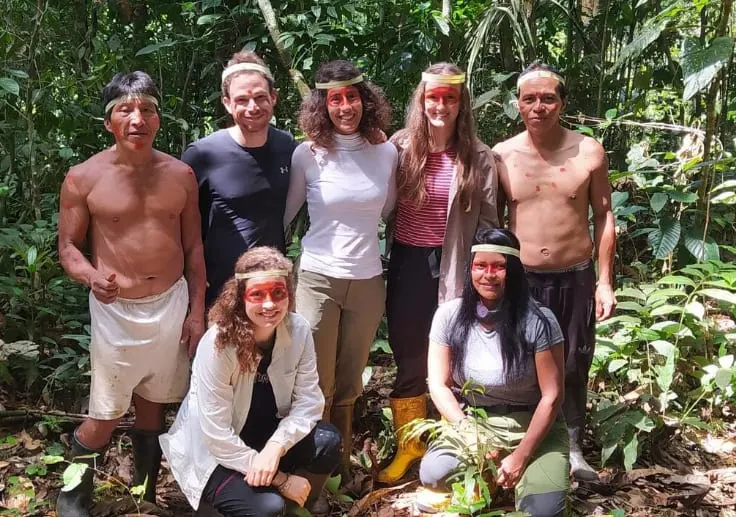
How to Experience Local Culture Instead of the Tourist Version of It
Beyond gondola rides and souvenir stalls lies the harder, richer work of actually meeting a place: its routines, its economics, its unscripted hours. A veteran travel writer's framework for telling the real thing from its rehearsed imitation, and for visiting responsibly once found.
The gap between what a destination markets and what a destination actually is has never been wider. A gondola ride past Instagram-famous balconies is not Venetian life; it is a rehearsed transaction repeated dozens of times a day for people who will never return.
Experiencing local culture instead of its tourist counterfeit means deliberately trading curated spectacle for something messier, slower, and far more revealing: the rhythms, disagreements, meals, and unglamorous routines that make a place function when no one is watching.
Trending Now!!:
The dominant search intent behind this topic is practical, not philosophical. People are not asking what authenticity means in the abstract.
They want a method: where to go, what to avoid, how to behave, and how to tell the difference between a genuine local haunt and a tourist trap dressed up to look like one. This article answers that directly, drawing on more than a decade of on-the-ground travel reporting and destination analysis, including how overtourism policy is reshaping access to cultural sites in 2026.
Why the Tourist Version Exists in the First Place
Every heavily visited destination eventually develops what tourism economists call a “front stage,” a version of itself performed for outsiders, distinct from the “back stage” where residents actually live.
The concept originates from sociologist Dean MacCannell’s 1976 work on staged authenticity, and it remains the single most useful framework for understanding why so much of modern travel feels hollow.




Restaurants near major landmarks optimize menus for tourists with limited time and unfamiliar palates. Craft markets stock souvenirs manufactured overseas rather than by local artisans. Tour operators standardize routes because standardized routes are easier to sell, staff, and insure.
None of this is accidental or even necessarily dishonest. It is a rational market response to demand that rewards convenience and recognizability over nuance. The problem is that travellers who only encounter the front stage often leave believing they understand a place when they have really only understood its export product.
Overtourism has intensified this dynamic considerably. Spain welcomed 96.8 million international tourists in 2025, and France surpassed 100 million visitors the same year, according to figures reported by Rome Business School.
Venice alone draws roughly 30 million visitors annually, with about seven in ten staying only a single day, according to reporting by The Independent. That volume forces cities to manage crowds rather than cultivate connection, which is precisely why Venice introduced its “Contributo di Accesso,” a day-tripper access fee that expanded to 60 peak days between April and July in 2026, charging €5 in advance or €10 for last-minute registration.
The policy’s stated goal, according to Venetian tourism officials, is to discourage the exact kind of drive-by visit that produces the shallowest cultural contact and the highest congestion cost.
The Difference Between Curiosity and Consumption
Cultural travel is often marketed as consumption: see the sights, taste the dishes, buy the crafts, check the boxes. Genuine cultural experience runs on curiosity instead, which requires a different posture entirely. Consumption asks what can this place give me? Curiosity asks what is actually happening here, and why?
This distinction shows up in small, testable ways. A traveller practicing consumption asks a hotel concierge for “the best local restaurant” and receives a recommendation calibrated for tourist comfort.
A traveller practicing curiosity instead asks where hotel staff themselves eat on a day off, or checks which restaurants near a market are full of people speaking the local language at 1 p.m. on a Tuesday, not 7 p.m. on a Saturday. The second approach takes more effort and yields far less predictable results. It also yields something closer to the truth.
Common Misconception: Authenticity Is a Location, Not a Behavior
One of the most persistent errors in travel writing is treating authenticity as a place that can be found, mapped, and recommended, as if the “real” version of a city exists in a specific neighbourhood untouched by outsiders. This framing collapses quickly under scrutiny.
Neighborhoods change. What was undiscovered a decade ago is now a listed stop on walking tours, its own front stage fully formed. Authenticity is better understood as a mode of engagement rather than a fixed coordinate: showing up with humility, spending time rather than passing through, and being willing to be corrected about assumptions formed before arrival.
This reframing matters practically because it means the goal is not to out-hunt other tourists for a secret spot. It is to change how time is spent, regardless of location.
A Practical Framework: The Four Shifts
Years of observing what separates genuinely transformative trips from forgettable ones point toward four consistent behavioural shifts. None of them requires unusual privilege, extended time off, or fluency in a foreign language.
Shift from landmarks to routines. Landmarks are static and performative by design; they were built or preserved specifically to be looked at. Routines, by contrast, are dynamic and unselfconscious: the morning bread queue, the Sunday football match at a neighbourhood pitch, the evening ritual of families walking the same loop through a plaza. Observing or joining a routine reveals more about daily life than any monument.
Shift from guided to self-directed movement. Guided tours are useful for orientation and historical context, and dismissing them entirely is both impractical and unnecessary. The mistake is treating a guided tour as the whole experience rather than the first hour of a longer one.
Booking a two-hour walking tour and then spending the following four hours retracing parts of that route independently, without a script, consistently produces richer encounters than either extreme alone.
Shift from transaction to conversation. Buying a coffee and buying a coffee while asking the barista how business has changed this year are functionally different acts. The second requires almost no additional time and routinely opens a door that guidebooks cannot.
Shift from itinerary density to itinerary slack. Overpacked schedules are the single biggest structural obstacle to cultural immersion, because immersion happens in unplanned time: the wrong bus taken on purpose, the extra hour at a market because a conversation started, the afternoon lost to a festival stumbled into by accident.
Building deliberate slack into a trip, even a single unstructured afternoon per multi-day stop, consistently produces the memories travellers describe as most meaningful afterward.
Where to Look: Signals That Separate the Real from the Rehearsed
Distinguishing an authentic establishment from a tourist-oriented one is a skill, and it can be taught through specific signals rather than vague instinct.
Menus printed in six languages with laminated photos of every dish are a reliable indicator of tourist-first design, not a moral failing but a market signal. Menus handwritten or updated daily, in the local language only, with no photos, tend to indicate a kitchen serving a local clientele that already knows what the food looks like.
Staffing patterns matter too. A restaurant employing people who greet regulars by name, argue amiably with customers about the day’s specials, or serve dishes that change with what was available at market that morning is operating for continuity rather than turnover.
A restaurant staffed by rotating young employees trained on a script, with a menu identical across multiple branches, is optimized for volume.
Price transparency is another underused signal. Local markets typically post prices or negotiate them in ways consistent with regional norms; tourist-facing stalls near major attractions frequently apply a visible markup that locals would not tolerate. Comparing prices for the same item at a market near a landmark versus a market ten minutes’ walk away is often the fastest education in how a local economy actually prices things.
The Overlooked Role of Timing
Most guidance about avoiding tourist traps focuses on location. Timing is arguably just as important and far less discussed. Arriving at a popular market at opening time, before tour buses arrive, exposes an entirely different vendor mix and customer base than arriving at midday.
Visiting a religious site during an actual service, rather than during open visiting hours designed for sightseers, reveals a building functioning as intended rather than as a museum piece.
Travelling in shoulder season, when local life resumes its normal pace after peak crowds thin, consistently produces warmer, less transactional encounters, a point increasingly emphasized by European tourism bodies pushing travellers toward off-peak visits as a direct response to 2026’s overtourism protests in Barcelona, Mallorca, and the Canary Islands.
Language, Even Imperfect Language, Changes Outcomes
Fluency is not required to signal respect, and the assumption that it is stops many travellers from trying at all. Learning ten to fifteen functional phrases (greetings, thanks, please, numbers, and a few food-related terms) measurably changes how locals respond, based on consistent field observation across multiple regions.
This is not superstition. It reflects a basic social dynamic: effort signals intent, and intent shapes reception. A traveller who attempts the local language, however imperfectly, is read as a guest rather than a customer, and guests are treated differently than customers almost everywhere in the world.
This also applies to nonverbal cultural literacy: understanding basic norms around greetings, tipping, dress in religious spaces, and dining etiquette before arrival. These norms are typically documented in a few minutes of research and prevent the kind of low-grade friction that keeps interactions transactional rather than warm.
The Ethics Nobody Puts on the Packing List
A dimension of this topic that competing coverage frequently omits is the ethical weight of cultural travel itself. Seeking “authentic” experiences can, without careful handling, slide into a different problem: treating local life as a spectacle to be consumed for a traveller’s benefit, sometimes at real cost to the people being observed.
Wandering uninvited into residential neighbourhoods to photograph “real life,” treating a religious ceremony as a photo opportunity rather than a sacred event, or expecting locals to perform hospitality on demand are all forms of extraction disguised as cultural curiosity.
Mexico City’s 2025 anti-gentrification protests, which began on American Independence Day and targeted the displacement pressure created by short-term rentals and an influx of wealthier foreign visitors, are a pointed reminder that residents are not scenery.
Responsible cultural travel means recognizing that a neighbourhood’s ordinary life is not a tourist attraction and behaving accordingly: asking before photographing people, supporting businesses that reinvest locally, and being conscious of how visitor spending patterns affect housing costs and displacement in popular districts.
Where the Industry Is Actually Heading
The travel industry itself has begun responding to this exact demand. According to a Hilton travel report cited in recent tourism trend analysis, nearly two-thirds of travellers now frequently or always choose accommodations specifically because they offer access to authentic local events and activities.
CNBC’s 2026 travel trend analysis identifies a broader “anti-tourist” shift, in which travellers deliberately avoid overtourism hotspots and peak seasons in favour of culturally immersive, less crowded alternatives.
This is a meaningful market signal. Hotels, tour operators, and destination boards are increasingly building products around genuine cultural access, cooking classes hosted in family homes rather than demonstration kitchens, artisan workshops with practicing craftspeople, and neighbourhood-based itineraries designed by residents rather than corporate marketing teams.
The practical implication for travellers is that authenticity no longer requires abandoning all planning; it increasingly requires choosing providers whose model is built on local relationships rather than volume throughput.
A Short Checklist Before the Next Trip
Before booking activities, a few questions consistently separate cultural travel from its tourist imitation. Who benefits financially from this experience, a local family or a distant operator? Would this place exist and operate the same way if tourists disappeared tomorrow?
Is there room in the schedule for something unplanned to happen? Has any effort gone into learning basic language or etiquette before arrival? Is the goal to observe local life respectfully, or to extract a photograph and move on?
None of these questions has a universally right answer, and no trip achieves a perfect score across all of them.
What they offer instead is a working discipline: a way of noticing, trip after trip, whether the front stage or the back stage is being visited. Over time, that discipline changes not just where a traveller goes, but how a place is actually understood once they get there.
What People Ask