How to Make Healthy Snacks Your Kids Will Actually Eat and Keep Eating
Forget the food fights. After more than a decade of feeding picky eaters, here is what actually works when you want your kids to reach for something real.
The first time I tried to swap my daughter’s afternoon chips for sliced cucumber and hummus, she looked at me the way only a seven-year-old can, like I had personally betrayed her.
The cucumber went untouched. The hummus got a suspicious sniff. And I stood in the kitchen, wondering if I had completely misjudged my own child, or if I simply had no idea what I was doing.
Trending Now!!:
That was more than a decade ago. Since then, I have fed children in professional settings, worked alongside registered dietitians in school nutrition programs, and raised three of my own kids through the snack wars.
What I know now, and wish I had understood back then, is that getting kids to eat healthy snacks has almost nothing to do with the snacks themselves. It has everything to do with how you offer it, when you offer it, and whether the child feels like the choice belongs to them at all.
This is not a list of things to blend and hide inside a muffin. That approach works sometimes, but it teaches kids nothing about food. What follows is a practical, honest guide to building a snack culture in your home that supports your child’s growth, stabilizes their energy, and quietly expands what they are willing to eat over time.
Why Snacks Matter More Than Most Parents Realize
Snacks provide up to 27 percent of daily calories in young children and bridge energy gaps between meals. Pairing protein or fat with carbohydrates slows digestion and prevents the blood sugar crashes that trigger hunger and irritability.
That mid-afternoon meltdown many parents chalk up to tiredness is very often a blood sugar problem, and it starts with what the child ate three hours earlier.
Children still need to eat several snacks throughout the day, partly because smaller bellies fill up faster, so multiple small meals and snacks make sense, and partly because kids require a lot of nutrients to grow. The best healthy children’s snacks balance protein, carbohydrates, and fats and include vitamins and minerals that contribute to a healthy immune system and good overall health.
When you understand snacking through that lens, the pressure lifts a little. You are not fighting a battle over food preferences. You are building a system that keeps a small human’s body and brain functioning well. And that reframing changes everything about how you approach the plate.
The Problem With How We Usually Offer Snacks
Most parents offer snacks reactively. The child is whining, the clock says 4 p.m., and whatever is fastest ends up in the bowl. That reactive mode is how the ultra-processed options always win, not because you wanted that, but because they are engineered to be quick, grab-friendly, and impossible for a hungry kid to refuse.
The fix is not willpower. The fix is preparation done once, at the beginning of the week, so that the healthy option is the easy option when chaos hits.
I learned this the hard way when my second child was in kindergarten, and I was working full-time. Every afternoon, I would stare into the pantry for thirty seconds and default to whatever required zero effort.
When I finally started prepping a small snack bin in the fridge on Sunday evenings, grape tomatoes washed and ready, cheese cubed, grapes halved, sliced apples in a little lemon water to prevent browning, the whole dynamic shifted. The bin was visible, it was ready, and it took the same effort as reaching for a bag of crackers.
Having quick snacks at the ready is essential when hungry kids are around. Children may be more inclined to eat a few smaller meals and snacks than three big meals as they go about their days. Preparation is the infrastructure that makes healthy snacking realistic rather than aspirational.
What a Good Snack Actually Looks Like
Here is a framework that took me years to internalize: a truly satisfying, nutritious snack for a child needs at least two components working together. Carbohydrate plus protein. Fruit plus fat.
Grain plus dairy. Including a source of protein helps a child feel fuller longer and supports muscle growth, while adding a carbohydrate, such as a whole grain, fruit, or dairy, provides longer-lasting energy and reduces a sugar crash.
Single-item snacks, a handful of crackers, a piece of fruit alone, tend to spike blood sugar briefly and leave kids hungry again fast. That is why the after-school graze-fest often looks like a child eating continuously for forty-five minutes without ever seeming satisfied. They are chasing fullness with the wrong foods.
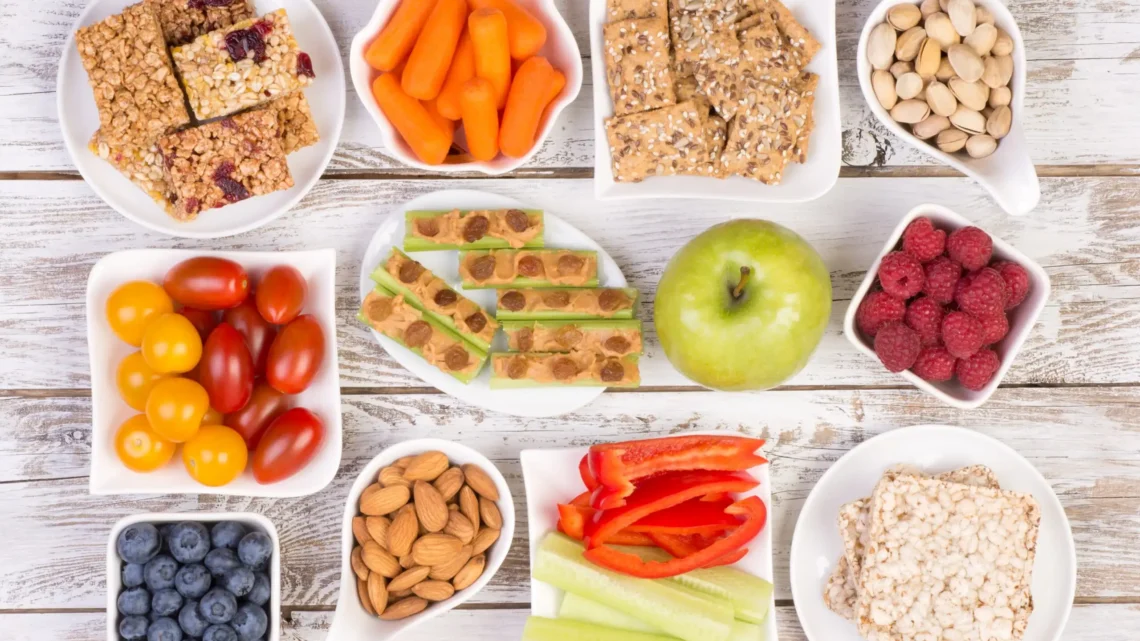
Some of the most effective combinations I have seen work consistently across age groups include sliced apple with almond butter or peanut butter, whole grain crackers with a cube of cheese, plain Greek yogurt with a drizzle of honey and some frozen berries stirred in, celery stalks with nut butter and a few raisins pressed on top, and a small bowl of edamame with a pinch of sea salt.
Steamed edamame still in the shell is a reliable go-to snack that kids love to pop out of the pods, and it delivers high protein and high fibre in every serving. None of these combinations are complicated, and none of them require a recipe.
Picky Eaters Are Not a Character Flaw
The single most common mistake parents make with picky eaters is treating the pickiness as a problem to be solved immediately, usually by persuasion, bribery, or hiding vegetables inside other things. I say this having done all three, repeatedly, before understanding what was actually happening neurologically in my children.
Food neophobia, the fear of new foods, peaks between ages 2 and 6. Research shows that children may need 8 to 15 exposures to a new food before accepting it. This does not mean forcing bites. It means serving the food alongside familiar favourites, without pressure, until it becomes part of their visual and sensory landscape.
That statistic, 8 to 15 exposures, changed the way I worked with picky eaters entirely. I stopped expecting a child to eat a new food on the first, third or fifth try. Instead, I started thinking about each exposure as a deposit into a long-term account. You put sliced mango on the plate beside the crackers they already like.
They ignore it. You do it again. And again. Somewhere around the ninth or tenth time, without any fanfare, they try it. Not because you convinced them, but because their brain finally classified it as familiar and therefore safe.
Instead of labelling snacks as good or bad, try using terms like “always foods” that help a child’s body grow healthy and get stronger, or “sometimes foods” that taste good but should not be everyday choices.
Framing food in a positive, balanced way helps children develop a healthier relationship with eating. That language shift, from moral judgment to function-based description, is something that takes about two days to implement and genuinely lasts.
The Presentation Factor Nobody Talks About Enough
I once watched a three-year-old refuse broccoli at the dinner table for six consecutive nights. Then I put the same broccoli, the exact same preparation, into a small paper cup and called it “tiny trees for dinosaurs.” He ate the entire cup. Twice.
That experience is not an exception. It is how children’s brains process novelty and play. Presentation for kids is not about being Pinterest-perfect. It is about making the familiar feel slightly different and making the unfamiliar feel approachable.
Pairing creative presentation with healthy foods often encourages children to try new things. Offering children two or three items at snack time helps them feel in charge of their food decisions, and could set them on a path to lifelong health.
The autonomy element is critical. When a child gets to choose between apple slices and a banana, between carrot sticks and cucumber rounds, they feel ownership over the decision. That ownership dramatically increases the likelihood they will eat whatever they choose. You are not giving up control. You are offering control within a structure you have already designed to be healthy.
Small food picks, silicone muffin cups used as dividers on a plate, a mini charcuterie board assembled with turkey slices, cheese cubes, whole-grain crackers, and grapes; these presentations feel like events to children. The mix of carbohydrates, protein, and fibre in a snack board works together to fuel a child’s brain and body, and kids love the assembly aspect of it.
Protein-Rich Snacks That Kids Actually Request
Getting enough protein into a child who survives primarily on pasta and cheese crackers is a genuine concern for many parents, particularly those with younger children who have very selective palates. The good news is that protein-rich snacks for kids do not have to announce themselves as such.
Peanut butter is packed with protein and is one of the most popular healthy snacks for kids. It is also super versatile and can be spread on rice cakes or crackers, used in a classic peanut butter and jelly sandwich, or eaten with pretzel sticks. When opting for this snack, choose the healthiest peanut butter you can, with no added sugar or vegetable oils, as these reduce its nutritional value.
Greek yogurt is another consistent performer. It has roughly twice the protein of regular yogurt, a thick, creamy texture kids tend to enjoy, and it accepts flavour additions well. A spoonful of frozen fruit stirred in as it thaws gives it a swirled, ice-cream-adjacent quality that children find genuinely exciting.
Cottage cheese, which was maligned in my own childhood as diet food, has quietly become one of the most versatile healthy snacks for kids today. Cottage cheese is high in protein and an excellent source of essential nutrients, including vitamin B12, selenium, and calcium, and it can be served on crackers, topped with fresh or dried fruit, spread on toast, or used as a dip for fresh vegetables.
Hard-boiled eggs, prepped in batches on Sunday, are a grab-and-go protein that takes thirty seconds to hand to a child. String cheese costs almost nothing per serving and delivers consistent protein without requiring any preparation at all.
Snacks That Work for Lunchboxes and On the Go
The landscape of healthy lunchbox snacks has genuinely improved in recent years, and not just in specialty health food stores.
When shopping for healthy packaged snacks, look for minimally processed options with short ingredient lists you can actually recognize. The healthiest packaged snacks contain whole food ingredients, minimal added sugars, and no artificial additives.
For school lunchboxes specifically, the practical constraints are real: the snack cannot require refrigeration in many cases, it cannot contain nuts in a nut-free school, it needs to be something the child will actually open and eat independently, and it should not make a catastrophic mess.
Whole grain crackers with a small portion of hummus in a sealed container, dried fruit paired with sunflower seed butter packets, and small bags of homemade trail mix assembled from low-sugar cereal, dried cranberries, and pumpkin seeds all meet those criteria consistently.
For on-the-go snacking, the car snack situation is its own category entirely. I have found that snacks that require active participation, peeling a clementine, popping edamame from pods, building a small stack of crackers and cheese, tend to keep children occupied and satisfied longer than passive snacks that disappear in thirty seconds.
The Sugar Conversation, Done Without Drama
At some point, every child discovers that sugar exists and that they prefer it to most other things. This is not a moral failing. It is biology. Sweet foods signal energy and safety to the developing brain, and the food industry has spent billions of dollars making those signals louder.
The way I have handled this with my own children, and the approach I consistently recommend to parents I have worked with, is to avoid turning sugar into a forbidden category. Forbidden categories create obsession.
A child who is never allowed sweets will eat an entire birthday cake at the first unsupervised opportunity. A child who has grown up understanding that fruit, yogurt, and the occasional piece of dark chocolate all exist in a sane, balanced food world tends to self-regulate much more naturally.
When trying to get kids to enjoy lower-sugar options, mixing them with a little of their favourite cereal so it is roughly half and half can be a good way to slowly cut back on added sugar without triggering resistance. The gradual reduction approach works for a lot of flavour preferences, not just sugar.
Diluting sweet yogurt with plain Greek yogurt over several weeks, slowly shifting a child toward whole grain crackers by mixing them with their preferred refined grain variety, these are transitions that stick because the child never notices the shift happening.
Getting Kids Into the Kitchen
This is the piece of advice that sounds like a lifestyle magazine cliché but is actually one of the most evidence-supported strategies in pediatric nutrition: children eat food they helped make.
I have seen this work in classrooms, summer camps, and my own kitchen over many years. A child who assembles their own yogurt parfait, layering the granola, placing the berries, and drizzling the honey with enormous concentration, is far more invested in that snack than one who was simply handed it.
Letting children create their own yogurt sundaes with their favourite toppings gives them plenty of options to personalize, including berries, bananas, chia seeds, nuts, and granola.
Age-appropriate involvement in snack preparation builds more than eating habits. It builds competence, confidence, and a genuine curiosity about food that carries over into adolescence and adulthood.
My youngest, now nine, can make a full snack board from scratch. She knows which combinations keep her full before soccer practice and which ones do not. That kind of food literacy does not come from lectures about nutrition. It comes from years of being in the kitchen, touching the ingredients, and being trusted to make small decisions.
A Note on Timing, Because It Matters More Than the Snack
One variable that rarely gets discussed in healthy snack guides is timing. Offer a snack forty-five minutes before dinner, and you will lose dinner. Offer it four hours after lunch, and you will have a child who is already deep in a blood sugar crash, irritable and fixated on the most calorie-dense thing within reach.
If a child consistently refuses healthy snacks and demands sweets, it may signal that their blood sugar is already unstable. High-sugar breakfasts or long gaps between meals can create a cycle where the body craves quick glucose. The solution in those cases is often not the snack itself but the meal that preceded it.
For most school-age children, a structured after-school snack offered within thirty minutes of arriving home, at a point when hunger is present but has not yet tipped into desperation, is the sweet spot. Toddlers typically need a snack mid-morning and mid-afternoon, which maps well onto natural energy dips in their shorter meal cycles.
What Actually Works, Over Time
The honest truth is that building a child who eats well is not a project with a clear end date. It is a slow accumulation of consistent exposure, low-pressure repetition, and a kitchen culture that treats food as something interesting rather than something combative.
The cucumber my daughter refused at seven? She was eating it with hummus by age nine, and now, at seventeen, she makes her own snack boards on weekends with a level of enthusiasm that still surprises me. That is not a story about a dramatic intervention or a clever trick. It is a story about patience, repetition, and trusting the process, even when it is slow.
Start with what your child already likes. Build one healthy component into that. Wait. Try again. Adjust the presentation. Involve them in the prep. And resist the urge to make every snack a nutrition lecture, because the moment food becomes a source of stress or power struggle, you have already lost the most important battle, the one for your child’s long-term relationship with eating well.
The healthy snacks your kids will actually eat are not always the ones on the trending list. They are the ones that showed up on the plate, without pressure, often enough to become familiar. And, for a child, familiar is just another word for safe.