How to Make Your Own Yogurt: It’s Easier Than You Think
With just two ingredients, a pot, and a thermometer, you can make thicker, creamier, more probiotic-rich yogurt than anything sitting on a grocery store shelf. Here is exactly how to do it.
The first time I ruined a batch of homemade yogurt, I did everything wrong in the most instructive way possible. I used ultra-pasteurized milk from a health food store, thinking “organic” meant better.
I added the starter to the milk that was still piping hot. And I left the pot on top of the refrigerator, which I had heard was warm, not realizing mine ran stone cold. Twelve hours later, I had a pot of warm milk that smelled vaguely confused. Not yogurt. Not even close.
Trending Now!!:
That was in 2013. Since then, I have made hundreds of batches, tested seven different starter cultures, ruined maybe a dozen more pots in enlightening ways, and eventually figured out what the Turkish grandmothers and Lebanese home cooks who have been doing this for millennia already knew: making yogurt at home is not complicated, but it is precise in a few specific places. Get those right, and everything else practically takes care of itself.
This is everything I know.
Why Bother Making Yogurt at Home?
The honest answer is that homemade yogurt is simply better than most of what you can buy. The texture is more custard-like, the tang is cleaner, and you know exactly what is in it, which is to say: milk and live bacterial cultures, full stop. No thickeners, no gums, no added pectin or cornstarch quietly holding a watery product together.
There is also the cost argument, which is real. A gallon of whole milk currently runs around four to five dollars at most grocery stores and yields roughly a half-gallon of thick, creamy yogurt, often more if you are not straining it. The same volume of a quality Greek yogurt brand can cost three times as much. Make it weekly for a year, and you have saved real money.
But the reason most serious home cooks stick with it is not economics. It is the same reason people bake their own bread or cure their own charcuterie. There is a satisfaction in understanding the process, in coaxing bacteria to do exactly what you want, in producing something that tastes genuinely alive.
Probiotic yogurt made at home, fermented long and slow, carries far more active cultures than most commercial products, many of which are heat-treated after fermentation, wiping out the very bacteria printed proudly on the label.
The Science in Plain English
Yogurt is fermented milk. You heat milk to kill off competing bacteria, let it cool to a temperature where beneficial bacteria thrive, introduce those bacteria via a starter culture, and then keep the whole thing warm while the bacteria consume the milk’s lactose, produce lactic acid, and cause the proteins to coagulate into a gel. That gel is yogurt.
The two bacterial workhorses in virtually every yogurt culture are Lactobacillus bulgaricus and Streptococcus thermophilus, though many commercial and heirloom starters also include Lactobacillus acidophilus, Bifidobacterium, and Lactobacillus casei.
Each strain contributes something slightly different, both in flavor and in potential gut health benefits. You do not need to memorize the taxonomy. You just need to know that live active cultures are non-negotiable, and that the strain mix in your starter will shape the flavor of your finished yogurt.
Temperature controls everything in this process. Too hot when you add the starter, and you kill the bacteria before they can work. Too cold during incubation, and the fermentation stalls. The sweet spot for adding your starter is between 108°F and 115°F, and the ideal yogurt incubation temperature for the long rest is right around 110°F. This is not a wide margin, which is why every experienced yogurt maker eventually owns a reliable instant-read thermometer.
Choosing Your Milk
This is the single decision that most affects your final result, and the answer is almost always whole milk.
Full-fat milk produces thicker, richer, creamier yogurt because the fat content contributes body and mouthfeel that lower-fat milks cannot replicate. Two percent milk will yield something decent. Skim milk will give you a thin, almost pourable product unless you add dry milk powder or strain it aggressively. Neither is a disaster, but if you want the best homemade yogurt without any extra steps, start with whole milk every time.
The one critical rule: do not use ultra-pasteurized milk, sometimes labeled UHT. The ultra-high-temperature treatment that extends shelf life also alters milk proteins, preventing proper gel formation. Your yogurt will not set or will set poorly, resulting in a grainy, unpleasant texture. This catches many new yogurt makers off guard because many organic milks, particularly shelf-stable varieties, are ultra-pasteurized. Check the label. Conventionally pasteurized whole milk is what you want.
Raw milk, if you have access to it and are comfortable with the handling considerations, makes extraordinary yogurt. The flavors are more complex, almost grassy, and the texture tends to be naturally thicker. But it requires a thorough heat treatment in the cooking process, which you would be doing anyway.
Goat’s milk yogurt is looser than cow’s milk yogurt because goat’s milk has different protein structures, but it has a distinct, pleasantly tangy character that fans love. If you have never made it, it is worth trying once.
Choosing Your Starter Culture
You have two routes: a commercial store-bought yogurt or a dedicated starter culture from a specialty supplier.
For your first few batches, store-bought yogurt is perfectly fine and completely convenient. Look for a plain, unflavored yogurt, full-fat if possible, that clearly states “contains live active cultures” on the label. Fage, Stonyfield, and Straus are reliable choices in the United States. Avoid anything with thickeners like pectin, gelatin, inulin, or cornstarch, because those additives can carry over and give your homemade yogurt a gummy texture.
The flavor of your starter will carry into your final batch. This is why tasting the starter before you begin matters. A bland starter produces a bland result.
For longer-term, more serious yogurt making, heirloom yogurt starter cultures are worth exploring. Companies like Cultures for Health sell powdered heirloom strains, including Georgian, Bulgarian, and viili varieties, each with distinct flavors and textures.
Unlike the bacterial populations in commercial yogurt that weaken with each successive batch, true heirloom cultures can theoretically be propagated indefinitely, passed down the way a sourdough starter is. I have been using the same Bulgarian culture for four years. The flavor is sharp, complex, and deeply satisfying in a way that plain Fage-started batches rarely reach.
The Equipment You Actually Need
You do not need a yogurt maker. I will say it plainly because the yogurt-making industry has done an excellent job of convincing people otherwise. A heavy pot, a thermometer, and a warm place to park the incubating yogurt are all the equipment required.
That said, if you plan to make yogurt more than once a week, an electric yogurt maker or the yogurt function on a modern Instant Pot is genuinely useful. The Instant Pot yogurt setting holds a steady 110°F for whatever duration you set, removing all the improvised insulation and hoping. I switched to using mine regularly after years of the oven-light method, and the improvement in consistency was immediate.
The oven-light method, for what it is worth, works very well for most people. Turn on your oven light, do not turn on any heat, and do not preheat anything. Place your covered pot inside. The light bulb generates just enough ambient warmth to hold the milk at incubation temperature for the 8 to 12 hours the fermentation needs. In winter, when kitchens run cold, I sometimes add a folded towel draped over the pot for extra insulation.
Other reliable no-equipment incubation tricks: a cooler with a bottle of hot water tucked beside the pot, a turned-off oven with a bowl of boiling water on the lower rack, or simply wrapping the pot tightly in several thick bath towels and leaving it in the warmest corner of your kitchen. The goal is simply to maintain a temperature close to 110°F throughout fermentation. Precision helps, but within 10 degrees in either direction, you still get yogurt.
The Process, Step by Step
Heat the milk
Pour your milk into a heavy-bottomed pot, a Dutch oven works beautifully, and heat it over medium-low, stirring occasionally to prevent scorching, until it reaches 180°F. You do not need to boil it vigorously, just bring it to this temperature and hold it there for two minutes.
This kills competing bacteria and, importantly, denatures the whey proteins in the milk, which is what gives homemade whole milk yogurt its thicker, more cohesive texture. Skip this step, and you are technically skipping half the reason your yogurt sets up properly.
Cool the milk
This is where impatience kills batches. You need the milk at 110°F to 115°F before you add the starter. Any hotter and you damage the live cultures. I speed things up by setting the pot in a large bowl or a clean sink filled with cold water and ice. Stir occasionally as it cools. Use your thermometer. When it hits 112°F, you are ready.
Add the starter
Whisk 2 to 3 tablespoons of your starter yogurt into a small cup with warm milk until smooth, then pour the mixture back into the full pot and stir gently to distribute. This extra step, tempering the starter, prevents thermal shock to the cultures and ensures even distribution. Do not rush this moment. Stir slowly, completely, and with intention.
Incubate
Cover the pot and place it in your chosen warm environment. Now leave it alone. Seriously, leave it alone. The single most common yogurt-making mistake after temperature errors is disturbing the pot during incubation. Every time you lift the lid and poke at the forming gel, you risk breaking the protein network before it has set. Set a timer for eight hours and go do something else.
Fermentation time controls both flavor and texture. Eight hours gives you mild, lightly tangy yogurt. Twelve hours gives you something with more depth and a fuller probiotic punch.
Beyond 14 or 15 hours at 110°F, the yogurt can become quite sour and may separate. I find ten hours to be the ideal balance for most whole-milk batches, but this is genuinely a matter of personal taste, and your first few batches are as much about calibrating your own preferences as following a formula.
Refrigerate
Once incubation is complete, transfer the pot to the refrigerator without stirring. Let it chill for at least four hours, though overnight is better. The yogurt will continue to firm up as it cools. What looked a bit wobbly and loose in the pot after incubation will often be thick and set after a cold rest.
How to Make Greek Yogurt at Home
Straining is all that separates regular yogurt from Greek-style yogurt. Line a colander or fine-mesh strainer with several layers of cheesecloth, pour in your finished yogurt, set the whole apparatus over a bowl, cover it, and refrigerate for 2 to 4 hours. The liquid that drains out is whey, which is mildly sweet, rich in protein, and excellent in smoothies, bread dough, or simply drunk straight.
Strain for two hours and you get thick, spoonable Greek yogurt. Strain for six to eight hours, and the yogurt becomes labneh, the Lebanese strained yogurt cheese that you can roll into balls, coat with olive oil and herbs, and serve with flatbread. It is one of the most quietly spectacular things you can do with a pot of homemade yogurt, and it is virtually free compared to buying labneh at a specialty store.
The whey that drains off is not waste. Save it. Use it as a starter liquid for lacto-fermented vegetables, add it to soups, use it to soak grains, or substitute it for the liquid in pancake batter. It is tangy, nutritious, and worth using.
Troubleshooting the Most Common Problems
Yogurt didn’t set
The most common cause is adding a starter to milk that is too hot, which kills the cultures. The second most common cause is ultra-pasteurized milk. The third is a starter culture that had been sitting in your fridge past its prime and no longer had viable bacteria. If the batch does not set after 12 hours, gently reheat the pot to 110°F and let it sit for another 4 to 6 hours. Sometimes a sluggish fermentation just needs more time.
Yogurt is too sour
You incubated too long, or your kitchen was warmer than expected, which accelerated fermentation. Reduce incubation time by two hours on your next batch, or move the yogurt to the refrigerator at the first sign of a set.
Yogurt is grainy or stringy
The milk was heated too quickly, or the starter was added at too high a temperature, partially denaturing the proteins unevenly. Go slower on the heating next time and be more patient on the cooling.
Liquid pooling on top
This is whey separation, which is entirely normal and not a sign of a failed batch. Stir it back in, or pour it off if you prefer thicker yogurt. It occurs more often in warm kitchens and during longer fermentations.
Yogurt tastes flat
Your starter lacked flavor, or it contained stabilizers that muted the bacterial activity. Try a different store-bought yogurt as your starter, or invest in a dedicated heirloom culture. Taste your starter before you begin every batch. What you taste going in is roughly what you will taste coming out, amplified.
What to Do with Homemade Yogurt
Eat it plain, obviously, with honey or good fruit. But do not stop there. Use it as a marinade for chicken, where the lactic acid tenderizes the meat, and the fat keeps it moist on a high-heat grill. Use it to make tzatziki, the cucumber-yogurt sauce that turns a weeknight grilled pita into something worth sitting down for. Swirl it into soups instead of cream, stir it into mashed potatoes, dollop it on tacos where sour cream would normally go.
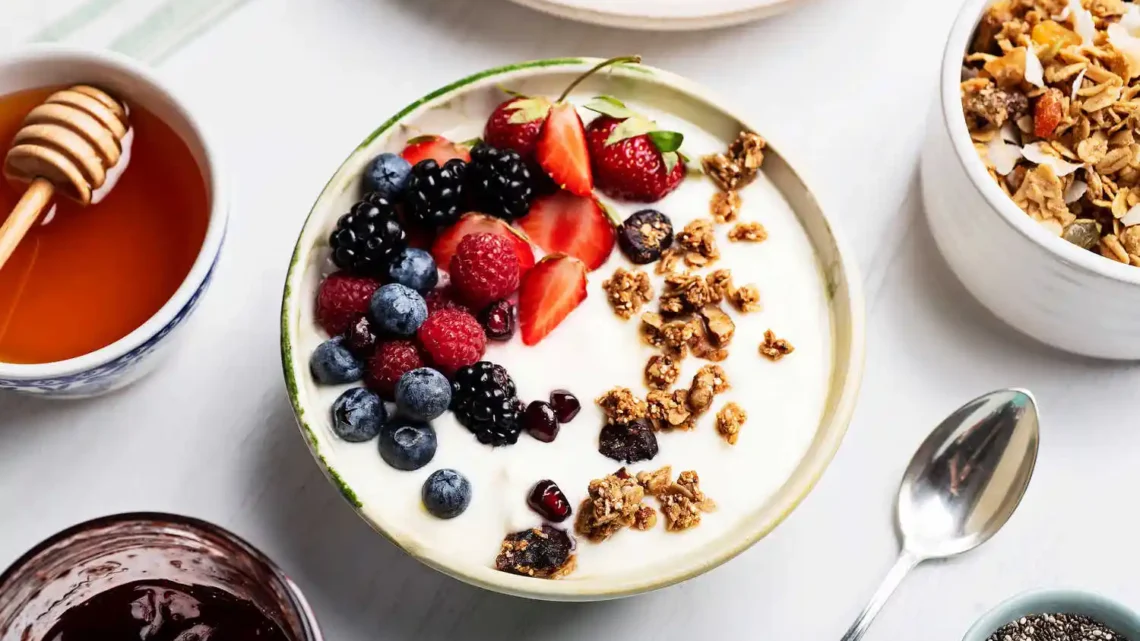
Yogurt parfait is not just a cafe menu item. Layering homemade yogurt with granola and fresh berries in a mason jar and refrigerating it overnight is one of the better meal-prep breakfasts in existence, and with yogurt you made yourself, it costs almost nothing.
Frozen yogurt made from strained homemade yogurt, blended with honey and a little vanilla, frozen in popsicle molds, is better than anything you can buy. This is a fact.
Save Your Starter
Before each batch goes into the fridge, spoon 3 to 4 tablespoons into a small jar. Label it with the date. This is your starter for the next batch, and it is a small ritual worth taking seriously. Your successive batches will develop their own character over time, reflecting your specific milk, local temperature conditions, your particular bacterial culture, and the small variations in your hands and kitchen. That accumulated character is yours. No store sells it.
Most yogurt starters stay viable in the refrigerator for up to two weeks. After that, the cultures begin to weaken, and the next batch may ferment slowly or not at all. If you cannot make yogurt within two weeks, freeze the starter in a small airtight container. Frozen starter keeps well for 2 to 3 months, thaws overnight in the refrigerator, and can reliably seed a new batch.
A Note on the First Batch
Your first homemade yogurt will probably not be your best. That is not a discouragement. It is simply how fermentation works. The bacterial populations need a generation or two to establish themselves in your particular milk and environment.
By the third or fourth successive batch, when you are culturing from your own previous batches, you will notice the flavor deepening, the set becoming more reliable, the texture becoming exactly what you want it to be.
The learning curve is genuinely short. One bad batch teaches you more than three successful ones. And even the mediocre batches, the ones that are a little loose or a little bland, are still yogurt you made yourself, with two ingredients, in a pot on your stove, without buying any special equipment or following any complicated protocol.
That first spoonful, even when it is imperfect, tastes different from anything you can open a plastic container and eat. It tastes like something you understand.
Homemade yogurt keeps in an airtight container in the refrigerator for up to two weeks. Always reserve a few tablespoons from each batch to culture your next one.