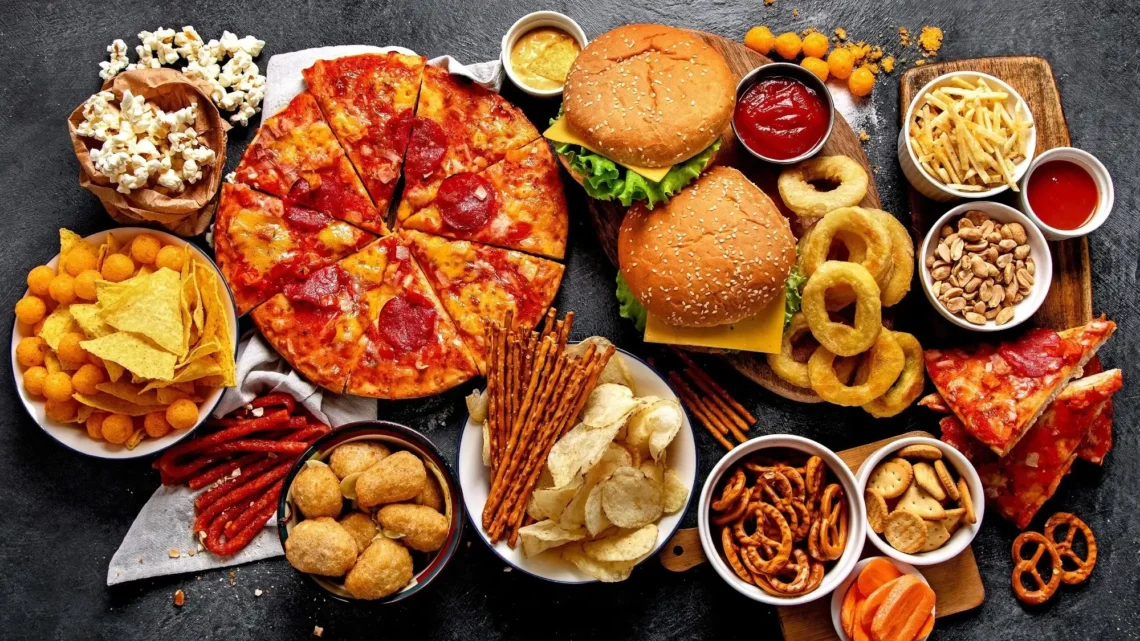
How Ultra-Processed Foods Are Defined by Scientists vs. How They’re Marketed
Researchers classify these foods by industrial formulation, while brands lean on unregulated terms like "clean label" and "natural" to soften that classification, and a pending federal definition could finally force the two languages to match.
A can of soda and a plant-based protein bar can carry the same “ultra-processed” classification under the leading scientific framework, even though one is marketed as a treat and the other as a health upgrade.
That gap, between how researchers classify food by manufacturing process and how brands position it for sale, is the central confusion driving consumer distrust in 2026. Scientists define ultra-processed foods by formulation and industrial technique. Marketers define them, functionally, by whatever language moves product off the shelf.
Trending Now!!:
Understanding that gap matters more now than at any point since the term entered the public vocabulary, because U.S. regulators are on the verge of turning a scientific classification into a legal one, with direct consequences for labels, school lunches, and health claims nationwide.
The Scientific Definition: A Classification System, Not a Blacklist
The dominant framework for classifying ultra-processed foods is NOVA, developed by Brazilian epidemiologist Carlos Monteiro and colleagues at the University of São Paulo starting in 2009. NOVA does not sort foods by nutrient content, calorie density, or fat and sugar levels the way older systems do.
It sorts them by the extent and purpose of industrial processing, placing every food into one of four groups: unprocessed or minimally processed foods, processed culinary ingredients, processed foods, and ultra-processed foods.
The fourth group is where the science gets specific and, often, uncomfortable for the food industry. Ultra-processed foods are industrial formulations made mostly or entirely from substances extracted from whole foods or synthesized in a lab: modified starches, protein isolates, flavour compounds, emulsifiers, and other additives designed to replicate or enhance sensory qualities that home cooking cannot easily reproduce.




Whole food is largely or entirely absent from the final product. Nutritionally, these foods tend to be energy dense, high in sugar, fat, and sodium, and low in fiber, though that description is a common pattern rather than a defining criterion.
What separates a NOVA-4 classification from ordinary “processed” food is technique and ingredient sourcing, not health outcome. A jar of tomato sauce made from tomatoes, salt, and olive oil is processed food. A tomato-flavored snack built from starch, flavoring agents, colorants, and a stabilizer to hold its shape is ultra-processed, even if its sugar and sodium numbers look identical on a nutrition panel.
This is the detail most competing explainers skip: NOVA is a manufacturing taxonomy first and a health signal second, and conflating the two is the single most common misreading of the science, including among journalists covering it.
Why the Scientific Community Itself Is Divided
No standard, agreed-upon definition currently exists for the threshold at which a product becomes ultra-processed, and considerable variation persists across descriptions used in research.
A 2025 systematic review identified at least six competing classification systems beyond NOVA, including the EPIC system, IFPRI, UNC, UP3, and Siga, each differing in how explicitly they define processing techniques and how they treat additives and nutritional cutoffs. Siga stands out for pairing processing criteria with quantitative nutrient thresholds, something NOVA deliberately avoids.
That fragmentation has real consequences for the evidence base. A widely discussed 2026 perspective in Science reexamined controlled feeding trials often cited as proof that processing itself, independent of nutrients, drives weight gain, and identified overlooked confounders such as eating speed and food texture that have nothing to do with industrial formulation.
Meanwhile, a 2025 meta-analysis pooling eighteen prospective cohort studies and more than a million participants found that high consumers of ultra-processed food faced a 15 percent higher risk of all-cause mortality, with each additional 10 percent share of ultra-processed food in the diet adding roughly a 10 percent increase in mortality risk. Every one of those studies, however, was observational, leaving socioeconomic status, income, and access to fresh food as persistent confounders that adjustment models cannot fully remove.
There is a policy wrinkle here that rarely makes it into consumer-facing coverage: because the category is so broad, NOVA-4 foods currently supply a substantial share of dietary fiber in the American diet, meaning a blanket avoidance strategy could raise grocery costs for lower-income households without necessarily improving nutrient intake.
Fortified whole-grain cereal, plant-based milk, and packaged whole-wheat bread can all land in the same NOVA-4 bucket as candy and soda, purely on formulation grounds. This is the nuance that gets lost when the term is used as shorthand for “unhealthy,” and it is exactly the kind of overlooked fact that separates informed reporting from headline-driven alarmism.
How Marketing Redefines the Same Category
Where science treats “ultra-processed” as a manufacturing description, marketing treats it as a reputational threat to be managed around, and the industry playbook for doing so has matured considerably over the past three years.
Clean Label as a Parallel Vocabulary
The food industry’s primary response has been to build an entirely separate, unregulated vocabulary: clean label. There is no legal definition for the term, no certifying body, and no enforcement mechanism, yet it is generally understood in the marketplace as referring to products with simple, familiar ingredients free of artificial additives, preservatives, colors, and flavors.
That ambiguity is a feature for brand teams, not a flaw. It allows a company to slap “clean” on packaging while sidestepping any obligation to disclose whether the product still qualifies as ultra-processed under NOVA.
The consumer appetite for this language is enormous and growing. Global data from Innova Market Insights shows that roughly one in four consumers worldwide report they are actively eliminating processed foods from their diets, and nearly one in three new food and beverage launches globally now carries some form of clean label claim.
The global clean label market was valued near 53 billion dollars in 2025 and is projected to approach 87 billion dollars by 2033. That is not a niche marketing trend; it is a structural repositioning of the entire consumer packaged goods sector around a term with no regulatory teeth.
The Renaming Playbook
The most consequential marketing tactic is not a claim at all but a substitution: swapping an ingredient’s technical or stigmatized name for one that sounds artisanal or nutritional.
Industry observers have documented this pattern extensively, noting that renaming high-fructose corn syrup as “corn sugar,” or labeling maltodextrin as “tapioca fiber,” has become a recognizable enough tactic that food journalists and informed consumers now flag it on sight. The ingredient’s function in the formulation does not change. Only its name does.
A related tactic sits inside the word “natural” itself, which carries no binding federal definition despite its outsized influence on purchase decisions. A product can legally claim “all natural ingredients” while including carrageenan, modified starches, or “natural flavor,” a labelling term that can legally encompass hundreds of distinct chemical compounds derived from natural sources but manufactured through the same industrial extraction processes used for synthetic flavoring.
This is the detail most clean label coverage understates: naturalness of origin says nothing about the degree of processing the ingredient underwent before it reached the final product.
Reformulation is the more defensible version of this response, and it is happening at scale. Following the mid-2026 phase-out of eight synthetic dyes tied to the federal Make America Healthy Again initiative, PepsiCo’s Simply product line has replaced artificial colors and flavors across several established snack brands, mirroring a broader industry shift toward reformulated versions of legacy products.
Reformulation changes the additive profile of a product; it does not automatically move it out of the ultra-processed category, since NOVA’s classification depends on the presence of any cosmetic or functional additive, not the specific additive removed.
The Regulatory Collision Reshaping Both Sides
For most of the past sixteen years, the scientific and marketing definitions of ultra-processed food operated in separate spheres because no government agency had attempted to formalize either one. That changed in 2025 and accelerated through 2026, in a sequence worth tracking closely for anyone in food, health, or CPG marketing.
Following the release of the MAHA Report in May 2025, which flagged the prevalence of ultra-processed foods in the U.S. food system as a public health concern, the FDA and USDA jointly opened a request for information in July 2025 seeking data to help construct a uniform federal definition.
The comment period drew more than five thousand submissions, an unusually high volume that signaled how much commercial and scientific weight now rides on the outcome.
Health Secretary Robert F. Kennedy Jr. repeatedly framed a federal definition as the necessary precondition for overhauling front-of-pack nutrition labelling, at one point suggesting an April 2026 target and floating a traffic-light-style graphic system that would flag products as low, medium, or high risk across several nutrients of concern. That timeline slipped.
On August 10, 2026, HHS and USDA confirmed they had submitted a proposed definition to the White House’s Office of Management and Budget for final review, with Kennedy stating that ultra-processed foods make up close to 60 percent of the American diet and that childhood obesity now affects more than one in five children nationally.
The document that emerged carries less legal force than many anticipated. FDA’s submission takes the form of a white paper rather than a binding rule, characterized as not economically significant, and it does not preempt state-level activity already underway.
Under the proposed federal approach, a product would qualify as ultra-processed if it contains at least one functional ingredient such as a dye, emulsifier, or flavor enhancer, along with high amounts of saturated fat, sodium, or added sugar, or a nonnutritive sweetener. That criteria set leans closer to Siga’s hybrid model, which blends processing technique with nutrient thresholds, than to NOVA’s pure processing-based approach. This distinction will matter enormously for which products end up flagged.
States are not waiting for Washington. California’s Assembly Bill 1264, passed in September 2025, already established its own statutory definition of ultra-processed foods, targeting products containing functional ingredients like dyes, emulsifiers, or flavour enhancers alongside high levels of saturated fat, sodium, added sugar, or nonnutritive sweeteners, specifically to remove qualifying items from school meals.
A brand that reformulates to satisfy a future federal standard could still run afoul of California’s narrower school-focused rule, or vice versa, creating a compliance environment that regulatory counsel and food scientists are only beginning to map.
A Practical Framework for Reading Past the Marketing
Consumers, and the brands trying to earn their trust honestly, benefit from separating three distinct questions that marketing language tends to blur together on purpose.
First is the processing question: does the ingredient list contain substances that never appear in a home kitchen, such as protein isolates, modified starches, or emulsifiers used purely for texture or shelf stability? That is the NOVA question, and it is answerable directly from the ingredient panel regardless of front-of-pack claims.
Second is the nutrient question: independent of how the food was made, does it deliver high levels of added sugar, sodium, or saturated fat relative to its calorie content? That is the question the emerging federal and California definitions are trying to answer alongside the processing question, and it is the one most nutrition labels already address, however imperfectly.
Third is the naturalness question, which is almost entirely a marketing construct: does the source of an ingredient, natural versus synthetic, actually correlate with a meaningfully different degree of processing? Often it does not. A “natural flavor” derived from a plant source can pass through as many industrial extraction and stabilization steps as a lab-synthesized flavour compound, yet only one of those labels sounds appealing.
Brands and communicators who conflate these three questions, treating “natural” as a proxy for “minimally processed” or “reformulated” as equivalent to “no longer ultra-processed,” are the ones most likely to face the credibility backlash and eventual regulatory scrutiny that packaging analysts have already started warning about heading into 2027 compliance cycles.
What Comes Next
The scientific definition of ultra-processed food was never designed to function as a consumer warning label; it was built as a research tool to study dietary patterns at population scale.
Marketing borrowed its urgency without adopting its precision, and the result has been a decade of consumer confusion that regulators are now attempting, imperfectly, to resolve. Whatever criteria the FDA and USDA ultimately finalize, whether processing-based like NOVA or hybrid like Siga and California’s AB 1264, will not eliminate the gap between how food is classified and how it is sold.
It will simply give that gap a legal boundary for the first time, and shift the marketing battle toward whichever side of that boundary a product happens to land on.
What People Ask