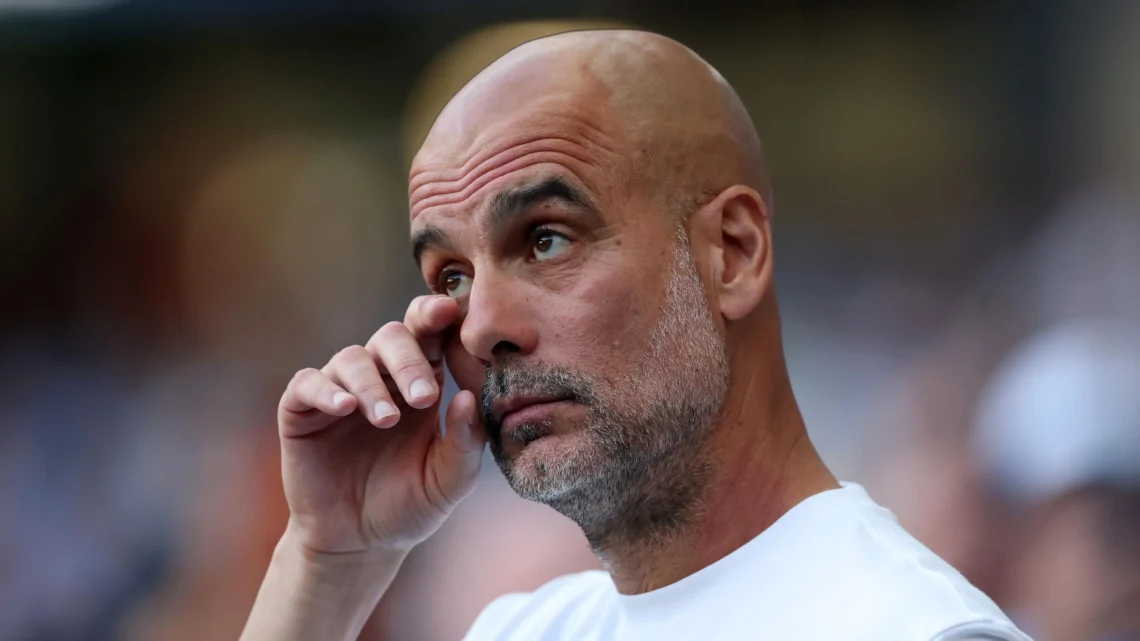
Pep Guardiola Is the Greatest Football Manager Who Ever Lived, and the Argument Is Already Over
Josep “Pep” Guardiola is done at Manchester City. He walked in as a revolutionary, stayed a decade, and walked out a monument.
The debate around who the greatest football manager of all time is has been running since tactics were invented, and perfectly good men have wasted perfectly good arguments on it.
Trending Now!!:
Sir Alex Ferguson has his monument. Johan Cruyff has his philosophy. Arrigo Sacchi has his revolution. Brian Clough has his legend. All of them are giants. None of them is Pep Guardiola.
This is not a disrespect. This is an observation. When you examine what Guardiola has done across three countries, three clubs, three languages, and three entirely different footballing cultures, the case builds itself. You do not even need to be a Manchester City supporter to see it. You just need eyes and the intellectual honesty to use them.
Let us start from the beginning, because the beginning alone should close the conversation. In the 2008/09 season, Guardiola took over Barcelona from Frank Rijkaard and implemented a possession-based style built around short, quick passes, relentless pressing, intelligent positioning, and constant movement.
The system revolved around Xavi Hernández, Andrés Iniesta, and a young Lionel Messi. He had managed Barcelona B the season before. He was not a proven name at the top level. He was a theory, an experiment, a bet. Barcelona lost their opening La Liga fixture 1-0 to Numancia.
The concerned murmuring began immediately. Less than a year later, Barcelona became the first Spanish team to win La Liga, the Copa del Rey, and the Champions League in a single campaign, and Guardiola, at 37 years old, became the youngest man to ever coach a Champions League-winning team.
A treble. In his debut season at the top level. After managing a B-team. Most men spend entire careers chasing one of those trophies. Guardiola collected all three before his first anniversary.
That 2008/09 season saw Barcelona win an unprecedented six trophies, a feat that has yet to be matched by any other club in European football. Six trophies in one year. Not two. Not four. Six. In his first year. The man walked into one of the biggest clubs on the planet and immediately made it look like he had been running the place for decades.
The lazy argument comes next, and it always does. “He had Messi. He had Xavi. He had Iniesta. Anyone could win with those players.” No. Anyone could not. Frank Rijkaard had many of those same players and was asked to leave because the project had stagnated. Tito Vilanova had those players and won La Liga but could not replicate the systemic dominance.
Luis Enrique had Messi alongside Neymar and Luis Suárez and still could not sustain what Guardiola built. Great players need a great manager to reach their ceiling. Lionel Messi himself said: “I want to thank Pep with all my heart for everything he has given me personally and professionally.” Messi. The greatest player who ever lived. Thanking his manager. That is not a coincidence.
That is a coach unlocking potential that even generational talent cannot access alone. By the end of Guardiola’s tenure in 2012, Barcelona had secured 14 titles, with the team’s brilliance evident at every juncture, from a 5-0 victory over Real Madrid in El Clásico to Barcelona players sweeping the top three spots at the Ballon d’Or ceremony. He did not just win matches. He rewired the entire understanding of what a football team could be.
Here is where it gets uncomfortable for the opposition. After four years at Barcelona, Guardiola took a sabbatical, let his mind rest, and then walked into Bayern Munich, one of the most tactically demanding environments in European football, a club with a culture, an identity, and a very particular idea of how football should be played.
Guardiola won the Bundesliga title in each of his three seasons at Bayern Munich, along with two DFB-Pokal titles, the Club World Cup, and the UEFA Super Cup in his debut season. Three seasons. Three Bundesliga titles. Not one gap year. Not one rebuilding period. Not one “let us give him time.”
Immediate, consistent, dominant. A different country, a different language, a different tactical culture, and the result was exactly the same. Most great managers are products of their environment. Guardiola is the environment. He walks in and restructures the entire ecosystem around his ideas, and the ideas work everywhere.
People forget what the Premier League looked like before Pep Guardiola arrived in 2016. Physical. Direct. Fast. Brilliant in its own way, but not particularly interested in the kind of football Guardiola was selling. English football looked at possession-based systems with mild suspicion, the way a butcher looks at a vegan restaurant. Guardiola did not adapt to England.
He adapted England. Guardiola became only the second manager in history to lead his team to three consecutive Premier League titles, after Sir Alex Ferguson, when his City side were crowned 2022/23 champions. City also won the FA Cup and their first-ever Champions League trophy that season, matching Manchester United’s historic treble achievement of 1998/99.
Then in 2023/24, City became the first side in history to win four consecutive Premier League titles. Four in a row. No one had ever done it. Not Ferguson. Not Arsene Wenger. Not Jose Mourinho. Guardiola did it in a league that was supposedly too physical, too unpredictable, and too ungovernable for his kind of football. He did it anyway.
Here is a number that does not get enough attention. In the 136 years before Guardiola, Manchester City won 18 trophies. Under Pep, they added 20 more. Twenty trophies in ten years at a club that had spent over a century collecting eighteen.
Guardiola did not inherit a dynasty. He built one from a club with ambition and money but without the credibility that comes from sustained elite achievement. He turned City into a name that now belongs in the same conversation as Real Madrid, Bayern Munich, and Barcelona. That is not management. That is construction. The man built a football institution from the inside out.
This is the argument that ends arguments. Ferguson dominated England. Cruyff dominated Spain. Sacchi changed Italian football. Every great manager in history has their league, their country, their chapter. Guardiola has three chapters. La Liga.
The Bundesliga. The Premier League. Three of the most competitive football leagues on the planet, spread across three different countries with three different footballing philosophies, and he walked into each one and immediately became the standard by which everyone else was measured. No other manager alive or dead has done that. Not even close.
Open-mindedness demands honesty, so here it is. The Champions League with City took until 2023 to arrive, and before Istanbul, the critics were sharpening their pencils about Guardiola being unable to win it without Messi. That argument was retired the night Rodri scored against Inter Milan and Guardiola finally lifted the trophy in a third country. The 2023/24 season was a wobble.
The team was not itself, Rodri got injured, and the invincibility myth took a dent. It was the most human Guardiola had looked in years, and even then, City were competing at the top of every competition. Perfection is not the argument. Sustained, unprecedented, multi-continental excellence across nearly two decades of management is the argument.
Guardiola managed 592 matches at City and lifted six Premier Leagues, three FA Cups, five League Cups, three Community Shields, the club’s first Champions League in history in 2023, the UEFA Super Cup, and the FIFA Club World Cup.
He leaves with 20 trophies at City alone, including a domestic double in his final season. Across all clubs: Barcelona, Bayern Munich, Manchester City. Three leagues. Three countries. Three dominant eras. Over 30 major trophies. The youngest ever Champions League-winning manager. The first manager to win La Liga, the Copa del Rey, and the Champions League in the same season. The only manager to win four consecutive Premier League titles.
Pep Guardiola is 55 years old and he has already done more than most footballing minds could achieve in two lifetimes.
The greatest of all time is rarely a clean verdict. Football is subjective, emotional, and tribal. But if you sit down, remove your club jersey, and look at the body of work across three decades of elite management at three of the world’s biggest clubs, one name rises above the rest without needing a second opinion.
His name is Pep Guardiola. And the argument is already over.