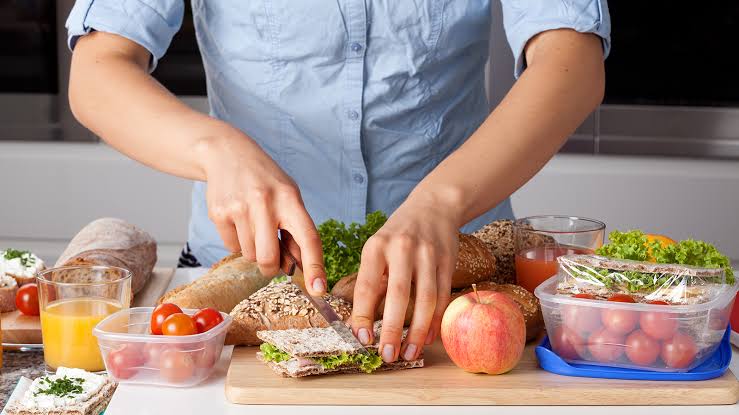
Meal Prepping for People Who Actually Hate Meal Prepping
A component-based approach to batch cooking solves the real reason most meal prep plans collapse by Wednesday: boredom, not a lack of discipline.
Meal prepping fails most people not because they lack discipline, but because the standard version of it, four identical containers of chicken and rice eaten cold for five days straight, was designed for spreadsheets, not appetites.
A workable alternative exists: prep components instead of finished meals, build in variety by design, and treat the freezer as an ally rather than an afterthought.
Trending Now!!:
The Problem Was Never Discipline
Nutrition coaches who have spent a decade watching clients start and abandon meal prep routines recognize a pattern almost immediately.
The failure point is rarely Sunday. People are generally willing to spend two hours cooking on a weekend. The failure point is Wednesday, when the fourth consecutive lunch of the same dish becomes genuinely unappetizing, and the entire system gets quietly abandoned in favor of takeout.
This is not a willpower problem. It is a design flaw baked into how most meal prep advice gets written. Content built around “prep five meals for the week” assumes the user has the palate of a bodybuilder in a competition cut, someone who has trained himself to treat food as fuel rather than pleasure. Most people have not done that training, and most people never will, nor should they need to.
A 2023 survey conducted by the meal-kit company Innit found that 60 percent of respondents said meal planning caused them stress, and a third reported doing no advance meal prep at all. That figure matters because it reframes the conversation.




The audience searching for help with meal prep is not primarily made up of people who need recipes. It is made up of people who have tried the standard advice, found it unsustainable, and are now looking for a version of the practice that does not feel like a chore they are failing at.
Component Prep Beats Meal Prep
The single biggest shift that changes outcomes for prep-averse cooks is moving from finished-meal batching to component batching. Instead of assembling and storing five identical bowls of teriyaki chicken and broccoli, the more durable approach is to cook the individual pieces separately: a protein, a starch, a vegetable, a sauce, and store each in its own container.
The distinction sounds cosmetic. It is not. Component prep means Monday’s dinner can be roasted chicken with rice and a peanut sauce, while Wednesday’s can be the same chicken shredded into tacos with the same rice repurposed as a side, and Friday’s can be the chicken tossed into a salad with a completely different dressing pulled from the fridge. The cooking time invested on Sunday stays fixed. The eating experience across the week does not.
Professional meal-prep consultants who work with corporate wellness programs often describe this as the difference between a “meal factory” and a “flavor bank.” A flavor bank holds neutral bases, proteins, grains, roasted vegetables, that get reassembled with different sauces, spices, and textures throughout the week. The reassembly step takes under five minutes per meal and is what actually prevents the boredom that kills adherence.
A Practical Component Framework
A workable weekly bank typically includes one lean protein cooked in bulk (a whole roasted chicken, a tray of baked salmon, or a pot of seasoned ground turkey), one neutral starch (rice, farro, or roasted potatoes), one or two vegetables cooked simply enough to be reused across cuisines, and three to four sauces or dressings stored separately, since sauce variety is what does the heaviest lifting in preventing flavor fatigue. Chimichurri, a peanut-lime dressing, a garlic yogurt sauce, and a simple chilli oil can turn the identical protein and starch into four distinct meals across a week.
Where Most Advice Gets the Timing Wrong
A common misconception among people new to prepping is that everything needs to happen in one marathon Sunday session. Industry veterans generally advise against this, for a practical reason: a three-hour Sunday cooking block is itself a barrier to entry. Missing one Sunday, because of travel, illness, or simply not feeling like it, collapses the entire week’s plan and often ends the habit altogether.
Splitting prep across two shorter sessions, one on Sunday and one on Wednesday, tends to produce far better long-term adherence. It also solves the freshness problem that plagues single-session prepping: vegetables and proteins cooked on Sunday and eaten on Friday have often lost both texture and nutritional quality by the time they are consumed, particularly leafy greens and delicate fish. A midweek touch-up session, even a 20-minute one, keeps quality high without requiring a second full cooking marathon.
The Freezer Is Underused
Home cooks routinely treat the freezer as a place for emergencies rather than a working part of the prep system. That is a missed opportunity, particularly for anyone who dislikes the repetition of eating the same fresh-cooked batch for days on end.
Soups, stews, casseroles, cooked grains, and most sauces freeze well and can be portioned into single servings immediately after cooking, which means a “week” of prepped food can actually be assembled from four or five different cooking sessions spread across a month, then rotated through the freezer as needed.
This approach also solves the psychological aversion many people have to eating “prepped” food that visibly sat in the fridge for days. Food pulled from the freezer and reheated does not carry the same mental association with leftovers, even when the underlying ingredients are identical.
Batch-cooking a double portion of a dinner recipe and freezing half is a low-effort entry point into freezer prepping for people who find dedicated prep sessions overwhelming.
Common Mistakes That Undermine the System
Several recurring errors show up across nearly every failed meal prep attempt, regardless of the person’s cooking skill level.
Overcomplicating the first week is the most common one. New preppers frequently choose recipes with eight or more ingredients and multiple cooking methods, which turns a manageable Sunday task into an exhausting one. Simpler recipes with fewer components are easier to batch, easier to clean up after, and easier to sustain past the first week.
Ignoring texture degradation is another frequent oversight. Rice, pasta, and roasted vegetables all change in texture after several days of refrigeration, something recipe-driven content rarely addresses.
Slightly undercooking pasta and vegetables before storing them, then finishing them briefly during reheating, preserves texture far better than cooking them fully before storage.
Underestimating portion satisfaction is a subtler mistake but a significant one. Meal prep containers built strictly around calorie or macro targets frequently leave people hungry an hour later, which drives snacking that undoes the point of prepping in the first place. Building meals around a base of adequate protein and fiber, rather than a rigid calorie number, tends to produce better long-term satisfaction and fewer abandoned plans.
Storing everything in identical containers is a smaller but real issue. Uniform containers make the fridge look organized but actively contribute to the boredom problem, since every meal looks and feels the same before it is even opened.
Varying container shapes and grouping components rather than finished meals keeps the visual experience, and by extension the eating experience, more varied.
For People Who Truly Cannot Stand Cooking in Advance
Some people dislike meal prep not because the system is wrong but because batch cooking itself, regardless of format, feels tedious to them. For that group, a lower-friction alternative exists: prepping ingredients rather than food.
Washing and chopping vegetables, marinating proteins raw, and portioning dry goods into ready-to-cook packets takes a fraction of the time of full cooking sessions while removing the single biggest barrier to weeknight cooking, which is the setup and cleanup around chopping and measuring.
This ingredient-only approach sacrifices some of the time savings of full meal prep but dramatically lowers the psychological barrier to starting, and adherence research on habit formation consistently shows that lower-friction versions of a behavior get sustained longer than higher-effort versions, even when the higher-effort version is technically more efficient.
The Bottom Line
Meal prep advice built around identical containers and rigid weekly menus works for a narrow slice of highly disciplined eaters and fails nearly everyone else.
Component-based prepping, staggered cooking sessions, deliberate freezer use, and ingredient-only prep for the most prep-averse cooks all address the actual reason the standard system breaks down: monotony, not laziness. Sustainable meal prep is less about cooking more efficiently and more about designing a system flexible enough to survive an ordinary week.
What People Ask