The Difference Between Machine Learning, Deep Learning, and Artificial Intelligence
Everyone keeps saying "AI" when they mean three very different things. Here is what artificial intelligence, machine learning, and deep learning each actually do, where one ends and the other begins, and why getting this wrong is costing organizations real time and real money.
Somewhere around 2013, a senior data scientist walked into a pitch meeting at a midsize logistics company in Austin, Texas, and tried to explain why the chatbot they had just deployed was not, technically, artificial intelligence.
The executives looked confused. The product had been sold to them as “AI.” The data scientist spent forty-five minutes drawing circles on a whiteboard, each one nested inside a larger one.
Trending Now!!:
By the end of it, the room understood something it had not understood before: these three terms are not interchangeable, and the distinction between them matters enormously, especially when you are staking millions of dollars on the technology.
That scene still plays out in boardrooms, newsrooms, and startup pitches around the world today. The terminology has grown louder, the hype has grown thicker, and the confusion has only deepened. So let us settle this properly.
The Nested Reality: AI, ML, and Deep Learning Are Not Competing Ideas
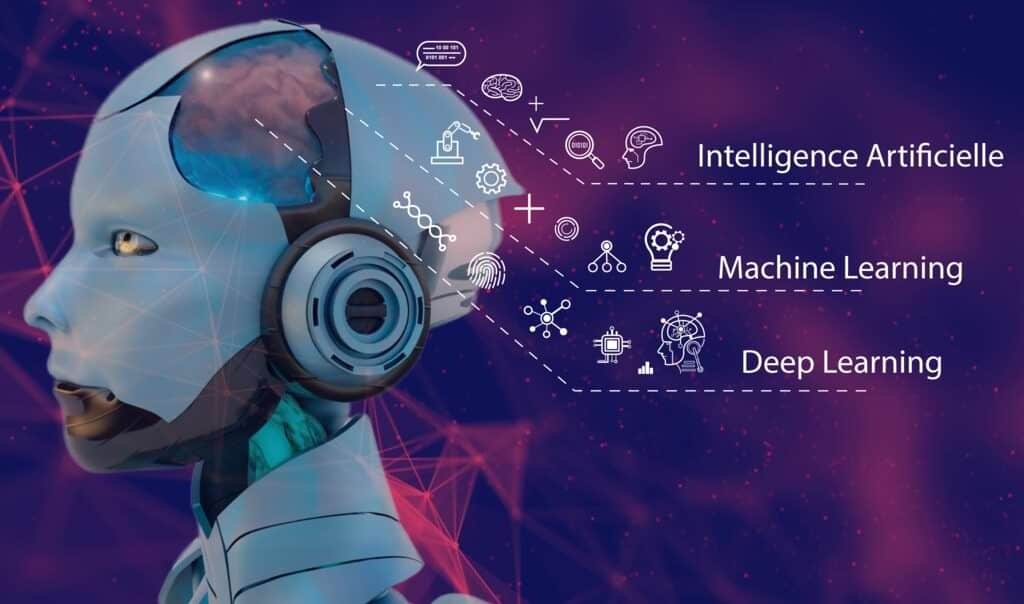
The single most important thing to understand before anything else is that artificial intelligence, machine learning, and deep learning are not three separate technologies fighting for the same territory. They are nested layers, one inside the other, like Russian dolls. Artificial intelligence is the outermost shell. Machine learning lives inside it. Deep learning lives inside machine learning.
Think of it this way: all deep learning is machine learning, but not all machine learning is deep learning. And all machine learning is AI, but not all AI is machine learning. This hierarchy is not just academic. It shapes everything, from which tool a developer reaches for to how a CTO budgets a data infrastructure project.




People collapse these terms because they are almost always used in the same breath. A tech journalist will write that a company “uses AI,” when what they mean is that the company has trained a gradient-boosted decision tree on customer transaction data.
A recruiter will list “deep learning” as a job requirement when the role involves linear regression. The words have become branding, not precision. And imprecision, in this field, costs real money and real time.
What Artificial Intelligence Actually Means
Artificial intelligence, stripped of its science fiction mythology, is simply the broader ambition of making machines capable of doing things that would ordinarily require human intelligence.
Problem-solving. Pattern recognition. Decision-making. Language comprehension. The goal has been around since the 1950s, when Alan Turing published his famous paper asking whether machines can think.
Early AI had nothing to do with learning from data. It was rule-based. Engineers wrote explicit instructions, line by line: if a customer says “refund,” route them to this department; if the temperature exceeds this threshold, shut down the valve. These expert systems, as they were called, worked well in narrow, predictable environments. They fell apart the moment the world got messy.
The Limits of Rule-Based AI
The problem with programming rules by hand is that the real world refuses to cooperate with your rule book. Language is ambiguous. Context shifts. Edge cases multiply.
By the time you have written enough rules to cover every scenario, the scenario has changed. This is why, by the early 2000s, the AI field began pivoting away from hand-crafted logic and toward something more adaptive: learning from data.
That pivot gave rise to machine learning.
Machine Learning: When Machines Stop Following Orders and Start Learning
Machine learning is the branch of artificial intelligence in which systems learn from data rather than from explicit instructions. Instead of telling a program “this email is spam because it contains the word ‘inheritance,’” you show it ten thousand examples of spam and ten thousand examples of legitimate mail, and let it figure out the patterns on its own.
The model adjusts its internal parameters based on what it sees, gets feedback on its mistakes, and gradually improves. This process, called training, is what separates machine learning from classical programming. The developer does not write the answer. The developer writes the conditions under which the machine finds the answer.
The Three Learning Paradigms
Machine learning does not operate in one mode. There are three principal approaches, and understanding them matters because real-world applications almost always map to one of these three.
Supervised Learning
Supervised learning is the most widely deployed approach in industry today. You give the algorithm labelled examples: input-output pairs where the correct answer is already known.
A credit-scoring model trained on historical loan data, with labels indicating who defaulted and who did not, is a supervised learning model. A spam filter trained on emails categorized as “spam” or “not spam” is another.
The algorithm learns the mapping between inputs and outputs, and then applies that mapping to new, unseen data. This is how most predictive analytics systems work, from hospital readmission models to customer churn prediction in subscription businesses.
Unsupervised Learning
Unsupervised learning drops the labels entirely. The algorithm receives raw data with no guidance on what the correct output should look like. Its job is to find structure on its own: groupings, patterns, anomalies.
Clustering algorithms that segment customers into behavioural groups without being told what those groups should look like are a classic example. So are anomaly detection systems that flag unusual network traffic without having seen labelled examples of cyberattacks.
Unsupervised learning is harder to evaluate because there is no ground truth to measure against. It is also, for the same reason, extraordinarily powerful in domains where labelling data would be prohibitively expensive or practically impossible.
Reinforcement Learning
Reinforcement learning is closer to how humans learn by doing: through trial, error, and reward. An agent takes actions in an environment, receives feedback in the form of rewards or penalties, and learns to maximize cumulative reward over time.
This is how DeepMind’s system learned to play Go at superhuman levels, and it is the backbone of how robotics researchers are training warehouse robots to navigate dynamic environments without bumping into human workers.
In reinforcement learning, nobody teaches the agent the right answer. The agent discovers it, often inventing strategies that no human engineer would have thought to prescribe.
Where Machine Learning Breaks Down
For all its power, traditional machine learning carries a significant limitation: it requires features. Before you can train a model on, say, medical images to detect tumors, someone has to decide which aspects of the image matter.
Is it the pixel density? The contrast ratio? The shape of certain regions? This process of feature engineering is deeply human, deeply time-consuming, and deeply prone to missing things.
For structured data like spreadsheets and databases, feature engineering is manageable. For raw, unstructured data such as photographs, audio recordings, video, and free-form text, it becomes a bottleneck. This is precisely the problem that deep learning was designed to solve.
Deep Learning: The Layer Where the Real Revolution Happens
Deep learning is a subset of machine learning that uses artificial neural networks with many layers, which is where the word “deep” comes from, to learn representations of data directly from raw inputs.
It does not need a human to pre-select the relevant features. Given enough data and enough computing power, it learns those features on its own, layer by layer, each layer building on the previous one.
The architecture is loosely inspired by the structure of the human brain: interconnected nodes that pass signals to one another, adjusting the strength of those connections based on experience. In practice, these networks bear no real resemblance to biological neurons, but the metaphor has stuck, and the results have been genuinely transformative.
How Neural Networks Build Understanding Layer by Layer
Consider what happens when a deep learning model looks at an image of a face. The first layer might detect raw pixel intensities. The second layer detects edges.
The third detects shapes, curves, and angles. The fourth detects facial features like eyes, noses, and jawlines. The fifth integrates those features into a representation that the model can use to identify the person, assess their emotional state, or estimate their age.
No human told the network to look for edges before looking for eyes. It discovered that hierarchy of abstractions on its own, because that is the most efficient way to process the data it was given. This capacity for autonomous feature learning is what makes deep learning so powerful for tasks involving images, audio, and language.
The Major Architectures You Should Know
Convolutional Neural Networks (CNNs)
Convolutional neural networks are the workhorses of computer vision. They are designed to process grid-structured data like images by applying filters that scan for patterns at different spatial scales.
A CNN can look at a chest X-ray and flag potential signs of pneumonia. It can scan a factory production line at sixty frames per second and identify defective components. It can process satellite imagery and detect illegal deforestation.
The radiologists and factory inspectors who work alongside CNN-powered systems will tell you the same thing: these models do not replace human judgment, but they catch things human eyes miss, especially when fatigue is a factor.
Recurrent Neural Networks (RNNs) and the Rise of Transformers
For sequential data, especially language, the field once relied heavily on recurrent neural networks, which maintain a memory of previous inputs to inform current outputs. But RNNs had a structural problem: they struggled to carry information across long sequences. By the time a model reached the end of a paragraph, it had largely forgotten the beginning.
The transformer architecture, introduced in the landmark 2017 paper Attention Is All You Need by Vaswani and colleagues at Google, changed everything.
Transformers use an attention mechanism that allows the model to weigh the relevance of every word in a sequence against every other word simultaneously, rather than processing tokens one at a time. This architecture is the foundation of every large language model, or LLM, you have encountered: GPT-4, Claude, Gemini, Llama, all of them are transformer-based deep learning systems.
Generative Models and the Diffusion Era
Generative AI, the kind that produces images from text prompts and writes code from natural language descriptions, is also a product of deep learning. Generative adversarial networks, or GANs, set the early benchmarks for synthetic image creation. Diffusion models have since surpassed them, producing images of breathtaking photorealism from a handful of words. These systems learned what images look like by training on hundreds of millions of examples, building an internal model of visual reality so rich that they can generate plausible new images that have never existed before.
What Deep Learning Demands That Traditional ML Does Not
Deep learning is not free. It comes with steep requirements that make it overkill for many practical applications.
It needs data, enormous quantities of it. A well-tuned gradient-boosted model can perform impressively with a few thousand rows of structured data. A deep learning model trained on the same dataset will likely underperform. The sweet spot for deep learning is when you have millions, or billions, of training examples.
It needs computing. Training a large deep learning model is extraordinarily resource-intensive. The rise of graphics processing units, or GPUs, and later specialized tensor processing units, or TPUs, made modern deep learning feasible.
But the energy costs and infrastructure overhead are real and significant, which is why most organizations that deploy deep learning do so through cloud platforms like AWS, Google Cloud, and Microsoft Azure rather than building their own hardware stacks.
It needs expertise. The tooling has improved dramatically, TensorFlow and PyTorch being the two dominant frameworks, but designing and debugging a neural network still requires skills that are not evenly distributed. The gap between knowing that a model performs poorly and knowing why it performs poorly, and knowing how to fix it, is where junior practitioners often get stuck.
The Real Difference, In Practical Terms
If you work in a data-driven organization and you have to decide which of these technologies applies to your problem, the honest framework is this:
If you need a machine to handle tasks that follow explicit, predictable rules, and you can write those rules yourself, that is classical AI, sometimes called rule-based AI or expert systems. It is still widely used in manufacturing, logistics, and compliance.
If you have structured, labelled data and you want to predict an outcome, detect a pattern, or classify an item, machine learning, specifically supervised learning, is almost certainly your starting point. This covers the vast majority of enterprise ML deployments: fraud detection, predictive maintenance, customer segmentation, and recommendation engines.
If your data is unstructured, meaning images, audio, video, or free-form text, and you have enough of it, deep learning is likely the appropriate tool. This covers facial recognition, speech-to-text, natural language understanding, document classification, and increasingly, complex reasoning tasks via LLMs.
And if you want to build systems that generate content, hold conversations, or reason across multiple modalities, you are operating in the domain of generative AI, which is deep learning at its most sophisticated current form.
The Mistakes Organizations Keep Making
Having watched teams across industries navigate these technologies, a few patterns of misapplication recur with depressing regularity.
The first is deploying deep learning when a simpler model would do. A European retail bank once spent eight months and considerable budget building a deep neural network to predict customer churn, only to find that a well-tuned logistic regression model with engineered features outperformed it on their dataset of sixty thousand records. Deep learning is powerful, but it is not universally superior. Match the tool to the data, not to the marketing materials.
The second is treating a machine learning model as a finished product rather than an ongoing system. ML models degrade. The world changes, and the data the model was trained on becomes less representative of current reality. A fraud detection model trained in 2022 will need retraining to stay sharp against fraud patterns in 2026. The discipline of MLOps, which covers model monitoring, versioning, and retraining, exists precisely to address this reality.
The third is conflating model accuracy with model trustworthiness. A deep learning model can achieve 97% accuracy on a test set and still be dangerously brittle in deployment.
If the training data contains hidden biases, the model will replicate those biases. If the deployment environment differs subtly from the training environment, performance can collapse. Responsible AI deployment requires not just evaluation of accuracy, but evaluation of fairness, robustness, and interpretability.
Where These Technologies Live in the World Right Now
It helps to anchor these abstractions in specific, observable realities.
When your bank declines a transaction within milliseconds on the grounds that it looks suspicious, that is a machine learning model trained on historical fraud patterns, running an inference on your current transaction and flagging the anomaly. It is supervised learning at an industrial scale.
When a radiologist at a major hospital uses a computer-assisted detection tool to review a mammogram, the tool scanning for regions of interest is almost certainly a convolutional neural network, a deep learning system trained on millions of annotated medical images. It does not diagnose. The radiologist does. But it changes where the radiologist looks.
When you dictate a message to your phone and it transcribes your words accurately, that is a deep learning system, most likely a transformer-based automatic speech recognition model, converting the acoustic signal of your voice into text in near-real time.
When an autonomous vehicle navigates an intersection, it is running multiple deep learning pipelines simultaneously: one for object detection, one for lane recognition, one for predicting the behavior of other vehicles and pedestrians, with a higher-level decision-making system coordinating the outputs. This is AI in the broadest sense, orchestrating multiple ML and deep learning components.
When a large language model like Claude or GPT-4 answers a complex question or generates a piece of code, it is a transformer-based deep learning model that has learned statistical patterns across a training corpus of extraordinary scale, and generalized those patterns into a capability that looks, from the outside, a great deal like reasoning.
Natural Language Processing: The Discipline That Ties Everything Together
Natural language processing, commonly abbreviated as NLP, is worth naming explicitly because it sits at the intersection of all three technologies and currently generates the most commercial and cultural attention. NLP is the field concerned with enabling machines to understand, interpret, and generate human language.
Early NLP relied on rule-based AI: hand-coded grammars, dictionaries, parsing algorithms. Machine learning brought probabilistic models. Deep learning, and specifically the transformer architecture, produced LLMs that can handle language with a fluency that would have seemed fantastical even a decade ago. The progression from rule-based NLP to ML-driven NLP to deep learning-driven NLP is, in miniature, the whole story of how AI has evolved.
The practical applications of modern NLP span every sector: automated contract review in legal tech, sentiment analysis in financial services, clinical documentation in healthcare, customer service automation in e-commerce. The technology is no longer experimental. It is infrastructure.
The Future Shape of These Technologies
Generative AI and large language models have not replaced the older branches of AI and machine learning. They have expanded the frontier.
Most enterprise AI deployments today still rely heavily on classical ML: tabular data, supervised models, interpretable outputs. The unsexy gradient-boosted ensemble that a team shipped in 2019 is probably still running in production, still driving value, and probably still nobody is writing a press release about it.
What has changed is the ceiling. Deep learning, and particularly transformer-based systems, has demonstrated capabilities that force a revision of what machines can do with language, vision, and reasoning. Multimodal models that handle text, images, audio, and video in a single architecture are no longer theoretical. Agentic AI systems that plan, use tools, and execute multi-step tasks autonomously are moving from research labs into enterprise pilots.
The convergence of AI subfields, where LLMs route to specialized ML models for specific tasks, where reinforcement learning fine-tunes language models through human feedback, where computer vision models feed into language models to enable visual question answering, is producing systems of increasing capability and increasing complexity.
Understanding the layers, where AI ends and ML begins, where ML ends and deep learning begins, is the prerequisite for navigating that complexity without being swept away by it. The circle drawing on the whiteboard, nested and careful, still matters. Maybe now more than ever.
What People Ask