The Economics of Community Solar Programs for Renters Who Cannot Install Panels
Community solar programs are quietly dismantling one of the most stubborn inequities in American energy policy. For the more than 100 million renters locked out of rooftop solar, shared solar gardens now offer real bill savings, no panels required, no landlord permission needed, and no roof necessary.
More than a third of Americans rent their homes. They pay the same electricity bills as homeowners, breathe the same polluted air, and watch the same utility rate hikes show up in their mailboxes every season.
Yet for most of the last two decades, the single most powerful tool for cutting those bills, putting rooftop solar panels on your home, has been completely out of reach for them. Not because of income, or ambition, or lack of interest. Simply because they do not own a roof.
Trending Now!!:
That structural exclusion is, quietly and without nearly enough fanfare, beginning to come apart. The vehicle is called community solar, and for millions of renters across the United States, it is the most significant energy development in a generation.
Understanding its economics, not the brochure version but the real-world version, is what separates people who actually save money from those who sign up, get confused about bill credits, and cancel after three months.
This piece is written for the second group. Or rather, it is written to keep them from becoming the second group in the first place.
What Community Solar Actually Is, and What It Is Not
Let us be clear about one thing from the start. When you subscribe to a community solar program, you are not buying panels. You are not leasing equipment. You are not forming some sort of cooperative ownership stake in a local solar farm, at least not in the traditional sense.




What you are buying is a slice of the electricity that a solar farm produces, and in exchange, your utility company applies credits to your monthly bill that offset what you would otherwise owe.
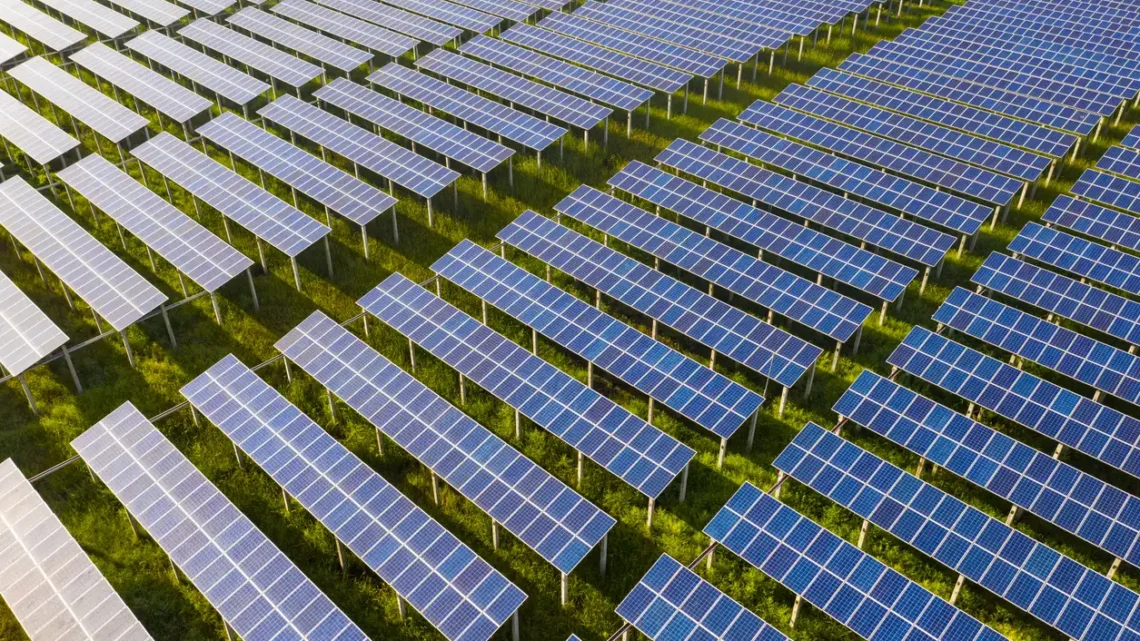
The community solar farm generates power from the sun, which is fed back into a utility company’s local electric grid, and you, as a solar subscriber and utility customer, have your utility account credited for the amount generated for your share.
The technical mechanism that makes this possible is called virtual net metering. It works because electricity grids are not pipelines. Power generated ten miles away is, functionally, the same as power generated next door.
The grid equalizes everything. So when your share of a solar garden in the next county produces kilowatt-hours of electricity, those kilowatt-hours are counted against your bill as if the panels were sitting on your apartment roof.
The economics are straightforward: you pay the community solar provider a rate that is 5 to 15 percent less than your standard utility rate, and the difference is your guaranteed savings. There is no installation, no equipment to maintain, no landlord permission needed, and most programs have no long-term contract.
That is the clean version. In practice, things get more interesting.
The Real Economics: What Renters Actually Save
How the Math Works on a Real Electricity Bill
Imagine you pay $120 a month for electricity in a two-bedroom apartment in Chicago. Your utility charges you about $0.14 per kilowatt-hour, which is close to the Illinois average.
You subscribe to a community solar garden through one of the state’s Illinois Shines Adjustable Block Program providers, and your subscription covers roughly 80 percent of your monthly usage. At a guaranteed 10 percent discount on your solar rate, you would save around $8 to $12 a month.
That may not sound dramatic on paper, but it adds up to roughly $100 to $140 a year, with zero installation cost, zero maintenance, and no conversations with your landlord.
Now layer in the low-income pathways. States like Illinois, New York, and Massachusetts offer enhanced savings of 20 to 50 percent for qualifying subscribers through programs like the Illinois Shines Adjustable Block Program with LMI carve-outs, NYSERDA Inclusive Community Solar, and Massachusetts’ SMART program LMI adder.
Income eligibility is typically based on area median income (AMI) thresholds. For a renter earning below 80 percent of the area median income, the savings conversation changes entirely. We are no longer talking about shaving $10 off a bill. We are talking about a meaningful reduction in energy burden, which is the percentage of household income a family spends on utilities, one of the more understated measures of economic stress in American life.
The Bill Credit Mechanism: Where People Get Confused
The most common point of confusion among new community solar subscribers is the bill structure. When you enroll, you do not simply pay less for electricity. What typically happens is this: you continue paying your utility bill as normal.
Then, separately, your utility applies a solar credit to that bill based on your subscription’s production output for the month. If the credit exceeds your bill, it typically rolls over to the next month. If production is lower than expected, because of seasonal cloud cover or panel maintenance, your credit shrinks accordingly.
This variability catches a lot of people off guard. Community solar is not a flat discount. It is a production-based credit, which means your savings in January, when a solar farm in Massachusetts is dealing with snow cover, will look different from your savings in July. Providers often advertise the annualized average, which is accurate but can obscure months where the credit barely moves the needle.
Operational community solar projects in Connecticut are delivering electricity at approximately $0.088 to $0.099 per kilowatt-hour, well below current standard utility supply rates of about $0.126 to $0.137.
That spread is where the subscriber’s economic value lives. But that spread exists because developers have locked in long-term power purchase agreements, and the credits subscribers receive reflect the project’s contracted rate, not the spot market. Understanding this distinction matters when comparing providers.
State Programs and Where the Opportunity Is Strongest
The Leading States for Renter Solar Access
Not all states are equal on this. Community solar legislation, virtual net metering rules, and subscriber protections vary dramatically by state, and for renters, the state you live in is as important as any other factor.
The top states for renter solar access in 2026 are New York, with community solar available in all boroughs and NYSERDA programs backed by high utility rates; California, which passed SB 868 granting balcony solar rights alongside a growing community solar market; Illinois with its Adjustable Block Program and LMI carve-outs; Massachusetts with its SMART program and robust virtual net metering framework; and Colorado with established community solar gardens and Xcel Energy programs.
New York deserves special mention because of scale. The state’s utility rates are high enough that a 10 to 15 percent discount delivers meaningful dollar savings, and NYSERDA’s inclusive community solar initiative has specifically prioritized reaching renters in multifamily buildings, who represent the bulk of New York City’s residential population.
California’s Emerging Framework
California is in transition. There are currently 1,200 community solar projects totaling 560 megawatts in operation across the state, with another 430 projects totaling 165 megawatts under construction. Approximately 125,000 residential customers and 60,000 commercial customers subscribe to these projects.
The California Public Utilities Commission is also moving toward a new Community Renewable Energy Program, which will directly benefit low-income customers since 51 percent of the subscribers must be low-income and will receive a guaranteed electricity bill credit. That guaranteed credit provision is significant because it removes the production variability problem for the households most sensitive to budget swings.
Connecticut: A Cautionary Tale About Program Expiration
Connecticut’s Shared Clean Energy Facility, or SCEF, program is worth examining in detail because it illustrates both the promise and the fragility of community solar policy.
SCEF has delivered real, measurable savings for residents, especially those who need it most, without increasing costs to the system, and about 90 percent of SCEF subscribers qualify as low-income customers, those most disproportionately affected by rising energy costs.
The numbers are compelling. According to Eversource, SCEF projects awarded through Year Six of the program are projected to save subscribers over $200 million over the projects’ 20-year term. And yet the program is set to expire in 2027, and demand already exceeds available capacity. This is a recurring pattern in community solar policy nationally: programs that work get capped or expire before they can reach everyone waiting for access.
Renters considering community solar programs should always check the program expiration date and the waitlist situation before making any decisions. A program that sounds great on a state agency website may have a two-year waitlist and a sunset provision coming in eighteen months.
Federal Policy: The Inflation Reduction Act and What It Actually Does for Renters
The Low-Income Bonus Credit Explained
The Inflation Reduction Act introduced a mechanism that has quietly changed the investment math for developers building community solar projects in low-income communities. This program provides a boost of up to 20 percentage points to the investment tax credit for solar and wind energy projects in low-income communities.
Translated into plain language: developers who build solar farms designed to serve low-income subscribers can claim a federal tax credit of up to 50 percent of their project cost. The stronger the developer’s credit position, the more discount they can pass through to subscribers.
The program’s annual capacity limitation of 1.8 gigawatts is divided across facility categories for the 2026 program year. That allocation structure matters for renters because it determines how many new low-income-serving solar projects get built. More allocation means more projects, shorter waitlists, and more competitive pricing among providers competing for subscribers.
The HUD Guidance That Unlocked Access for Housing Assistance Recipients
There is a specific policy development that most community solar coverage misses entirely, and it is one of the most practically important for renters at the bottom of the income scale. In July 2022, the U.S. Department of Housing and Urban Development issued guidance that enables residents of HUD-assisted housing to access cost-saving community solar subscriptions without inducing a rent increase or utility allowance adjustment.
Before that guidance, Section 8 and other housing assistance recipients faced a perverse problem: enrolling in a community solar program could trigger a utility allowance recalculation that effectively clawed back the savings through a rent adjustment. The HUD guidance largely resolved that issue for qualifying program models. This is an important step in ensuring that the 4.5 million families who live in affordable housing can benefit from low-cost, renewable energy.
That said, the guidance applies to specific community solar structures, and not all program designs qualify. Renters in HUD-assisted housing should verify with their program provider that the subscription model they are enrolling in falls within the HUD-approved structure before signing anything.
Choosing a Provider: What the Fine Print Actually Means
Contract Length and Cancellation Terms
This is where many renters get burned. Community solar providers are not all the same, and the subscription agreement is the document that determines whether your experience is seamless or a customer service nightmare.
Contract length for residential subscribers is typically 12 to 25 months. Cancellation terms, credit rate guarantees, and any fees vary by provider. Before signing, ask three specific questions. First, what is the cancellation notice period, because 90 days is common and catches people off guard when they move on short notice.
Second, is the discount rate fixed or variable, because some providers advertise a high initial discount that steps down after the first year. Third, what happens if you move to a different utility service territory, because in many cases the subscription does not transfer across utility boundaries.
The portability question matters especially for renters, who move more often than homeowners. Some of the better-designed programs, like several operating in New York and Massachusetts, allow subscribers to update their utility account information when they move within the same territory. Programs that lock you into a geographic footprint with steep early termination fees are poorly designed for renters’ lives.
Evaluating Discount Rates Across Providers
When comparing providers, look for platforms like EnergySage, Arcadia, or Nexamp, which allow you to compare discount rates. The higher the guaranteed discount, the better.
The distinction between a guaranteed discount and a projected discount is not semantic. A guaranteed discount means the provider contractually commits to crediting you at a rate that is a fixed percentage below your utility’s standard rate.
A projected discount means they are showing you a model based on expected production and current rates, neither of which is guaranteed. In a rising rate environment, that distinction matters less. In a year where your utility cuts rates or the solar farm underperforms, it matters enormously.
Subscription Sizing: The Mistake Most People Make
One of the most common and underreported errors in community solar enrollment is over-subscribing. Programs typically allow you to subscribe to a share of the farm’s output that covers up to 100 percent of your historical electricity usage. Most energy advisors recommend subscribing to 80 to 90 percent of your usage as a buffer.
Here is why this matters economically. If your subscription produces more credits in a given month than you owe on your electricity bill, excess credits roll over, but the rollover terms vary. Some programs cap rollovers at 12 months.
Some apply excess credits at a lower value than the original credit rate. In a handful of programs, unused credits expire entirely. Over-subscribing in a program with unfavorable rollover terms means you are effectively prepaying for solar electricity you never benefit from.
Low-Income and Moderate-Income Programs: A Deeper Look
Illinois Shines and Why It Is a National Model
The Illinois Shines Adjustable Block Program deserves its reputation. It was built with explicit LMI carve-outs, meaning a percentage of the program’s capacity is reserved specifically for low-income subscribers.
Participants in the LMI tier typically receive a higher credit rate than standard market subscribers, and the federal Inflation Reduction Act includes a Low-Income Communities Bonus Credit that funds community solar projects serving LMI households.
The program works in part because Illinois structured it to require developers to actively recruit and enroll LMI subscribers rather than simply making LMI spots available and hoping people find them.
That distinction, active outreach versus passive availability, is one of the key variables that separates programs that reach the communities they are designed for from programs that claim an equity mission while primarily serving middle-income households with good internet access.
New York’s NYSERDA Inclusive Community Solar
New York’s approach through NYSERDA focuses specifically on multifamily buildings, which in New York City means reaching a renter population that is both large and historically underserved by clean energy programs.
The program combines subscription discounts with technical assistance for building owners interested in hosting community solar connections, and it has built a track record in the Bronx and Brooklyn that other states are beginning to study.
Solar for All: The Federal Initiative
One of the Inflation Reduction Act’s most ambitious provisions was Solar for All, a program designed to deliver solar savings specifically to low-income households. The Greenhouse Gas Reduction Fund’s three funding programs collectively provide nearly $27 billion to a variety of recipients, in particular non-taxable financing entities such as community development financial institutions.
Solar for All drew from a portion of that fund with a specific mandate to reach renters and low-income households who have been structurally excluded from clean energy markets.
The program has experienced funding turbulence, and advocates continue to push for its full implementation. But for renters actively exploring options today, many state-level programs funded through Solar for All grantees are still operating and enrolling new subscribers.
The Equity Gap: Why Renters Are Still Underserved
The Numbers Behind the Access Problem
Low- and moderate-income residents make up 46 percent of the U.S. population, but only 26 percent of residential solar installations had reached these communities as of 2023. That gap is not a coincidence.
It is the accumulated result of program designs built primarily around homeownership, financing structures that require credit scores many renters lack, and an industry marketing apparatus that has historically focused on the easiest customers rather than the most underserved ones.
LMI customers face several barriers to installing rooftop solar panels, including high upfront costs, low home ownership rates, suboptimal roof conditions, and limited access to credit.
Community solar programs, when well designed, address all of those barriers simultaneously. They require no upfront cost, no credit check for most residential programs, no roof, and no homeownership. The eligibility bar is simply having a utility account in a covered service territory.
The Trust Problem
There is also a relative lack of familiarity with solar products, as well as an understandable lack of trust in the solar industry, resulting from years of questionable marketing practices. That trust deficit is real and earned.
The solar industry has a documented history of aggressive door-to-door sales tactics in low-income neighborhoods, confusing contracts, and bait-and-switch discount rates. Community solar providers are not uniformly ethical, and renters, who have historically had less legal recourse when a utility arrangement goes sideways, are right to approach enrollment with skepticism.
The practical advice here is to prioritize programs administered through your state’s utility commission, a nonprofit partner, or a community development financial institution over programs promoted primarily through online advertising. The former group has institutional accountability. The latter group may be excellent, but verification requires more legwork.
Platforms and How to Find a Program in Your State
Finding a community solar subscription has become meaningfully easier in the last two years. The practical starting points for most renters are the following.
EnergySage maintains one of the most comprehensive databases of community solar programs by state, with side-by-side comparisons of discount rates, contract terms, and provider reviews.
Arcadia operates its own community solar marketplace and also aggregates access to programs across utility territories. Nexamp is a developer-operator that runs its own subscriber-direct programs in several northeastern states with a particularly clean enrollment interface.
For income-qualified programs specifically, the best first step is your state’s energy office website, where programs with LMI carve-outs are typically listed separately from standard market programs. Your utility company’s website is another underused resource.
Several utilities, including Xcel Energy in Colorado and Eversource in New England, maintain their own community solar portals where subscribers can see real-time waitlist information.
No credit check is required for most programs, and sign-up is free for most residential programs. You can cancel if you move, provided you give the required notice period, which typically ranges from 30 to 90 days.
What the Future Looks Like for Renter Solar Access
The Policy Trajectory
Community solar and renter solar legislation is expanding rapidly. More than 20 states now have active virtual net metering frameworks, up from fewer than ten a decade ago. Several states that previously lacked enabling legislation are in active rulemaking.
The economic case for expansion is not complicated: electricity from new solar installations now costs less than existing fossil fuel plants in most U.S. markets. When the underlying economics favor a technology this strongly, the policy eventually follows.
The more nuanced policy question is whether equity provisions will be built into new state programs at the design stage rather than added as afterthoughts. Connecticut’s experience with SCEF, a program that was doing exactly what it was designed to do before running into capacity limits and a sunset clock, suggests that good intentions at program launch are not sufficient. Renters and their advocates need durable program structures, not pilot programs.
The Balcony Solar Frontier
One emerging development worth watching is the expansion of plug-in solar, sometimes called balcony solar, which has been standard in Germany for several years and is beginning to gain regulatory traction in the United States.
Small plug-in solar panels ranging from 200 to 800 watts for balconies or windows are emerging in the U.S. market, plugging into a standard outlet and feeding the home’s electrical system for modest savings of $50 to $150 per year. California’s SB 868 specifically granted renters the right to install such systems, which is a meaningful legal development even if the savings are currently modest.
Plug-in solar is not a replacement for a full community solar subscription. But for renters who want a tangible connection to their own energy production while also subscribing to a community solar garden, the two can coexist.
The combination of a balcony panel and a well-structured community solar subscription represents something close to the maximum energy savings accessible to a renter in 2026 without any landlord involvement.
The Bottom Line on Community Solar Economics for Renters
Community solar for renters is not a charity program or a green lifestyle accessory. It is a straightforward economic product with a clear value proposition: pay less for electricity, support renewable energy generation, and do both without buying a house first.
The savings, typically 5 to 15 percent for standard subscribers and 20 to 50 percent for qualifying low-income households, are real and verified. The mechanism is established and operating at scale in more than twenty states.
The complications are real too. Contract terms vary. Provider quality varies. Program availability depends on where you live and how much political will your state has committed to virtual net metering infrastructure.
And for the most vulnerable renters, those in HUD-assisted housing or navigating multiple benefit programs, the interaction between a solar subscription and other assistance programs requires careful navigation that most providers are not equipped to guide you through.
But the fundamental case for community solar is as solid as any personal finance decision a renter can make right now. Electricity prices are not going down.
The cost of community solar production is. If you live in an apartment, rent a home, or are a homeowner who is not eligible for rooftop solar, community solar is the easiest way to support clean energy on your local grid and receive a discount on your utility bill in the process.
The roof you do not own is no longer an excuse. The question now is simply whether you take the time to find the right program, read the contract, and sign up.
For the latest state-by-state program availability, visit your state energy office’s website or use the EnergySage community solar marketplace at energysage.com. For income-qualified programs, check the U.S. Department of Energy’s community solar portal at energy.gov/communitysolar.
What People Ask