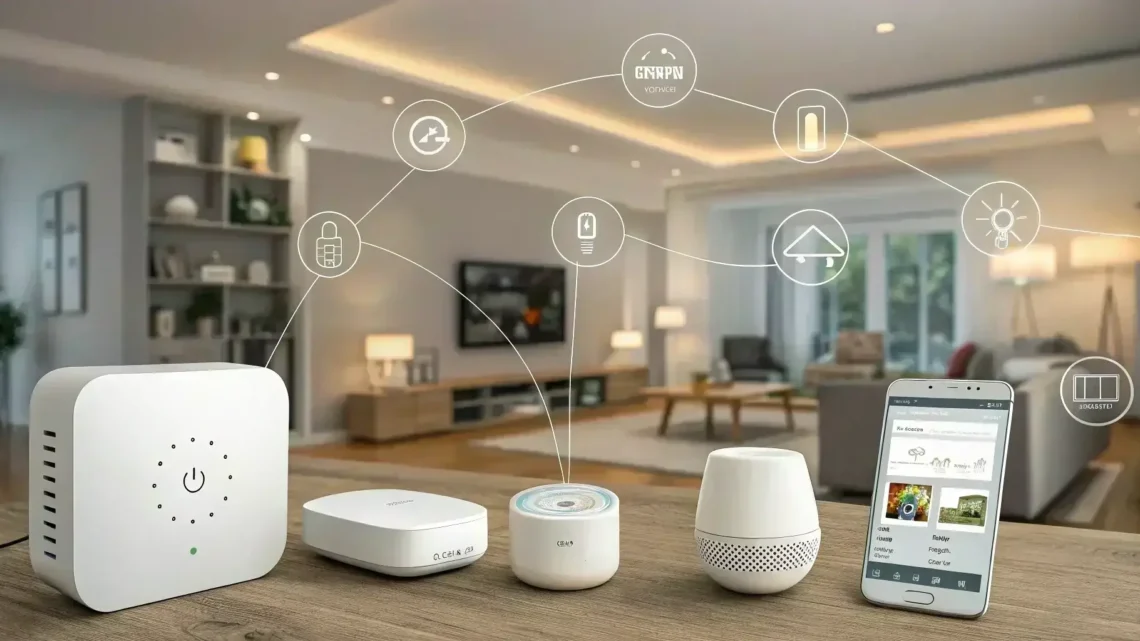
The Essential Smart Home Setup for Beginners (Under $300)
You don't need a big budget or a tech degree to build a home that thinks for itself. Here's everything you need to buy, in the exact order to buy it, and the mistakes that cost most beginners twice what they should spend.
The first smart home I ever built cost me close to $800, and most of it was a spectacular waste of money. I bought three different hubs that didn’t talk to each other, a set of bulbs that only worked with one of them, and a doorbell that required a subscription to do anything remotely useful. Six months later, I had a drawer full of orphaned gadgets and a mild resentment toward anything with a glowing LED.
That was over a decade ago. The smart home landscape in 2026 looks almost nothing like it does now. You can walk into this space today with $300, spend it wisely, and end up with a genuinely functional connected home that handles your lighting, security, energy, and daily routines without a single hair-pulling compatibility nightmare. But only if you know where to start.
Trending Now!!:
This guide is built on the lessons I learned the hard way, tested across dozens of homes and hundreds of devices. It’s not about getting every gadget. It’s about getting the right ones, in the right order, without setting your budget on fire on gear you’ll never use.
The One Decision That Changes Everything: Pick Your Ecosystem First
Before you buy anything, you need to pick a platform and stay loyal to it, at least at the beginning. The three major ecosystems you’ll hear about are Amazon Alexa, Google Home, and Apple HomeKit. They’re not interchangeable, and mixing them without a plan is how you end up with my drawer full of regrets.
Amazon Alexa is the most popular ecosystem for beginners because it works with the widest range of third-party devices, and Amazon Echo smart speakers are affordable and widely available. If you’re just getting started and don’t have a strong preference, Alexa is the safest bet. It’s cheap to enter, the compatible device library is enormous, and the setup is forgiving enough for people who’ve never done this before.
Google Home is excellent if your household uses Google’s services, such as Gmail, Google Calendar, and the like. It understands natural language better than most competitors, so you can phrase voice commands in a dozen different ways, and it’ll figure out what you mean.
Apple HomeKit is the most private of the three. HomeKit prioritizes privacy and security above all else, with data staying encrypted and processing locally when possible. The trade-off is that you’ll pay more for certified devices, and you’ll need an Apple device to set them up. If privacy is your north star, HomeKit earns its premium.
The smarter strategy in 2026, though, is to buy Matter-compatible devices whenever possible. Matter changes everything by acting as a universal translator, letting devices from different brands work seamlessly together so you no longer have to juggle multiple apps or worry about whether a new gadget will fit your setup. With Matter support, a bulb you buy today can work in an Alexa household now and move to Apple HomeKit if you switch phones in two years. It’s the closest thing to future-proofing that exists in consumer home technology right now.
Your $300 Blueprint: What to Buy and In What Order
Here’s the framework that consistently works for beginners. Don’t try to do everything at once. Start with three categories, get comfortable, then expand.
The Hub (Budget: $35 to $55)
Every smart home needs a brain. Your voice assistant, whether that’s an Amazon Echo Dot, a Google Nest Mini, or an Apple HomePod mini, serves as the central command point for everything else. A smart speaker serves as a central control hub for your smart home. It offers more smart home integration than a standard Bluetooth speaker and more affordability than a device like a smart display.
The Amazon Echo Dot is the right pick for most beginners. Both the Echo Dot and Google Nest Mini cost around $50 or less on sale. They let you control everything with voice commands, play music, set timers, and answer questions. Buy one, put it in your most-used room, typically the living room or kitchen, and learn to build habits around it before you add more.
One thing I tell everyone who’s setting this up for the first time: the speaker isn’t just a speaker. It’s the interface your whole family will use. Pick one that feels natural to talk to.
Smart Lighting (Budget: $60 to $90)
Smart lighting is the fastest way to feel like your home automation is actually working. Like smart plugs, smart light bulbs are among the cheapest ways to make your home a little smarter. They connect to your smartphone or hub over Wi-Fi and can change color temperature to how you like your home to feel.
For beginners, I recommend starting with TP-Link Kasa smart bulbs or Wyze color bulbs. TP-Link Kasa Smart Bulbs run roughly $10 to $15 per bulb. They’re not as feature-rich as Philips Hue, but perfectly functional for basic smart lighting and ideal for beginners testing the waters. Screw them in, download the app, connect to Wi-Fi, and you’re done in under ten minutes.
Here’s where most beginners go wrong with smart lighting. They install bulbs and immediately try to make everything automated from day one, with schedules, sunrise triggers, and color-shifting routines. Give yourself two weeks of manual control first. You’ll discover which lights you actually use, which rooms matter most to you, and where automation genuinely saves you effort versus just feeling clever.
One practical setup I swear by: a warm, dim light routine in the bedroom that turns on at 9 PM and gradually dims to near-off by 11 PM. It costs nothing beyond the bulb you already bought, and the impact on sleep quality is genuinely noticeable.
Smart Plugs (Budget: $30 to $40 for a 2-pack)
Smart plugs are possibly the most underrated purchase in all of home automation. Smart plugs are one of the best-kept secrets of smart home beginners.
They’re small adapters that plug into any standard wall outlet and give you Wi-Fi control over whatever is plugged into them, whether that’s a lamp, a fan, a coffee maker, or anything else. With a smart plug, you can turn devices on or off remotely, set schedules, and even monitor how much energy they’re consuming.
Brands such as Kasa, TP-Link, and Govee top the list for the best smart plugs. The Kasa Smart Plug Mini is available in a 4-pack for $37, and the Govee Smart Plug 15A is available in a 4-pack for $30.
I’ve used smart plugs to solve a genuinely embarrassing number of first-world problems. The coffee maker that my spouse always forgot to turn off. The floor lamp in the living room required bending behind the couch to reach the switch. The space heater we accidentally left on all day. Every one of these became a scheduled, voice-controlled, or app-controlled appliance for under $10.
Front Door Security (Budget: $50 to $80)
A video doorbell is the single security upgrade that gives beginners the most immediate psychological payoff. For under $100, you can get a 2K resolution video doorbell that provides a head-to-toe view of visitors and even includes a plug-in chime. It’s front-door security that practically pays for itself the first time it scares off a would-be porch pirate.
Ring, Eufy, Wyze, and Blink all offer solid entry-level doorbells in the $50-$80 range. Eufy deserves particular attention for privacy-conscious buyers because many of its models offer local storage, meaning your footage doesn’t automatically live in someone else’s cloud. Privacy-conscious buyers will find that Eufy and Aqara models offer local storage options or on-device processing, so footage isn’t constantly in the cloud.
One thing nobody tells you before you buy a video doorbell: check your existing doorbell wiring first. If your home has a wired doorbell, installation is a ten-minute job. If it doesn’t, you’ll want a battery-powered model, which works just as well but needs periodic recharging.
Where the $300 Actually Goes
Here’s what a real, functional smart home starter kit looks like when you add it all up:
- Amazon Echo Dot (5th Gen): $50
- TP-Link Kasa Smart Bulbs, 4-pack: $45
- Kasa Smart Plugs, 2-pack: $28
- Eufy Security Video Doorbell (battery): $80
- Optional: One additional smart plug or bulb for a second room: $15 to $25
Total: approximately $218 to $228, leaving you $70 to $80 in reserve for your first upgrade, whether that’s a smart lock, an additional camera, or your first smart thermostat.
The Smart Thermostat: Your First Major Upgrade After the Basics
Once you’ve lived with your starter setup for a month and it’s genuinely part of your routine, the smart thermostat is the next logical step. It’s not a day-one purchase for most beginners because it requires a bit more confidence and occasionally a compatible HVAC system, but the payoff is substantial.
A smart thermostat is one of the most impactful smart home ideas for both comfort and savings. These devices learn your schedule and preferences, automatically adjusting the temperature to keep you cozy and reduce waste. The Nest Thermostat can save around 10 to 12 percent on heating and 15 percent on cooling costs on average, meaning it often pays for itself in under two years.
The Google Nest Thermostat currently retails around $130 and is one of the cleanest installations in the category. The Ecobee SmartThermostat Essential runs similarly priced and is particularly good for Alexa households. Both are DIY-installable in under an hour if you’re comfortable turning off your HVAC breaker and matching four wires to a diagram.
The Mistakes I’ve Watched Beginners Make (So You Don’t Have To)
Buying everything at once. After helping hundreds of users start their smart home journeys, the repeated advice is to resist the urge to automate everything immediately. Start with three to five devices, learn the system, then expand. A home full of half-configured gadgets is worse than no smart home at all.
Ignoring the Wi-Fi situation. Smart homes demand robust Wi-Fi coverage. Homes over 1,500 square feet almost always need mesh networking to support multiple connected devices effectively. If your current router is more than four years old or your signal is inconsistent in certain rooms, every smart device you add will be unreliable. A mesh Wi-Fi system from Eero or TP-Link Deco in the $100 range is often the single most impactful upgrade you can make before adding smart devices.
Confusing subscription costs with the upfront price. Some smart home devices look cheap until you discover the useful features live behind a monthly paywall. Security cameras regularly require paid subscription plans for AI-enabled object detection, cloud video storage, and other advanced functionality. Some of the best security cameras are barely usable unless you pay $10 or more per month. Always check what the device does without a subscription before you buy.
Motion sensor lights that drive everyone insane. One of the most common and annoying beginner mistakes in smart home setups is the single-sensor motion trap. People install a basic passive infrared motion sensor in a living space and program the lights to turn on when someone walks in and shut off after a few minutes of inactivity.
A single basic sensor can’t tell the difference between a truly empty room and someone sitting still, so you’ll have to do that ridiculous arm-waving dance just to get the lights back on. Save motion-triggered lights for hallways, bathrooms, and pantries. For living rooms and bedrooms, use scheduled routines or voice commands instead.
Trusting geofencing alone for your smart lock. Trusting just one geolocation point for your home’s physical security is a huge mistake. GPS signals are really prone to environmental interference, which means your location signal can drift or jitter, potentially causing your door to unlock when you’re miles away, or lock up while you’re just taking the trash out. If you add a smart lock later, use multi-factor triggers: geofencing combined with your phone connecting to your home Wi-Fi network.
A Note on Security That Nobody Wants to Read But Everyone Should
Smart home devices are, by definition, computers on your home network. They need to be treated like computers. A few things that take twenty minutes to set up and protect you for years:
Use a separate Wi-Fi network for your smart home devices; most modern routers call this a guest or IoT network. Keep your phone and computers on the main network, and keep your smart plugs, cameras, and bulbs on a separate network. Segmenting networks with a dedicated VLAN for IoT devices isolates traffic and improves security. If a cheap camera gets compromised, it can’t reach your laptop.
Update your devices when updates are available. This sounds obvious, but it’s one of the most skipped habits in home automation. Firmware updates patch security vulnerabilities. Proper security setup takes 30 minutes but protects your smart home for years. Quarterly security audits to check for firmware updates, review connected device lists, and update passwords annually are strongly recommended.
Change the default passwords on everything. Every router, every app account, every hub. Use a password manager if you don’t already. It’s not paranoia at this point; it’s just basic hygiene for anyone with a connected home.
The Bigger Picture: What You’re Actually Building
A smart home at $300 isn’t really about the gadgets. It’s about reclaiming small amounts of friction from your day, the light switch you always forget to flip, the door you can’t remember locking, the heating that runs all day in an empty house. None of these feels like a big problem until you add them up across a year.
The category has matured enormously. Creating a comprehensive smart home setup is easier and more affordable than ever in 2026. With the global smart home market experiencing explosive growth and increasing competition among manufacturers, consumers now have access to high-quality automation technology at unprecedented prices.
The best advice I can give you after ten years in this space is to start with one genuine problem you want to solve. Not a gadget you want to own. A problem. The coffee maker you always leave on. The lights your kids never remember to turn off. The door you panic about every time you’re ten minutes down the highway. Find that problem, solve it well, and then ask yourself what’s next.
That’s how you build a smart home that actually makes your life better, one that earns its place instead of just taking up space in your Wi-Fi bandwidth.
Bottom line: A well-built smart home under $300 is not a compromise; it’s a starting point. Pick your ecosystem, buy your hub, add lights and plugs, secure your front door, and live with it for thirty days before you spend another dollar. By the time those thirty days are up, you’ll know exactly what to add next, and you’ll have the experience to add it right.
That knowledge, more than any gadget, is what separates a smart home that works from a drawer full of expensive paperweights.