What the Hallmarks of Aging Are and Which Ones Science Can Currently Intervene On
For decades, ageing was treated as background noise in medicine. Now, researchers have named it, mapped it, and in some cases, started reversing it.
For most of human history, ageing was treated as weather: something that happened to you, something you observed and endured, something beyond the reach of deliberate intervention.
That framing changed permanently in 2013, when a team led by Spanish biochemist Carlos López-Otín published a paper in the journal Cell that did something audacious.
Trending Now!!:
It is named ageing. Not as a vague, inevitable slide into decline but as a collection of specific, identifiable, and potentially controllable biological processes.
Nine cellular and molecular hallmarks of ageing were proposed by López-Otín and colleagues in that 2013 paper, comprising genomic instability, telomere attrition, epigenetic alterations, loss of proteostasis, deregulated nutrient-sensing, mitochondrial dysfunction, cellular senescence, stem cell exhaustion, and altered intercellular communication.
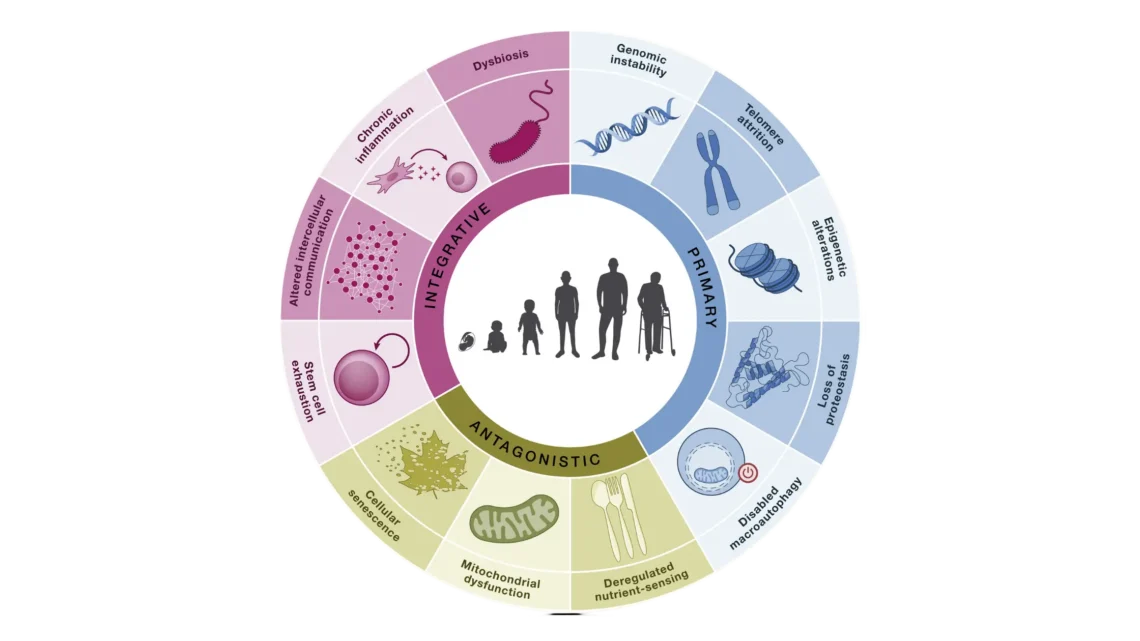
A decade of intense research confirmed those original nine. Then, in 2023, the team returned to the same journal with an updated framework. The revised list proposes twelve hallmarks of ageing: genomic instability, telomere attrition, epigenetic alterations, loss of proteostasis, disabled macroautophagy, deregulated nutrient-sensing, mitochondrial dysfunction, cellular senescence, stem cell exhaustion, altered intercellular communication, chronic inflammation, and dysbiosis.
These twelve hallmarks are not a simple list of complaints about old age. They are a formal scientific framework, and any process earns its place on the list by meeting three specific tests: the hallmark must manifest with age, its experimental accentuation must accelerate ageing, and therapeutic intervention on it must decelerate, stop, or reverse the ageing process. That third criterion, arguably the most exciting, is precisely where the most consequential science is now happening.




The Twelve Hallmarks, Explained Without the Textbook
The Primary Hallmarks: Where Damage Originates
Genomic Instability
Every time a cell divides, there is a small but real chance that its DNA gets copied imperfectly or damaged by environmental exposures, from ultraviolet radiation to oxidative byproducts of the cell’s own metabolism.
Over a lifetime, this damage accumulates. The machinery that repairs DNA becomes less efficient, and errors begin to pile up in ways that disrupt normal gene function, promote cancer, and erode the reliability of cellular behaviour.
This is genomic instability, and it is foundational to the entire hallmarks framework. Every other hallmark, in some sense, flows from it or interacts with it. The reason your cells do not simply degrade into chaos faster than they do is that repair systems, including proteins with names like PARP, SIRT1, and the mismatch repair complex, work continuously to correct the damage. When those systems slow down, the tide turns.
Telomere Attrition
Telomeres are the protective caps at the ends of chromosomes, and their behaviour is one of the more intuitive metaphors in all of biology. Each time a cell divides, the telomere shortens slightly, like a candle burning down. When it gets too short, the cell receives a signal to stop dividing permanently or to die. This mechanism evolved to protect against runaway cell division, but it comes with a cost: tissues that need regular renewal begin to struggle.
Daily vitamin D3 supplementation was found in recent research to prevent the shortening of telomeres, the protective caps on chromosome strands. The connection between telomere maintenance and interventions as simple as vitamin D is exactly the kind of finding that illustrates how this science is moving from laboratory curiosity to practical application.
Epigenetic Alterations
Your genome is the hardware. The epigenome is the software, a system of chemical tags and structural modifications that determines which genes get switched on and off in any given cell.
With age, that software becomes increasingly corrupted. Genes that should stay quiet wake up. Genes that should stay active go silent. The result is a kind of cellular identity crisis, where cells begin to behave in ways inconsistent with their original programming.
Steve Horvath at UCLA developed what became known as the epigenetic clock, a way of estimating biological age from the pattern of these chemical modifications.
The clock revealed something profound: biological age and chronological age can diverge meaningfully. A 50-year-old with the epigenetic profile of a 35-year-old is not the same as a 50-year-old whose biology matches the calendar.
Rapamycin, a potent inhibitor of the mTOR complex, has been shown to retard epigenetic ageing independently of its effects on replicative senescence, cellular proliferation, and differentiation. This was a pivotal finding because it provided a direct mechanistic link between a known pharmaceutical compound and the slowing of a measurable ageing clock.
Loss of Proteostasis
Proteins are the workers of the cell. They fold into specific shapes, carry out their assigned jobs, and eventually need to be recycled or replaced. Proteostasis refers to the maintenance of this system, and when it deteriorates, misfolded or aggregated proteins begin to accumulate.
This is directly implicated in neurodegenerative diseases like Alzheimer’s and Parkinson’s, where clumps of misfolded proteins become a defining pathological feature. The cell has chaperones and degradation pathways to handle this, but their capacity declines with age.
Disabled Macroautophagy
Autophagy, literally self-eating, is the cellular process by which damaged components get packaged and removed. Think of it as intracellular waste management. When autophagy is robust, cells stay cleaner and function better.
When it deteriorates, cellular debris accumulates, and inflammation follows. Disabled macroautophagy was one of the three new hallmarks added in the 2023 update, alongside chronic inflammation and dysbiosis, reflecting nearly a decade of new evidence about the mechanisms of ageing at microscopic, cellular, and system-wide levels.
The Antagonistic Hallmarks: Compensatory Responses That Eventually Make Things Worse
Deregulated Nutrient-Sensing
The body has evolved sophisticated systems for detecting whether food is plentiful or scarce and adjusting cellular behaviour accordingly. The major nutrient-sensing pathways include the insulin and IGF-1 signalling axis, the mTOR pathway, AMPK, and the sirtuin proteins.
When these systems work well, they coordinate growth, repair, and stress response beautifully. When they become dysregulated with age, they tend to remain stuck in a growth mode even when the cellular environment would benefit from repair and recycling.
Caloric restriction has been shown to extend lifespan in virtually every model organism it has been tested in, from yeast to primates. The leading explanation involves precisely this pathway: eating less activates nutrient-sensing machinery in ways that favour cellular maintenance over growth. Intermittent fasting operates on a similar principle.
Mitochondrial Dysfunction
Mitochondria produce the ATP that powers virtually everything a cell does. They also produce reactive oxygen species as a byproduct, and as those byproducts accumulate and mitochondria age, their efficiency drops. Dysfunctional mitochondria generate less energy while producing more cellular stress, and tissues with high energy demands, like the heart, brain, and muscle, feel this most acutely.
Urolithin A supplementation has shown promise in recent research as a nutritional approach to preserve cardiac function and support healthy ageing by targeting mitochondrial function, a core hallmark of ageing.
Cellular Senescence
Among all twelve hallmarks, cellular senescence may currently be the one generating the most clinical momentum. Senescent cells are cells that have stopped dividing, often in response to damage or stress. This arrest is initially protective: it prevents a damaged cell from replicating its errors.
But senescent cells do not simply sit quietly. They secrete a cocktail of inflammatory molecules collectively known as the senescence-associated secretory phenotype, or SASP, which damages neighbouring cells and contributes to the chronic, low-grade inflammation that characterizes aging tissue.
The problem compounds over time. Senescent cells accumulate faster than the immune system can clear them. By late middle age, their burden in tissues becomes measurable and consequential.
The Integrative Hallmarks: System-Wide Breakdowns
Stem Cell Exhaustion
Stem cells are the body’s reserve supply of fresh cells, available to replenish tissues that wear out. As ageing progresses, the number and functional capacity of stem cells in most tissues decline.
This is why wounds heal more slowly, why muscle recovery becomes harder, and why the immune system’s ability to generate new cells gradually diminishes. Stem cell exhaustion is both a consequence of the primary hallmarks and a contributor to the integrative decline they produce.
Altered Intercellular Communication
Cells do not operate in isolation. They send and receive signals continuously, including hormones, inflammatory molecules, and growth factors. As the body ages, this signalling becomes noisier and less reliable. Pro-inflammatory signals increase. Regenerative signals weaken.
The systemic environment shifts from one that supports tissue maintenance to one that accelerates deterioration.
Parabiosis experiments, in which the bloodstreams of old and young mice were connected, demonstrated this dramatically: old mice exposed to young blood showed improvements in tissue function, and young mice exposed to old blood showed signs of accelerated ageing.
Chronic Inflammation
Called inflammaging in scientific literature, this is the low-grade, persistent, sterile inflammation that builds through the lifespan and underpins nearly every major age-related disease, including cardiovascular disease, diabetes, Alzheimer’s, and cancer.
It is not the acute, purposeful inflammation that clears an infection. It is a dysregulated immune background noise that quietly destroys tissue over decades.
Interleukin-11 (IL-11), a pro-fibrotic and pro-inflammatory protein that increases with age and is linked to cellular senescence and a variety of age-related conditions, became the focus of significant research in 2024.
In mouse experiments, blocking IL-11 by either gene deletion or drug administration resulted in a median lifespan increase of more than 20% in both sexes, with improved biomarkers related to metabolism, frailty, and ageing.
Dysbiosis
The gut microbiome, the vast community of microorganisms that inhabit the digestive tract, shifts profoundly with age. Beneficial bacteria that produce anti-inflammatory compounds and support metabolic health tend to decline. Pathogenic or inflammatory species tend to increase.
This shift, called dysbiosis, feeds back into inflammation, nutrient absorption, immune function, and even brain health through the gut-brain axis. Its addition to the hallmarks framework in 2023 reflected growing evidence that the microbiome is not peripheral to ageing but central to it.
Where Science Can Actually Intervene Right Now
This is where the conversation typically becomes muddled by hype, and being honest about the current state of the evidence is important. Some hallmarks have genuine, clinically tested intervention pathways. Others remain compelling in animal models but unproven in humans. The distinction matters.
Cellular Senescence: The Most Clinically Advanced Target
The clearest translation from laboratory to clinic is happening in the space of cellular senescence. The drugs targeting it are called senolytics, and they work by selectively pushing senescent cells into apoptosis, essentially killing off the cells that refuse to die naturally.
In clinical trials of the senolytic combination of dasatinib and quercetin, the treatment reduced adipose tissue senescent cell burden within 11 days in patients with diabetic kidney disease, with decreases in cells expressing key senescence markers and reductions in circulating inflammatory signals including IL-1α, IL-6, and several matrix metalloproteinases.
Senolytic therapies have produced very impressive results in mice, and the combination of dasatinib and quercetin remains the only senolytic therapy demonstrated in clinical trials to clear senescent cells in humans as effectively as it does in animal models.
A 2025 study evaluated the feasibility, safety, and preliminary effects of dasatinib and quercetin in older adults at risk of Alzheimer’s disease, with participants taking 100 mg of dasatinib and 1,250 mg of quercetin for two days every two weeks over a 12-week period.
The regimen, intermittent rather than daily, reflects a strategy that has emerged as practical in this space: you do not need to take senolytics continuously because the mechanism operates on a hit-and-run principle. Kill a batch of senescent cells, stop, and let the body recover.
The caveats are real. Clinical research groups are still in the process of figuring out dosing and optimal use cases for first-generation small molecule senolytics. Dasatinib is a chemotherapy drug with a side-effect profile that demands careful medical supervision. No one should be self-prescribing this based on a podcast.
Nutrient-Sensing and mTOR: Real Data, Honest Uncertainty
Rapamycin, an mTOR inhibitor originally developed as an immunosuppressant for organ transplant patients, has extended lifespan in nearly every animal model in which it has been tested in. It has become one of the most debated compounds in longevity medicine precisely because the preclinical case for it is so strong.
The most important recent human evidence comes from the PEARL trial, published in April 2025, examining intermittent low-dose rapamycin in healthy adults. Results showed modest but measurable effects on some biomarkers, including lean mass improvements in women, alongside immune-function data suggesting that low-dose mTOR inhibition quiets chronic inflammation without fully suppressing the immune response.
However, an analysis of existing clinical evidence found that none of the trials directly demonstrated that rapamycin extends life or clearly slows the ageing process in humans, and researchers called urgently for larger, better-designed human trials before recommending it for off-label use.
Metformin has a longer and more reassuring clinical safety record. It has been used to treat type 2 diabetes for decades, and epidemiological data consistently showed that diabetic patients on metformin sometimes appeared to outlive non-diabetic patients not on the drug, which is a striking observation.
The TAME trial, a multicenter randomized placebo-controlled study, is currently evaluating whether metformin can delay the onset of age-related multimorbidity, with composite endpoints encompassing mortality, cardiovascular disease, cancer, and cognitive decline, making it the most advanced drug in terms of clinical translation for ageing itself.
NAD+ Metabolism: Promising but Still Finding Its Human Evidence
NAD+ is a coenzyme central to energy metabolism, DNA repair, and sirtuin activation. Its levels decline substantially with age.
A high-profile review in Cell Metabolism co-authored by prominent longevity researchers identified NAD+ precursors among the most promising compounds in human trials targeting the hallmarks of ageing, alongside metformin, GLP-1 receptor agonists, mTOR inhibitors, and senolytics.
Supplements like NMN (nicotinamide mononucleotide) and NR (nicotinamide riboside) are the delivery vehicles of choice. They reliably raise blood NAD+ levels. What remains less clear is whether raising those levels in the blood translates to meaningful cellular and tissue-level benefit in humans.
Preclinical studies have been broadly positive across metabolic, neuromuscular, vascular, and neurobehavioral domains, but human outcomes have been mixed, with the gap likely reflecting differences in model biology, intervention timing, dosing, and the complexity of human ageing.
Epigenetic Reprogramming: The Frontier With the Highest Ceiling
Perhaps the most electrifying area of current longevity research involves the idea that the epigenetic state of a cell can be deliberately reset toward a younger configuration.
The transient expression of Yamanaka transcription factors, known as OSKM, has produced evidence of partial epigenetic reprogramming with the reversal of ageing markers in animal models, though concerns regarding teratogenicity and oncogenic transformation limit near-term therapeutic applications in humans.
Several biotech companies, including Altos Labs and others backed by substantial investment capital, are working on how to achieve partial reprogramming safely.
The emphasis on partial is deliberate. Full cellular reprogramming generates induced pluripotent stem cells, which is useful in the lab but not what you want happening in a functioning adult tissue. The goal is to roll back the epigenetic clock enough to restore youthful gene expression patterns without erasing the cell’s identity and function.
Chronic Inflammation and the Microbiome: Lifestyle Interventions With Real Mechanistic Backing
Inflammaging and dysbiosis are the two hallmarks where lifestyle interventions have the most robust and reproducible impact.
Exercise, particularly resistance training combined with aerobic activity, reduces circulating inflammatory markers across multiple pathways. Dietary patterns rich in fiber, fermented foods, and polyphenols support beneficial microbiome composition. Sleep quality has a direct relationship with inflammatory regulation.
A 2025 study in Nature Medicine analyzing blood proteins from nearly 45,000 people found that individuals whose brain and immune system both tested as biologically young had 56% lower mortality risk over a 15-year period, with researchers attributing much of the longevity benefit to better control of chronic inflammation.
This is not an argument for supplements. It is an argument that the systemic inflammatory state is one of the most consequential and modifiable determinants of how fast you age.
The Hallmarks Are Not Independent
One thing that gets lost in popular coverage of this science is that the twelve hallmarks are deeply interconnected. Genomic instability drives epigenetic alterations.
Epigenetic dysregulation contributes to cellular senescence. Senescent cells worsen chronic inflammation through their SASP secretions. Chronic inflammation accelerates telomere shortening. Mitochondrial dysfunction feeds into nutrient-sensing dysregulation.
This interconnectedness is both a challenge and an opportunity. The challenge is that no single drug is going to address the full complexity of biological ageing. The opportunity is that interventions upstream can have cascading effects downstream.
Researchers have proposed combination strategies, such as intermittent senolytic treatment to clear accumulated senescent cells, followed by NAD+ precursor supplementation to optimize mitochondrial recovery, as a way of targeting multiple hallmarks in sequence.
GLP-1 receptor agonists, already widely used for metabolic conditions and weight management, have been argued in a 2025 Nature Biotechnology analysis to target the hallmarks of ageing at the genetic, epigenetic, protein, mitochondrial, cellular, extracellular, and systemic levels simultaneously, making them the closest thing to a true gerotherapeutic yet to emerge in human medicine.
No ageing drug has yet received FDA approval for ageing as an indication, but the clinical infrastructure is being built.
What This Means for Anyone Paying Attention
The practical takeaway from the hallmarks framework is not a shopping list of supplements. It is a shift in how ageing should be conceptualized, both by medicine and by the people ageing inside it.
The clearest interventions available today are not pharmaceutical at all. Regular vigorous exercise remains the most consistently effective intervention across multiple hallmarks simultaneously, touching mitochondrial function, inflammation, stem cell activation, and nutrient-sensing pathways.
Caloric moderation and dietary quality affect nutrient-sensing and microbiome composition. Sleep is a non-negotiable input for epigenetic maintenance and inflammatory control.
Beyond lifestyle, the clinical pipeline for direct anti-ageing interventions has genuinely matured. Senolytics are in human trials with real data.
Metformin is being formally tested as an ageing intervention in the TAME trial. NAD+ precursors are widely available, with human evidence that is at least encouraging, even if not yet definitive. Rapamycin is being used off-label by a growing number of physicians, with appropriate controversy and caution.
Researchers now suggest that a tipping point is approaching and that it will soon become clear which anti-ageing approaches are most effective, leading to their widespread clinical use for targeting the processes of ageing.
That is not science fiction. It is the logical endpoint of a research program that has already done something no generation before it managed: given ageing a name, a structure, and a target list.
What People Ask