Your Rights During a Police Stop in the United States: What the Law Actually Says
From traffic stops to immigration checks, the Constitution sets firm limits on what officers can do, but most protections depend on when and how they are invoked.
Most police encounters are shaped in the first ninety seconds, long before a lawyer, a judge, or a transcript enters the picture. What a driver says, where the hands rest, and whether a request to search gets a yes all determine what a court can consider later.
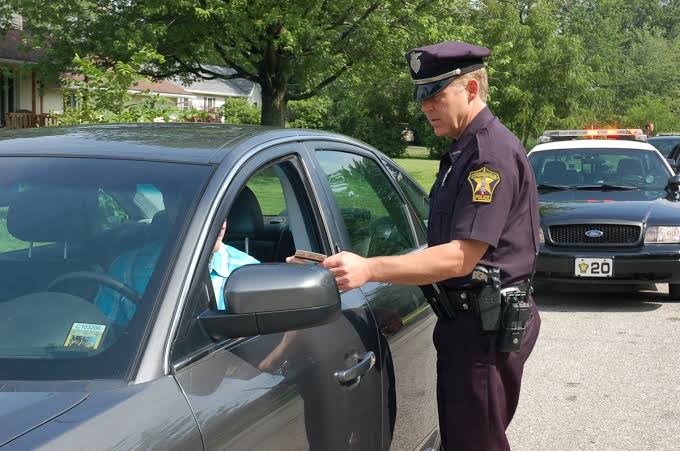
During a police stop, a person may stay silent, refuse consent to a search, and ask whether they are free to leave. Officers need reasonable suspicion to detain and probable cause to arrest. Disputes over an unlawful stop are settled afterward, in court, not on the roadside.
Trending Now!!:
That summary holds nationwide, but the details vary by state, by the type of stop, and increasingly by who is doing the stopping. Recent Supreme Court activity, including a January 2026 emergency-aid ruling and a contested September 2025 order on immigration stops, has shifted parts of the landscape.
Start With the Only Question That Matters: Is the Encounter Voluntary?
Constitutional law sorts police contact into three tiers, and every right a person holds depends on which tier applies.
The first tier is a consensual encounter. An officer can approach anyone, ask questions, and request identification without any suspicion at all. The test, drawn from Florida v. Bostick (1991), is whether a reasonable person would feel free to decline and walk away. Many people never realize they were in this tier, answer every question, and hand over bags or phones they had every right to keep.
The second tier is a detention, often called a Terry stop after Terry v. Ohio (1968). Here the officer needs reasonable suspicion, meaning specific facts suggesting criminal activity, not a hunch. A detention must be brief and limited to its purpose.




The third tier is an arrest, which requires probable cause. Searches of the person, the car, and sometimes the phone follow different rules at this stage.
The practical move is a calm, direct question: “Am I free to leave?” A yes ends the encounter. A no confirms a detention, and from that point the goal shifts from clearing things up to preserving the record.
Traffic Stops: Where Most Contact Happens
A traffic stop is legally a detention, and it begins on a lower threshold than most drivers assume. Under Whren v. United States (1996), an officer who observes any traffic violation may lawfully stop a car even if the real motive is something else. Under Heien v. North Carolina (2014), a stop can survive even when the officer misread the traffic law, provided the mistake was reasonable.
Once the car is stopped, officers hold considerable control. Pennsylvania v. Mimms (1977) allows officers to order the driver out of the vehicle, and Maryland v. Wilson (1997) extends that to passengers. In Brendlin v. California (2007), the Court recognized that passengers are also seized during a stop, which gives them standing to challenge it. Passengers frequently miss this point and assume the stop is not about them.
Time limits matter too. In Rodriguez v. United States (2015), the Court held that an officer cannot extend a completed traffic stop to wait for a drug-sniffing dog without independent reasonable suspicion. Checking a license, registration, insurance, and warrants is the legitimate mission. Everything beyond that needs its own justification.
The workable conduct is unglamorous. Pull over promptly, turn off the engine, keep both hands visible, and produce the license, registration, and insurance when asked. Declining a search should be stated once, plainly: “I do not consent to a search.” Repeating it, arguing it, or physically blocking the officer adds risk without adding protection. In most states, signing a citation acknowledges receipt, not guilt.
Pedestrian Stops, Identification, and the Frisk
On foot, the rules shift. Brown v. Texas (1979) held that a person cannot be punished for refusing to identify themselves absent reasonable suspicion. After Hiibel v. Sixth Judicial District Court (2004), however, states may require a detained person to state their name, and roughly two dozen have stop-and-identify statutes. Refusing in one of those states can itself be a crime, which turns a weak stop into a real charge.
A frisk is narrower than a search. Officers need a reasonable belief that the person is armed and dangerous, and the pat-down is limited to the outer clothing, looking for weapons. A frisk that turns into a pocket search for drugs exceeds its legal basis, a point defense attorneys raise often in suppression motions.
Silence, Miranda, and a Persistent Misconception
The most widespread myth about police stops involves Chief Justice Earl Warren’s landmark ruling in Miranda v. Arizona (1966). Warnings are required only for custodial interrogation, meaning questioning after a person is in custody. Officers do not have to read rights at a traffic stop or during a sidewalk conversation, and statements made before custody are generally admissible.
Silence itself requires care. In Salinas v. Texas (2013), a plurality held that a person questioned voluntarily and without custody who simply stayed quiet had not invoked the Fifth Amendment, so prosecutors could mention the silence at trial.
The safer approach is to say the words: “I am invoking my right to remain silent.” Under Berghuis v. Thompkins (2010), even a suspect who said almost nothing for hours was held not to have invoked. The same logic applies to counsel: Davis v. United States (1994) found that “Maybe I should talk to a lawyer” was too ambiguous. The request should be unmistakable: “I want a lawyer.”
An overlooked consequence follows from Vega v. Tekoh (2022). The Court held that a Miranda violation, standing alone, does not support a civil rights lawsuit against the officer. The remedy is suppression of the statement in the criminal case, which means the protection depends heavily on having competent counsel later.
Consent, Searches, and Phones
Consent is the quietest way to lose a Fourth Amendment right. Under Schneckloth v. Bustamonte (1973), officers do not have to tell anyone they may refuse. A casual “Sure, go ahead” or even a shrug can be treated as consent, and consent can be withdrawn, though evidence already found stays found. Refusing, without more, does not supply the suspicion officers lack.
Vehicles carry reduced privacy protection. Under the automobile exception, probable cause to believe a car contains evidence allows a warrantless search. After Arizona v. Gant (2009), a search of the car incident to arrest is limited to situations where the arrestee could reach the vehicle or where evidence of the offense of arrest might be inside. Dog sniffs during a lawful stop are not treated as searches under Illinois v. Caballes (2005), which is why the Rodriguez time limit carries so much weight.
Phones are different. Riley v. California (2014) requires a warrant to search a phone seized during an arrest. Courts remain divided on whether police can compel a fingerprint or face unlock, so declining to unlock a phone and asking for a lawyer is the common advice from criminal defense attorneys.
At the home, the January 14, 2026 decision in Case v. Montana confirmed that officers need only an objectively reasonable basis to believe someone inside needs emergency aid, not probable cause. The unanimous opinion, written by Justice Elena Kagan, also stressed that the entry cannot become a general search beyond what the emergency requires. For anyone answering the door during a welfare check, the practical lesson is that a refusal to open the door carries less weight than it did in many lower courts before the ruling.
Recording the Encounter
The Supreme Court has never squarely ruled on a right to record police, but a wide body of federal appellate authority supports it. The First Circuit’s Glik v. Cunniff (2011) is the most cited, and the Third, Fifth, Ninth, and Eleventh Circuits have recognized similar protection for filming officers performing public duties.
The right has boundaries: standing at a safe distance, not interfering, and complying with lawful orders to move. Officers who demand a phone be handed over generally need a warrant or a recognized exception, and demands to delete footage have no legal basis.
Immigration Stops Changed the Conversation in 2025
On September 8, 2025, in Noem v. Vasquez Perdomo, the Supreme Court granted a stay that allowed federal immigration agents in the Los Angeles area to continue stops that a district court had restricted. The order carried no majority explanation.
Justice Brett Kavanaugh wrote separately, stating that apparent ethnicity alone cannot supply reasonable suspicion but can be a relevant factor alongside others, such as location and type of work. Justice Sonia Sotomayor, joined by Justice Elena Kagan and Justice Ketanji Brown Jackson, dissented.
The order is an interim ruling, not a final decision on the merits, and a single concurrence does not bind lower courts. Even so, it has drawn scrutiny from legal scholars, who point to the 1975 case United States v. Brignoni-Ponce, where the Court rejected appearance alone as a basis for immigration stops.
The practical effect is uncertainty: the line between permissible and impermissible factors is being litigated in real time, and anyone detained in an immigration context benefits from asking whether they are free to go and requesting counsel early.
What the Data Show About Who Gets Stopped
Rights on paper and rights in practice diverge, and the clearest evidence comes from the Stanford Open Policing Project, which analyzed roughly 95 million traffic stops and published its findings in 2020.
The researchers found that Black drivers were stopped more often than white drivers relative to their share of the population, and that the disparity shrank after dark, when officers could less easily perceive a driver’s race. Black and Hispanic drivers were also searched more often, yet searches of those drivers turned up contraband at lower rates than searches of white drivers.
For readers, the implication is practical: the legal framework gives officers wide discretion at the start of a stop, and that discretion is where disparities concentrate. Documenting the stop through notes, recordings, and witness names strengthens any later complaint.
Force, Resistance, and the Aftermath
The roadside is the wrong place to contest legality. Most states have abolished any right to physically resist even an unlawful arrest, and resisting adds charges, such as resisting arrest or obstruction, that can outlast the original accusation. The legal challenge happens afterward through a motion to suppress, a complaint, or a civil suit.
On force, the Court’s May 2025 decision in Barnes v. Felix rejected the moment-of-threat doctrine used by some circuits, which looked only at the instant an officer fired. A unanimous Court, again in an opinion by Justice Elena Kagan, held that courts must weigh the totality of the circumstances, including events leading up to the use of force. The case arose from a 2016 Texas traffic stop that ended with the shooting of Ashtian Barnes. Civil recovery remains difficult because qualified immunity shields officers unless they violated clearly established law, but the ruling widened the evidence a plaintiff can rely on.
Anyone considering a claim should know that civil rights attorneys often work on contingency, and federal law allows prevailing plaintiffs to recover attorney’s fees under 42 U.S.C. § 1988. For criminal charges, the cost of hiring a criminal defense attorney varies widely by state and case type, and a public defender is available to defendants who cannot afford counsel. Organizations such as the ACLU and local legal aid offices publish state-specific know-your-rights guidance that reflects local statutes.
Five Mistakes That Cost People Their Case
The most common error is arguing legality at the scene. An officer cannot be talked out of a stop, and statements made while arguing become evidence. A related mistake is volunteering context, such as where the driver is coming from or whether they have had a drink, which supplies the reasonable suspicion the officer may lack.
Treating a polite request as a command is the third error. Phrases like “Would you mind if I took a look?” are requests, and a yes waives the warrant requirement. The fourth is assuming silence protects automatically. Under Salinas, it often does not unless invoked aloud. The fifth is waiting for a Miranda warning that, in most roadside encounters, is never legally required.
The Takeaway
The law gives people at a police stop three durable tools: the ability to decline consent, the ability to stay silent when it is invoked clearly, and the ability to challenge everything afterward. It does not give a right to resist, to talk an officer out of a stop, or to delay compliance with lawful orders.
State statutes, particularly on identification and recording, add variations that make local legal advice worth seeking. Anyone facing charges or a suspected rights violation should consult a licensed attorney in the relevant state, because the facts of a single stop often decide the outcome.
What People Ask