How I Found My Wedding Gown Inside an Okrika Bale in Enugu
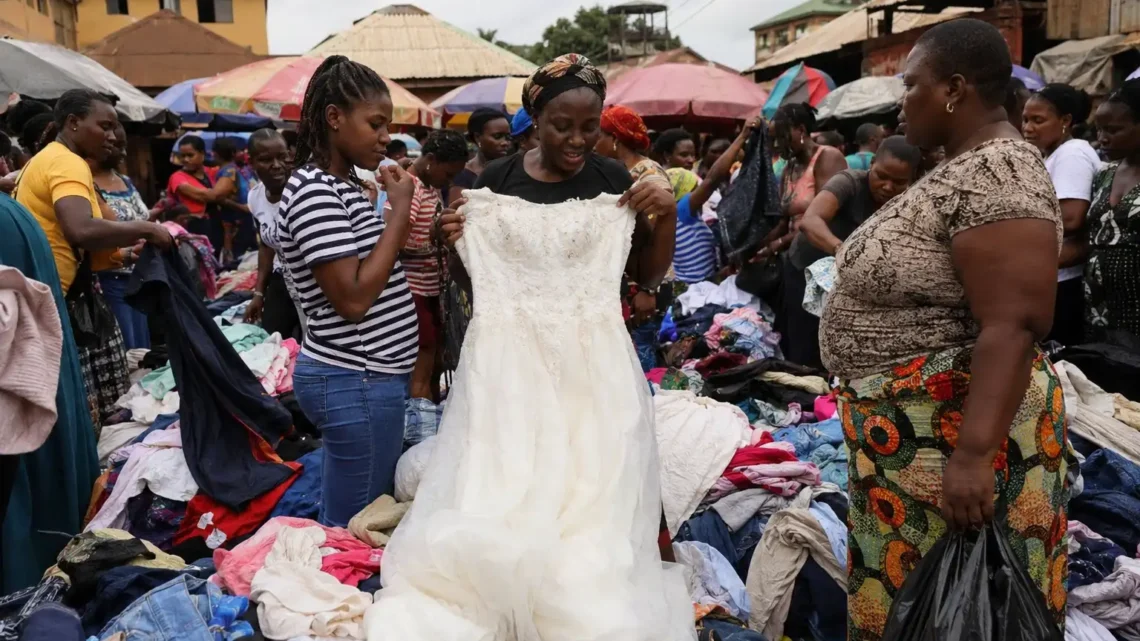
The bale ripped open at exactly noon, and Adaeze watched forty women surge toward it like it contained gold, not secondhand clothes shipped in from wherever these clothes came from before they landed in Ogbete Market.
Move small, move small, the seller, a heavyset woman everyone called “Mama Bale,” shouted, swinging a black nylon bag to clear space around her own stall. Nobody go collect anything if una no give me room.
Trending Now!!:
Adaeze had come to Ogbete that Saturday morning with exactly six thousand naira and a wedding four weeks away, her own wedding, the one she had been planning on a teacher’s salary while her fiancé, Obinna, sent what he could from Port Harcourt where he worked as a site supervisor.
The real gown, the one she wanted, cost a hundred and thirty thousand naira at a bridal shop on Okpara Avenue, a number that made her chest tight every time she thought about it.
Her cousin Chiamaka had dragged her to the bale opening with a theory. Enugu bales get better things than Lagos ones, she insisted, elbowing through the crowd. Because the ones wey dey come here, na from the container wey nobody don touch. Na so my sister find her sister’s asoebi last year, brand new, tag still dey inside.
Adaeze doubted it, but four weeks to a wedding does strange things to a person’s faith in secondhand miracles.




The women dug through the pile with a speed that looked violent from the outside, hands flying, elbows out, someone screaming when she found a leather jacket, another woman cursing when her prize got snatched from under her fingers by a girl half her age.
Adaeze stood at the edge for a full minute, overwhelmed, before Chiamaka yanked her sleeve and pulled her in.
Dig, dig, no fear them, Chiamaka shouted over the noise. Na survival of the fittest here o, this one no be Sunday school.
Something white caught Adaeze’s eye near the bottom of the pile, half buried under a mountain of jeans and a single lonely snow boot that had no business being in a Nigerian market. She pulled at it and felt lace, real lace, heavier than the polyester everything else in the pile was made of.
Ah ah, she said, out loud, to no one.
She dragged it free and the crowd around her paused for half a second, the universal instinct of market women recognising treasure.
It was a wedding gown, a proper one, ivory with beadwork across the bodice, slightly yellowed at the hem, a small tear at the shoulder seam, but whole, and unmistakably beautiful even crumpled and smelling of the inside of a shipping container.
Mama Bale, how much be this one, Adaeze asked, holding it up, her voice shaking slightly.
Mama Bale squinted at it from across the stall, sizing up both the gown and Adaeze’s obvious desperation in one glance, the way market sellers can read a customer’s soul in under three seconds.
That one na five thousand, she said.
Five thousand for wedding gown? Chiamaka repeated, scandalised on her cousin’s behalf, already moving into negotiation mode. Aunty, see the tear for the shoulder. Make we call am three.
They settled at thirty five hundred naira, which felt to Adaeze like theft in her favour, the kind of theft the universe occasionally allows a person going through something hard.
She took it to Mama Ngozi, a seamstress on Chime Avenue who had been altering clothes in the same narrow shop since before Adaeze was born, walls covered in fading photographs of past brides who had trusted her with their big day. Mama Ngozi held the gown up to the single window in her shop, turning it in the light, running her fingers along the beadwork like she was reading braille.
This one na quality o, she muttered. See the way them sew the beads, na by hand, not machine. This dress don travel far to reach Ogbete.
Can you fix am, Adaeze asked, holding her breath.
Fix am? Mama Ngozi laughed, a short dry sound. My dear, I go make am fit you like say na for you they sew am from the beginning. Come back Friday.
The days between felt longer than they should have. Adaeze told Obinna about the gown over a phone call, expecting him to laugh at the idea of his bride walking down the aisle in someone’s discarded Ogbete find, but instead he went quiet for a moment.
You know say that dress get story, he said finally. Somebody wear that dress one day, dance for her own wedding, maybe cry, maybe laugh. Now na you go carry the story continue. I like that one sha.
You dey too sentimental for site supervisor, Adaeze teased, but something in his words settled a worry she hadn’t fully admitted to herself, the fear that a bale gown meant a smaller love, a lesser beginning.
Friday came, and Mama Ngozi’s shop smelled of chalk and fresh thread when Adaeze walked in. The gown hung on a wire frame near the window, transformed, the tear invisible, the hem taken up to fall exactly at her ankle, the bodice nipped in at the waist like it had been drafted for her body specifically and not for some stranger thousands of kilometres away who had worn it first.
Adaeze stood in front of the small cracked mirror in the corner and didn’t recognise herself for a second, not out of vanity, but out of the strange feeling of holding a small piece of luck in her own two hands after weeks of counting naira notes and postponing small joys.
You go make other bride jealous, Mama Ngozi said, adjusting the shoulder one last time, satisfied. Nobody go know say na bale gown, unless you yourself yarn the gist.
Adaeze did yarn the gist, at every chance she got, at the wedding itself when aunties asked where she sourced such an “expensive looking” dress, at family gatherings for months afterward, the story growing a little each time in the retelling, the crowd at Ogbete growing a little rowdier, the tear in the shoulder growing a little more dramatic.
Some brides spend a hundred and thirty thousand naira and get exactly what they paid for. Adaeze spent thirty five hundred naira, one Saturday afternoon, and one cousin willing to elbow a market crowd on her behalf, and got a story she would tell for the rest of her life, one that started, of all places, at the bottom of a torn open bale in Ogbete Market.