
How One Beach Photo Exposed My Aunty’s Online “Soldier Boyfriend”
I was folding Aunty Ngozi’s wrapper on the balcony in Surulere when her phone rang for the fourth time that morning, and I almost didn’t pick it up for her, because by then I already knew something was wrong with the way she’d been smiling at that phone since Thursday.
Leave it, leave it, I’ll answer it myself, she said, snatching it from the plastic table with a speed that surprised me for a woman who complains about her knees every single day.
Trending Now!!:
She walked to the corner of the balcony, lowered her voice, and started giggling like a teenager who’d just been asked to prom.
I stood there holding a wet wrapper, watching my sixty-one-year-old aunty blush over a phone call in the middle of Lagos heat, generator humming somewhere down the street, danfo conductor screaming Ojuelegba, Ojuelegba from the road below.
His name, she told me later that evening over rice and stew, was Colonel Richard Webb, a US Army engineer stationed in Kabul, widower, one daughter in boarding school in Texas, and he had messaged her on Facebook two weeks earlier because, in his words, your smile reminded me of my late wife.
I put my spoon down. Aunty, you don’t find this strange? A colonel, in the army, texting you at 2pm on a Tuesday when he’s supposed to be at war?


He’s an engineer, she said, like that explained everything. He fixes bridges, not fighting front line.
I let it go that night because arguing with Aunty Ngozi when she’s decided something is like arguing with the sun about what time it wants to set.
But by the following week the whole compound knew about Colonel Richard. She’d shown the picture to Mama Ejiro downstairs, a broad-shouldered white man in fatigues standing in front of what was supposedly a military base, and Mama Ejiro, God bless her honest soul, had laughed so hard she nearly dropped her bucket of pepper.
That’s not one man, Mama Ejiro said. That’s every man. I’ve seen that same photo three times for three different “colonels” since 2019.
Aunty Ngozi didn’t want to hear it. She said we were all jealous, that not every man in Lagos could treat a woman the way this stranger from Kabul was treating her, with good morning texts, voice notes that called her my African queen, and long paragraphs about how lonely military life could be.
She told me, very seriously, that he had asked her to keep their relationship private for now because army rules didn’t allow personal relationships to be public while he was still active duty. I remember thinking, this man has an answer for everything, and that alone should have told her something.
The real trouble started on a Sunday after church, when Colonel Richard told her his daughter’s school fees were due and the Army’s payment system was delayed because of a technical issue with overseas transfers. He needed eight hundred thousand naira, just to hold things over, and he would pay her back double the moment his allowance cleared. Aunty Ngozi came straight to my room that evening holding her passbook like evidence in court.
I need you to help me withdraw money from the bank tomorrow, she said. Richard is in trouble.
I sat up so fast I nearly hit my head on the wall fan. Aunty, please. Please. This is a scam. This man does not exist. Nobody’s daughter’s school is billing a colonel through Western Union.
You people don’t understand love, she said, her voice shaking, and I realized this wasn’t stubbornness anymore, this was a woman who had genuinely convinced herself she’d found something at sixty-one that life hadn’t given her in decades, and none of us, not me, not Mama Ejiro, not her own children abroad who’d been calling to beg her, could talk her out of it, because she didn’t want to be talked out of it. She wanted it to be true so badly that the truth had stopped mattering.
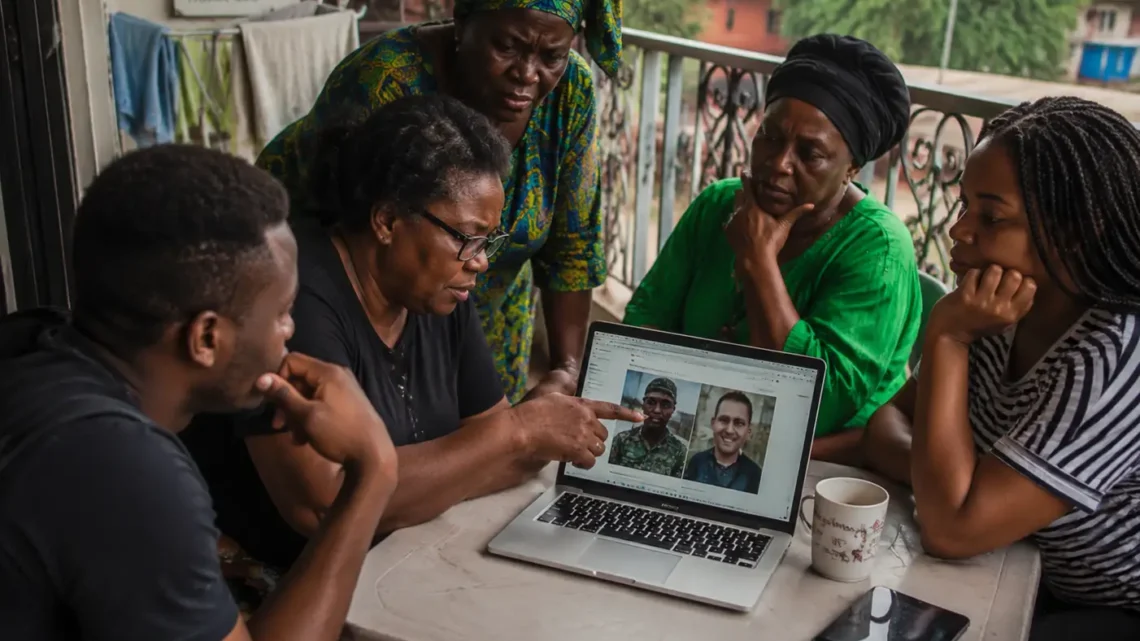
What saved Aunty Ngozi, in the end, wasn’t me or Mama Ejiro or anybody’s warning. It was her own eyes. Three days later, sitting in the parlour with her reading glasses pushed up her nose, she was scrolling through Colonel Richard’s photos for the hundredth time when she stopped on one picture, a beach photo he’d sent claiming it was Kabul leave, and something in it looked familiar. She called me over. This place, she said, pointing at a resort sign faintly visible in the corner. I know this hotel. This is Zanzibar. My daughter went there for her honeymoon.
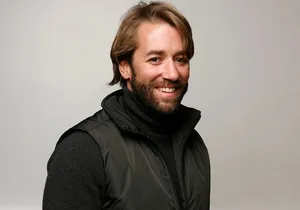
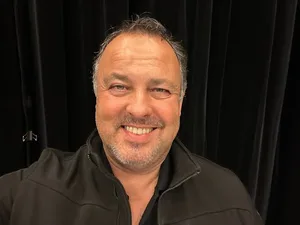
We spent the next hour on my laptop doing something we probably should have done from day one, a reverse image search. The photo of Colonel Richard Webb belonged to a Danish photographer named Lars Pedersen who ran a travel blog and had absolutely never set foot in Kabul in his life. Aunty Ngozi went quiet for a long time, staring at the screen, at this stranger’s real face smiling back at her from a blog post about diving in Zanzibar, nothing like the fatigues and the bridges and the lonely widower story she’d built a small corner of her heart around.
She didn’t cry, which surprised me. She just closed the laptop slowly, the way you close a door on a room you’re not ready to go back into, and said, He even remembered to ask about my blood pressure medication every morning. Every single morning.
And somehow that detail, more than the money she almost lost, seemed to hurt her the most, because it meant somebody, somewhere, probably running six other conversations just like hers, had studied her closely enough to know exactly which strings to pull, and had pulled them for sport.
Aunty Ngozi blocked the number that night. She didn’t report it, didn’t tell her children the full story, just quietly deleted two weeks of voice notes and went back to her usual self by the following Sunday, sharp-tongued, generous with her pepper soup, teasing me about when I’ll bring a husband home.
But something in her had gotten more careful. When her phone rings now from an unknown number, she hands it to me first before she even says hello, and watches my face for a verdict.
Last week she told me, half laughing, half not, that she’d read online about a woman in Ibadan who lost eleven million naira to a fake oil rig engineer, and shook her head and said, Some of us are lucky it stopped at heartbreak.
I think about that a lot, how the real cost of these scams was never really the money, it was that for two weeks, a lonely woman in Surulere had somebody to say good morning to, and losing that hurt worse than any bank alert ever could.