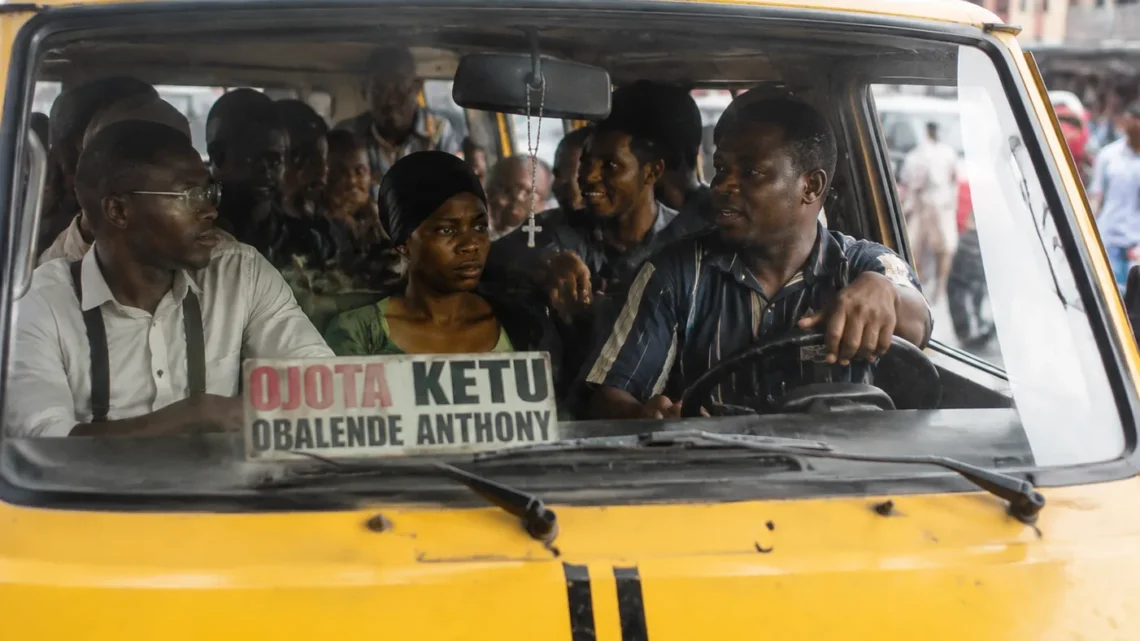
How One Danfo Ride Roasted My Love Life From Obalende to Ojota
Lagos traffic has a way of turning strangers into family, and by the time I got off that yellow bus at Ojota that Thursday evening, I had acquired a life coach, a comedian, and almost a fight, all inside one danfo ride from Obalende.
It started innocently enough. I boarded at Obalende, squeezed myself between a woman carrying a sack of onions and a man in a security guard uniform who smelled faintly of last night’s suya.
Trending Now!!:
The conductor, a wiry boy who couldn’t have been older than seventeen, was hanging half his body out of the bus, screaming “Ojota, Ojota, Ketu, straight!” like his life depended on filling those last two seats.
Our driver, a stocky man with a rosary swinging from the rearview mirror and a Bluetooth speaker taped to the dashboard, introduced himself to nobody in particular as Chief. Not because anyone asked. He simply announced it the way kings announce their arrival.
“My people call me Chief,” he said, easing the bus into the chaos of Obalende roundabout, “because I drive like royalty and I dash better advice than your pastor.”
Nobody responded. In Lagos, you learn that responding to a danfo driver’s opening statement is how you end up in a two-hour conversation you never signed up for. But Chief did not need our permission to continue.

By the time we hit Third Mainland Bridge, he was mid-sermon about a woman he called “my ex-madam,” the italicized nickname he’d apparently given to a former girlfriend who, according to him, “chopped my money and turned Yoruba demon” the moment he stopped buying her Brazilian hair every month. The whole bus was quiet, but you could feel everyone leaning in, the way people lean toward gossip even when they pretend to be minding their business.
“You,” Chief said suddenly, glancing at me through the rearview mirror, “the one wearing glasses like professor. You get girlfriend?”
I froze. Onion woman beside me actually turned to look at me, waiting for my answer like it was a live television interview.
“I, uh, I’m focused on my hustle right now,” I mumbled, the classic Lagos non-answer.
“Ehen! That’s the problem with you small boys,” Chief said, slapping the steering wheel for emphasis, nearly swerving into a motorcycle whose rider screamed something about his mother that I won’t repeat. “You dey use hustle as excuse. Me, I get five children, I still find time to love. Balance, my friend, balance!”
The conductor, hanging out the door as usual, laughed so hard he nearly fell off the bus, catching himself with one hand while still shouting “Ketu, Ketu, one chance remaining!” to nobody, because the bus was already full.
Somewhere around Anthony, a woman near the front tried to get off without paying the extra fifty naira Chief had added for what he called “bridge tax,” a fee that exists nowhere in Lagos State Transport regulation and lives purely in the imagination of danfo drivers citywide. The argument that followed was loud, theatrical, and honestly better than most Nollywood scripts I’ve watched on Netflix.
“Madam, abeg drop the fifty naira, na so so wahala you dey give me since Obalende,” Chief said, half turning in his seat while still driving, a skill I will never understand how danfo drivers master.
“Fifty naira for where? You never even service this your bus since when Muhammed Buhari be president,” the woman fired back, and the entire bus erupted. Even the security guard beside me, who had been silent since Obalende, let out a laugh that shook his belly.
Chief was not amused, but he was also not one to lose an argument in front of an audience. He killed the engine, right there in moving traffic, easing to the side as horns blared behind us like an orchestra of rage.
“If you no pay, you go trek reach Ketu,” he announced, arms folded, engine off, as if he had all day. Behind us, a man in a Sienna started shouting something about “one useless danfo driver holding up traffic for the whole of Lagos,” and I swear Chief turned around, looked the man dead in his side mirror, and said, calm as anything, “Oga, patience is a fruit, go and plant am.”
That line alone should be printed on a T-shirt.
The woman eventually paid, muttering under her breath about “highway robbery with a steering wheel,” and the bus rumbled back to life like nothing had happened. Chief, satisfied, went right back to his earlier topic, now lecturing the entire bus on why “love wey no get money attached na disaster waiting to happen,” a philosophy nobody asked for but everybody, myself included, was now quietly nodding along to.
By Maryland, he had somehow pivoted from love advice to football, arguing passionately with the conductor about whether Chelsea’s manager “sabi ball” or was just “lucky small boy dey shout for touchline.” The conductor, still hanging half out the door, still collecting fares, still shouting bus stops, argued back with the confidence of a man who had clearly never watched a full ninety minutes of football in his life.
When we finally hit Ojota and I stood to get down, squeezing past onion woman who had somehow fallen asleep sitting upright, Chief caught my eye one last time in the mirror.
“Professor,” he called out, “no forget wetin I tell you. Balance. Hustle for money, but no forget to hustle for love too. Both dey important.”
I laughed, thanked him, and stepped down into the noise of Ojota, danfo conductors shouting destinations like auctioneers, okada riders weaving through stalled traffic, the smell of roasted corn drifting from a woman’s stall nearby. It struck me, walking away, that I had just received more relationship advice in a forty-minute bus ride than I had gotten from three years of actual therapy, and I hadn’t paid a single naira extra for it.
Some of the best wisdom in this city doesn’t come from books or podcasts. Sometimes it comes from a man named Chief, driving a danfo with no functioning air conditioning, charging you fifty naira “bridge tax” while lecturing you about balance, love, and Chelsea’s tactical formation, all before your stop even arrives.