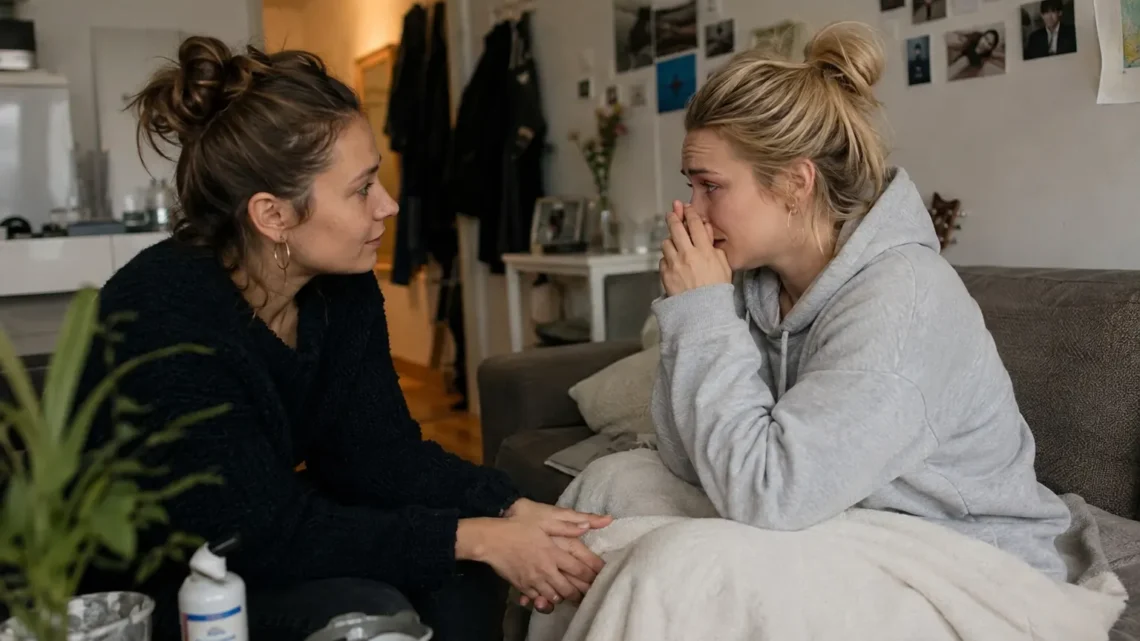
She Said I Was the Only Person She Could Trust. Then She Asked Me to Do the One Thing I Could Not
Please do not let my mother know I am in Helsinki.
That was the first message Elina had sent me in eight years.
Trending Now!!:
I was standing outside Alepa on Hämeentie with a paper bag of groceries cutting into my fingers when I read it. I had rye bread, milk, tomatoes, a frozen pizza I was already regretting buying, and a bottle of laundry detergent balanced against my hip.
I stared at the message.
Then another one arrived.
I am serious.




I laughed out loud, right there on the pavement.
A man walking past me glanced over as if I had lost my mind.
Elina and I had been best friends at nineteen, back when we both thought twenty-five was old and believed moving to another country would automatically turn us into interesting people.
We met at university in Helsinki. She lived in Kallio with two roommates and a dying houseplant. I lived with my older sister in Pasila and spent most evenings pretending I was studying while watching whatever was trending on YouTube.
We had the kind of friendship that made other people tired.
We sent each other twenty messages about nothing. We knew which songs the other person skipped. We could sit in silence on a tram for twenty minutes and still somehow have a full conversation.
Then Elina left.
First it was Stockholm.
Then Copenhagen.
Then Berlin.
Each move came with a new apartment, a new job, new photos, new people standing beside her in places I had never seen.
Eventually the messages became shorter.
Then they stopped.
I told myself that was normal.
People grow up.
People move.
People get busy.
I had said all those things so many times that I almost believed them.
Now she was back.
I called her.
She answered on the second ring.
Where are you?
Helsinki.
Obviously.
I mean where in Helsinki?
She paused.
Kamppi.
I looked at the groceries in my hands.
Stay there.
Are you coming?
No. I am sending a taxi.
She laughed.
It was the same laugh.
That annoyed me more than it should have.
Twenty minutes later, I found her sitting outside a café near Kamppi shopping centre with a black coat, white sneakers, and a suitcase that looked more expensive than everything I owned.
For a second, neither of us moved.
Then Elina stood up.
You look exactly the same.
You look expensive.
She laughed again.
That is your way of saying hello?
I have been out of practice.
She hugged me.
I hugged her back.
It felt strange.
Not bad.
Just strange.
Like putting on an old jacket and finding something in the pocket you had forgotten existed.
We walked toward the metro.
She told me she had been in Berlin for three years. She had worked in marketing, quit, started freelancing, fallen in love, moved in with someone, fallen out of love, moved out, and eventually realized she was exhausted.
She said all of this while checking her phone every thirty seconds.
I did not ask about her mother.
She did.
She still lives in Espoo, I said.
I know.
You have not called her?
Elina looked at me.
Not properly.
That was when I understood the message.
Her mother did not know she was back.
We stopped near the escalators.
What happened? I asked.
Elina looked down at her shoes.
I need you to lie for me.
I laughed because I thought she was joking.
She was not.
Her mother believed Elina was still in Berlin. She thought the reason Elina had not visited was because work was too busy and money was tight.
The truth was less impressive.
Elina had left Berlin after a breakup that had gone badly. She had lost most of her savings paying rent, had borrowed money from two friends, and had spent months doing freelance work that barely covered food.
Now she was staying in a tiny Airbnb near Sörnäinen.
She had not told her mother because she could not face the questions.
She will think I failed, Elina said.
Did you?
She looked at me.
I regretted asking immediately.
I do not know, she said.
We went for coffee.
At the table, she showed me photographs from Berlin. Rooftop parties. Museums. Restaurants. A weekend in Lisbon. A birthday dinner with six people smiling around a cake.
I recognized the woman in the photographs.
I did not recognize the life.
Social media makes everything look expensive, I said.
That is because most of it was.
I smiled.
Then she said something that changed the conversation.
I borrowed money from my mother.
I stopped stirring my coffee.
How much?
She told me.
It was not a fortune.
It was enough to hurt.
She had told her mother she needed the money for a professional course. Instead, she had used it to cover rent and debts.
She will never forgive me.
Maybe she will.
You do not know her.
That was true.
Her mother had always been kind to me, but I had never lived inside that family.
We walked along Töölönlahti that evening. The air was cold enough to make our fingers hurt, and the water looked dark beneath the lights.
Elina asked about my life.
I told her about my job, my apartment, my boring routines.
She smiled.
You stayed.
Someone had to.
She pushed my shoulder.
Still sarcastic.
Still avoiding serious questions.
She became quiet.
Then she asked me to do it.
Not the big lie.
A small one.
She wanted me to tell her mother that she had been staying with me.
Only for a few days.
Only until she found work.
Only until she figured things out.
I said yes.
I do not know why.
Maybe because she was my best friend.
Maybe because after eight years, I wanted to feel like I still mattered to her.
Maybe because saying no would have forced us to admit that our friendship had become something neither of us understood.
The next morning, her mother called me.
My stomach dropped when I saw the number.
Hello?
Her voice was warm.
She asked how I was.
Then she asked if Elina was really staying with me.
I looked across my apartment.
Elina was asleep on my sofa, wrapped in a blanket, her suitcase beside her.
I could have lied.
Instead, I said I was sorry.
There was a long silence.
Then her mother asked one question.
Is she safe?
I looked at Elina.
Yes.
Her mother breathed out.
Then I know where she is.
I hung up.
Elina woke up ten minutes later.
What did you say?
I told her.
She stared at me.
For a few seconds, neither of us spoke.
Then she picked up her phone.
There were seven missed calls from her mother.
Elina started crying.
Not loudly.
Just enough that tears kept falling while she tried to wipe them away.
You ruined everything, she said.
I nodded.
Maybe.
She looked angry.
Then tired.
Then relieved.
That afternoon, we took the tram to Pasila because she needed to collect a few things from a storage unit. We talked about nothing on the way there.
A dog barked at a cyclist.
Someone was eating a cinnamon bun on the tram.
A teenager was watching TikTok without headphones and pretending nobody could hear it.
Helsinki continued being Helsinki.
Nobody knew that our entire friendship was being rebuilt between one tram stop and the next.
When we got off, Elina looked at me.
Are you still angry with me?
Yes.
Why?
I thought about it.
Because you disappeared.
She nodded.
I know.
You could have called.
I was ashamed.
You could have called anyway.
She looked toward the station.
Would you have answered?
That question stayed with me.
Because I did not know.
Maybe I would have.
Maybe I would have been too proud.
Maybe she knew me better than I knew myself.
We spent the rest of the afternoon moving boxes.
Old photographs.
Winter clothes.
A broken lamp.
A box of university notes neither of us could believe we had kept.
At the bottom was a printed photograph of the two of us from 2018.
We were sitting on the steps outside the Helsinki Cathedral, both wearing coats that looked terrible.
I was holding a cheap takeaway coffee.
Elina was making a face at the camera.
She took the photograph from my hand.
We were idiots.
We still are.
She smiled.
Maybe.
Her mother called again that evening.
This time Elina answered.
I did not listen.
I went into the kitchen and started washing dishes that were already clean.
Ten minutes later, she came in.
Her eyes were red.
She wants me to come home.
I dried my hands.
Are you going?
I do not know.
I nodded.
There was nothing clever to say.
Some friendships survive betrayal.
Some survive distance.
Some survive lies.
The harder question is whether they survive the truth.
That night, Elina slept on my sofa again.
At 6:12 the next morning, I woke to the sound of the front door closing.
She was gone.
There was no note.
Only a message on my phone.
Thank you for telling the truth when I asked you to lie.
I read it twice.
Then I looked at the empty sofa.
I still do not know whether I saved our friendship that day or finally ended it.
Sometimes telling the truth does not bring people closer. Sometimes it only tells you who was still willing to come back.