I Drove the Same Cheating Wife Every Wednesday for Two Months
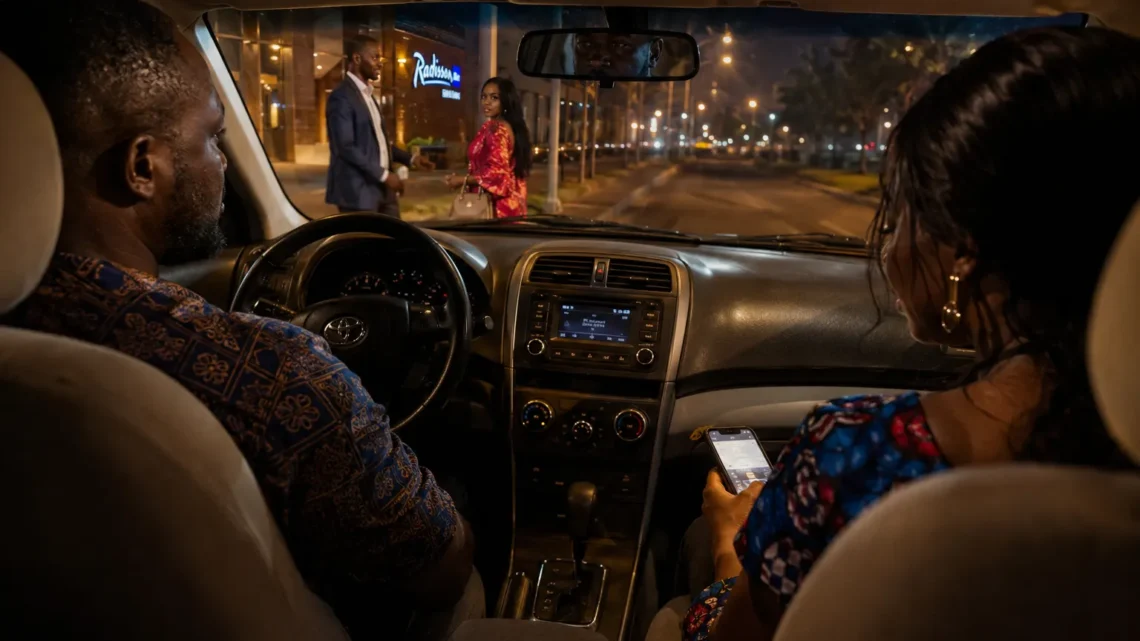
The app pinged at 9:47pm, a pickup from a service apartment on Ozumba Mbadiwe, drop-off in Ikoyi. I remember the time because I always remember the time on a Wednesday; that’s my slowest night, and any ride past nine feels like a small mercy.
Her name on the app was Ifeoma. She came out in heels; she was still adjusting, hair slightly flattened on one side like she’d been lying on a pillow that wasn’t hers, and she got into the back seat smelling of a cologne that wasn’t a woman’s cologne, something woody and expensive, clinging to her wrapper the way smoke clings to curtains after a party.
Trending Now!!:
Good evening, she said, breathless, already scrolling her phone. Please just go straight, don’t use the app’s route, there’s a diversion near Falomo.
I am Chuka. I have been driving for the app for three years, long enough to know Lagos by its moods, not its street names. I know which junctions smell like fried plantain at midnight, which ones smell like exhaust and frustration by 6pm. I know, too, the particular tiredness of a woman who has just left somewhere she wasn’t supposed to be.
I didn’t say anything. That’s the first rule of this job. You are a moving room with no ears.
But Ifeoma was a Wednesday regular by the second month. Always the same pickup point, always a different time, always Ikoyi as the drop-off, a big compound off Bourdillon Road with dogs that barked from behind a gate that never fully opened. I started recognizing her voice on the app notification before I even read the name.




The third time, she took a call in the back seat. She thought I wasn’t listening. Nobody ever thinks the driver is listening.
Baby, I’m almost home, she said, soft, syrupy, the voice you use for a lover, not a husband. No, traffic is much, you know how Third Mainland can be this time. There was no traffic. I had just driven her over an empty bridge, the lagoon flat and black on both sides, the city’s lights scattered like something spilled and never cleaned up.
I am not a man who judges quickly. Lagos will teach you that everybody is carrying something, some secret they are managing between traffic and rent and family WhatsApp groups asking for money. But there was a particular way she said baby into that phone, and a particular way her shoulders dropped afterward, staring out the window at nothing, that made me understand I had become something more than a driver. I had become a witness.
By the fifth Wednesday, she started talking to me instead of her phone.
You don’t talk much, she said, catching my eyes in the mirror.
I talk when there’s something to say, ma, I told her.
She laughed, a real laugh, surprised out of her. That’s rare for a Lagos man.
We started talking more after that. Not about the apartment on Ozumba Mbadiwe, not directly, but around it. She told me she was a brand consultant, that she worked with three different companies, one of them a fashion label I recognized because my sister used to post their bags online.
She told me her husband, Debo, worked offshore for weeks at a time, oil and gas, gone more than he was home. She said this the way people say things they’ve rehearsed defending, even when nobody has accused them of anything yet.
Marriage is hard now, she said one night, half to me, half to the window. Everybody thinks it’s simple until they’re the one doing it.
Yes ma, I said, because what else does a man in my seat say.
I want to be honest about something. I liked her. Not in the way Lagos gossip would assume, nothing like that ever passed between us, but I liked the version of her that showed up in my back seat every Wednesday, tired and honest in the particular way people are honest with someone they’ve decided doesn’t count.
Drivers, hairdressers, house help, we are the priesthood of Lagos secrets. People confess to us because we are furniture with opinions we’re too underpaid to voice.
Then one Wednesday in October, the pickup address changed. Not the service apartment on Ozumba Mbadiwe. A different one, off Admiralty Way in Lekki Phase 1. I didn’t think much of it until I pulled up and a man came down first to help her with her bag, his hand resting too long at the small of her back for a business colleague, and I recognized him.
Debo. Her husband. I had seen his photo on her phone screen once, a home screen picture of the two of them at what looked like a wedding, hers or someone else’s, both laughing.
Except it wasn’t. It was another man entirely, taller, in a Real Madrid jersey, laughing at something she’d said, and I understood, with the flat, sick clarity of a man who has been quietly collecting facts for two months, that I had built the wrong story from the start.
There was no husband named Debo waiting at home in worry. Or maybe there was, somewhere, but this man was not him, and the service apartment on Ozumba Mbadiwe was not a business trip location, and every Wednesday for two months I had been the getaway driver for a woman lying to someone, though I had never known exactly who.
She got in, phone already out, thumb already moving. Same place, she said, not looking up.
I drove. The lagoon did its usual black shimmer beside the bridge. She was quiet longer than usual that night, and near Falomo roundabout she suddenly said, You’ve never asked me anything, all these months.
It’s not my business, ma, I said.
Everybody in this city thinks everything is their business except the one thing that actually is, she said, and laughed, but it wasn’t the same laugh from before. It had an edge on it now, something tired underneath the tiredness.
I dropped her at the Ikoyi gate. The dogs barked. She paused before shutting the door, holding a five-star rating over my head the way people hold power they don’t realize they’re holding.
Same time next week? she asked.
I’ll be online, ma, I said, which wasn’t a yes, and wasn’t a no.
She didn’t book me again after that. Maybe she felt something shift in my voice that night, some crack in the furniture’s face. Maybe she simply moved apartments, moved men, moved whatever arrangement she was managing into a different rotation of drivers who hadn’t yet learned to recognize her Wednesday voice.
I think about her sometimes, not with judgment exactly, more with a strange kind of grief for a marriage I never confirmed was real, for a man named Debo who may or may not exist, may or may not be offshore right now believing his wife is tired from work when she calls him baby in a soft, syrupy voice from the back of somebody’s Corolla.
Lagos keeps its secrets moving at forty kilometers an hour, and some of us just happen to be driving when they spill.