The Week the Askaris Came and My Savings App Saved Me Instead
Uko na chapati leo? a boda rider shouted from across the road, already parking his motorbike on the dusty shoulder before I had even answered.
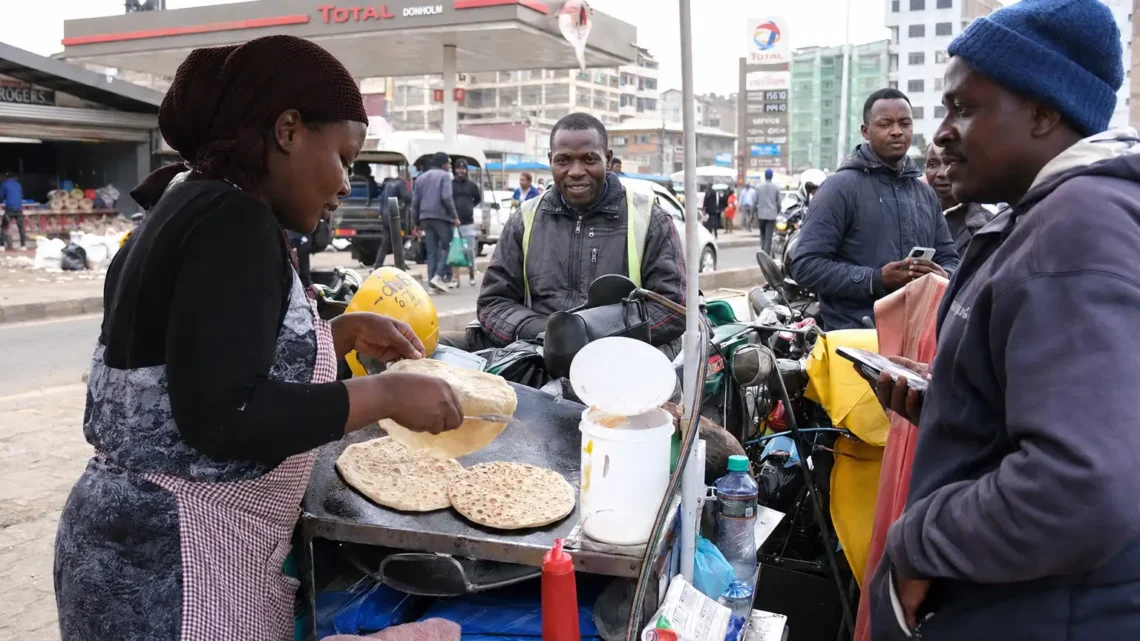
I nodded and pointed to the sufuria still steaming on my little gas burner. That was my life most mornings on Jogoo Road in Nairobi, Kenya, right outside the Total petrol station near Donholm, where I had been selling chapati and mbaazi since six in the morning for almost a year.
Trending Now!!:
My name is Amina, and by the time the sun was fully up, my hands smelled like onions and my feet ached from standing on the same patch of cracked pavement. But the money was real. Two hundred shillings here, fifty there, it added up. On a good day I could clear fifteen hundred shillings by ten in the morning, which was more than some people made in an entire day at the tailoring shop where I used to work.
Amina, wewe leo umeongeza bei? Brian, one of my regulars, asked as he counted coins into my palm.
Mafuta imepanda tena, I said. Cooking oil had gone up again. Everything had gone up again. That was the joke that was not really a joke anymore in this city, the one about how the price of a loaf of bread changed faster than the weather.
My friend Wanjiru sold boiled eggs and smokies two stalls down from me, and most mornings we shared a flask of tea between customers. She was the one who first told me about mobile banking apps that let you save small amounts automatically, the kind of thing you would call a side hustle income tool if you wanted to sound official about it. I did not have a fancy word for it. I just called it “not touching that money, whatever happens.”




Leo nimeweka mia tano, she told me one Tuesday, proud of herself for locking away five hundred shillings before she even opened her cooler box.
I laughed at her but I copied her that same week. We were two women standing on the same dusty road, quietly building something out of coins, telling ourselves this was temporary, this was just for now, until something better came along.
Then one Thursday in July, three county askaris walked down the road with a list and a black marker, and everything on that road stopped being simple.
Hii mahali si ya biashara, one of them said, tapping his boot against my little wooden table. This place is not for business. He said the county had “cleared” the area, that our stalls were “illegal structures,” that we had exactly one week to move or lose everything, the sufuria, the gas cylinder, the plastic chairs, all of it.
Wanjiru tried to argue, her voice rising in that way it did when she was scared but did not want to show it. Sisi ndio tunalisha watu hapa kila siku, she said. We are the ones feeding people here every single day.
The askari did not even look at her properly. He just wrote something on his clipboard and moved to the next stall.
That night I sat outside my single room in Umoja, phone in hand, doing the kind of math you do when you are trying to figure out if your whole life fits inside a number. Rent was due in nine days. My daughter’s school fees balance was still sitting there like a stone in my chest. And now, maybe, no chapati stand.
My brother called that same night from Mombasa, the way he always did when he sensed something was wrong even before I said it. Amina, uko poa? he asked.
Niko tu, I said, which was the Kenyan way of saying I am fine when you are absolutely not fine.
He told me something his pastor had said in church that Sunday, about how the ground under your feet can move but you are not the ground. I did not think much of it at the time. I was too busy calculating how much I could get if I sold the extra gas cylinder I was not using.
For the next week, we hustled differently. Wanjiru and I moved our stalls to a side street near the market, one without a clear view from the main road, the kind of spot where you keep one eye on your sufuria and one eye out for uniforms. Business was slower there. Fewer boda riders passing, fewer office workers stopping for a quick breakfast on their way to town.
Hii si sawa, Brian said when he finally tracked us down four days later, annoyed that he had to walk an extra block for his usual chapati. This is not right.
Maisha, I told him, and he laughed because there was nothing else to say. That is life.
But something strange happened in that difficult stretch. Because I had already started saving small amounts before the eviction, I actually had something to fall back on. Not much. Eleven thousand shillings, saved five hundred here, three hundred there, money I had told myself I was not allowed to touch. It covered the rent that month. It covered half the school fees balance. It did not solve everything, but it meant I was not standing completely empty-handed in front of my landlord, Mr Otieno, the way I had been the year before when my sister was in hospital and I had nothing saved at all.
Umefanya vizuri, Mr Otieno said when I handed him the rent on time, which from him was practically a parade.
Three weeks later, the county quietly stopped patrolling that stretch of Jogoo Road as hard as they had promised. Some vendors drifted back to their old spots. I did too, cautiously, keeping half my stock ready to pack into a sack at the first sign of a uniform. Wanjiru started saving even more aggressively after that week, calling it her “askari fund,” the money set aside specifically for the day the county decided to remember we existed again.
I still think about that pastor’s line my brother repeated to me, the one about the ground moving but you not being the ground. I am not sure I fully believe it. Some days the ground moving is exactly what breaks you, no matter how much money you have quietly tucked away in an app.
But some mornings, standing over the sufuria with the smell of onions on my hands and the boda riders lining up before the sun is even properly awake, I think about how close I came to having nothing that week, and how a habit I almost did not bother starting was the only reason I did not lose everything.
I still do not know if the county will come back with that clipboard again. Nobody on Jogoo Road knows. We just keep frying chapati, counting coins, and quietly putting a little bit away, because in this city, that might be the closest thing to certainty any of us are going to get.