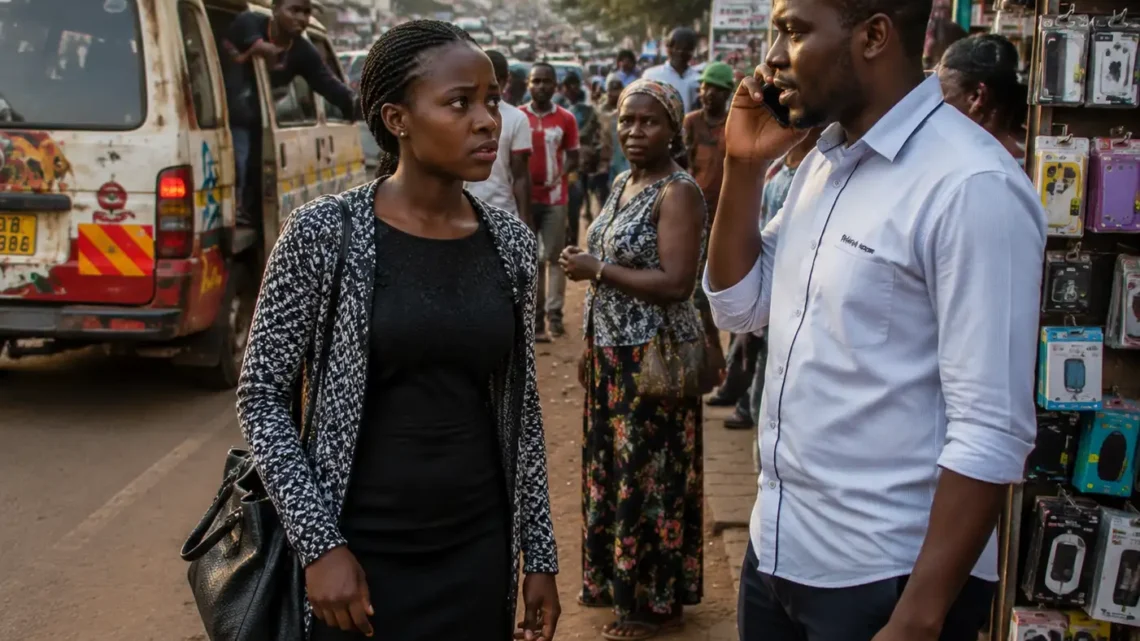
The Day I Confronted My Scammer and He Just Handed Me the Money
Achieng counted the money three times before she put it in the envelope. Fifteen thousand shillings.
Half of what her mother had saved from selling tomatoes at Gikomba for six years, brought out in small folds of paper that smelled like the market, like onions and diesel and hope.
Trending Now!!:
The man on the phone had called himself Mr. Otieno, and he worked, he said, for a shipping company near the port in Mombasa. We are hiring clerks for the new container terminal, he told her. Good salary, forty five thousand a month, accommodation provided. All he needed was a processing fee for her work permit, because the company was overwhelmed with applicants and had to be careful about who was serious.
Achieng was serious. She had a diploma in business administration from a college in Nakuru that had cost her mother two more years of tomatoes, and for eight months she had been serious about every job that came her way, walking from Kawangware to town and back because the matatu fare added up, sending her CV to companies that never called, standing in queues outside office buildings in Upper Hill until the security guards started to recognize her and wave her off before she even reached the gate.
You will not regret this, Mr. Otieno said. His voice was warm, a little bit tired, like a man who had said the same words to a hundred hopeful young people and still meant them every time.
She sent the money through M-Pesa on a Tuesday. By Thursday, the number was off. Not busy, not unreachable in the way a phone sometimes is when someone is in a matatu without signal. Off, completely, the way a number goes when someone has thrown the SIM card into a drain somewhere between Mombasa and wherever he actually was.




She did not tell her mother for eleven days.
When she finally did, sitting on the low stool in their kitchen in Kawangware while her mother strained tea through a small metal sieve, her mother did not shout. She only stopped straining the tea for a moment, her hand still over the pot, and said, “Watu wa Mungu,” the people of God, which was what she said when something was too much for ordinary words. Then she poured the tea and handed Achieng a cup and said nothing else about it that night.
Three weeks later, Achieng was riding in the back of a matatu on Ngong Road, watching the city go by in that particular grey light of five in the evening when the matatus start filling up and the touts start shouting louder, when she saw him.
Mr. Otieno. Standing outside a shop that sold phone accessories, laughing with another man, a phone against his ear exactly the way he must have held it when he spoke to her, warm and tired and convincing.
She did not think. She was off the matatu before it had properly stopped, ignoring the tout who shouted after her about fare, walking fast down the pavement toward him with her heart going so hard she could feel it in her throat.
Up close he was younger than his voice, maybe thirty, wearing a shirt that still had the fold lines from the shop. When he saw her walking straight at him he did not run. That surprised her more than anything. He simply lowered the phone from his ear and waited, the way a man waits for something he has been expecting for a long time.
You called yourself Otieno, she said. Her voice cracked in the middle of his own name, which felt wrong, like the name itself was a lie she was still carrying around in her mouth.
My name is Brian, he said. Otieno was my brother’s name.
Was.
He died in February. Matatu accident, on this same road, near Adams Arcade. He said it flatly, the way people say things they have said too many times to feel anymore. I used his phone line because it was already registered and I did not have money to register a new one. I am not going to lie to you and say I am sorry in the way you want me to be sorry.
Achieng stood there with her fists closed at her sides, the fifteen thousand shillings, her mother’s tomatoes, the eleven days of silence, all of it sitting in her chest with nowhere to go.
Where is my money, she said.
Gone, he said, and for the first time something moved in his face, something that was not quite shame but was standing close to it. I am not going to tell you a story about it. I used it. Some went to my brother’s hospital bill before he died, and I am not proud enough to hide behind that, because I kept doing it after he died too. I kept calling people like you.
How many.
I don’t count anymore.
A boda boda passed close to the pavement and the wind of it lifted the hem of her dress, and in that small ordinary moment she felt something strange happen inside her, not forgiveness, nothing so clean as that, but a kind of tiredness that made her want to sit down on the pavement right there.
I want it back, she said, quieter now.
I have four thousand on me, he said, and he was already reaching into his pocket, not to run, not to argue, just reaching, and that was the part that confused her most, that a man who had lied to her so completely would hand over what little he had without being asked twice. Take it. I will find the rest.
You said that to my face like it means something.
It means what it means, he said. Nothing more than that. I am not a good man, Achieng. I remember your name too, by the way. I remember all of them.
She took the four thousand shillings because her mother needed it more than her pride did, and she put it in her bag without counting it in front of him, because some small part of her that she did not like still did not want to embarrass him.
If I see you doing this again, she said, I will find you and I will make sure everyone on this road knows your real name.
Fair, he said, and he almost smiled, though it died before it reached anywhere near his eyes.
She walked back toward the matatu stage without looking back, and behind her she heard him answer his phone again, his voice sliding back into that same warm, tired register, Yes, this is the shipping office, how can I help you, and she stood very still for a second on the pavement, deciding whether to turn around, before the next matatu pulled up honking and she got on it instead, and rode home with four thousand shillings in her bag and a decision about the rest of it that she still had not fully made by the time she reached Kawangware.