I Refused to Raise My Prices, So I Changed Everything Else Instead
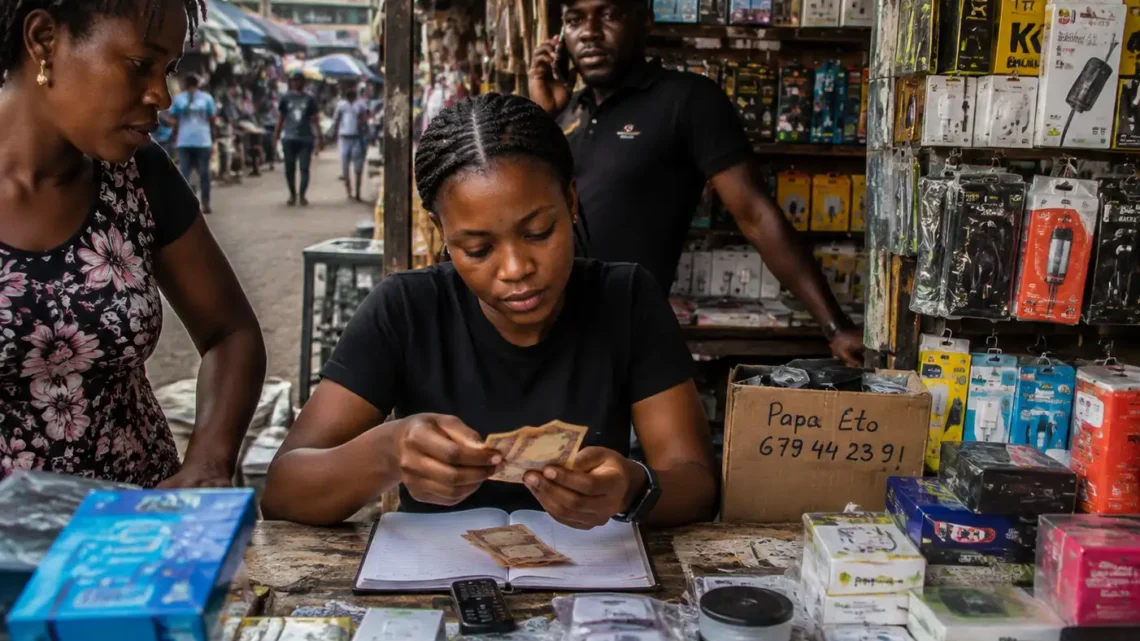
Odile counted the naira, no, the FCFA notes for the third time and still got a different number.
Fifteen thousand short. Not five hundred. Fifteen thousand.
Trending Now!!:
The stall next to hers was already blasting Coller La Petite from a cracked phone speaker, and the smell of grilled fish drifted in from the alley behind Marché Congo, but none of it reached her.
She was doing the maths in her head the way she’d done it every night for the past eight months, ever since she left her job at the customs clearing agency in Bonanjo and put everything into this six-by-four stall of phone chargers, screen protectors, and second-hand earphones.
Douala does not forgive people who stop paying attention to numbers.
Her supplier, a man everyone in the market called Papa Éto, though his real name was Ferdinand, had sent a voice note that morning. She played it again, standing between two crates of Bluetooth speakers she still hadn’t unpacked.




Odile, the dollar don change again o. From next week na eight thousand for the box of chargers, no be six thousand five again. Na so market be.
She didn’t reply immediately. She looked at the little exercise book where she tracked everything, the one with a cracked plastic cover she’d had since secondary school in Bonabéri, and did the maths again. If the price of a box went from six thousand five hundred to eight thousand, and she was already selling each charger for just enough to survive the moto-taxi fare, the electricity levy on the market shed, and her little brother’s school fees, there was no room left. None.
Her friend Ginette, who sold wigs two stalls down, leaned over.
You dey fine? Your face don change since morning.
Papa Éto don increase am again, Odile said. Second time this year.
Ginette sucked her teeth, the long, drawn-out kind that meant she understood completely.
This life self. Everybody wan chop for your matches. You go raise your price too now.
That was the easy answer. Raise the price. Everyone said it like it cost nothing. But Odile’s customers were people like her, women coming from Bonabéri and New Bell with exactly two thousand francs in their palm, counted out before they even reached the stall.
She had built her small name in the market on being the person who didn’t cheat you, who sold you a charger that actually lasted past the first rainy season. If she raised her prices to match Papa Éto’s new rate, she would be exactly like the big shops on Boulevard de la Liberté with their bright signs and their fixed prices that nobody from her side of town could afford anyway.
She thought about her online side hustle income, the WhatsApp group of two hundred and eleven contacts she had built slowly, sending pictures of new stock every Tuesday and Friday, taking orders through Orange Money before people even reached the market.
That group was supposed to be her way out. Her plan for financial freedom, if she was honest about the word, the thing she whispered to herself at two in the morning when the noise of Douala had finally gone quiet and it was just her, the ceiling fan, and the calculator app on her phone.
She had told herself that by the end of the year she would have enough saved to move from a rented stall to something bigger, maybe even a small shop with a door that locked, not a shutter that three other traders shared the key to.
Now Papa Éto’s message sat in her chest like a stone.
She called him instead of texting.
Papa, no be so we go do am. You know say na small small I dey do this business. If you raise am like that one time, you go kill my customers finish.
His voice on the other end was tired, not cruel.
Odile, you think say na me dey enjoy am? The people wey I dey buy from for Douala port, dem don increase for me too. The container clearance sef don cost pass before. Na so we suffer, everybody for the chain.
There it was. The whole thing laid bare in one sentence, the way it always is when you follow money far enough back in this country. It was never one greedy man. It was a chain, and everyone in it was gripping their own end just to survive, tightening it a little on the person below them because someone above had already tightened it on them.
Odile sat down on the low wooden stool behind her stall and looked at her exercise book again, at eight months of small, careful numbers.
She thought of the videos she watched sometimes at night, the ones about how to save money, about budgeting for beginners, about people in big countries talking calmly into cameras about compound interest and emergency funds, as if six months of savings was something you could build when the ground itself kept moving under you. She wasn’t angry at them. She just felt very far away from that world, like it was a different planet with the same sky.
By evening she had made a decision, small and unglamorous, the kind nobody makes a movie about.
She wouldn’t raise the price of the popular items, the ones her regulars bought most, the two-thousand-franc chargers and the cheap earphones that broke in a month but still sold fast. She would eat the loss on those. But she would bring in three new items through a different supplier in Bonabéri, slightly more expensive accessories, phone cases with designs, the kind of thing university students and young civil servants from Akwa liked to post on their WhatsApp status. Higher margin. Fewer buyers, but enough.
You go manage am? Ginette asked, watching her write new numbers into the exercise book under the light of a single bulb strung above the stalls.
I no get choice, Odile said. Na so business be. You bend, you no break. If I break, na my brother school fees go break with me.
She didn’t say it like a sad line in a film. She said it the way you say something you’ve already made peace with, already filed away next to a hundred other hard things.
That night, on her way home, squeezed onto the back of a bend-skin with two other passengers, the Wouri Bridge lit up faintly behind them, her phone buzzed. Three new orders on the WhatsApp group. Not much. Eleven thousand francs, before cost.
She didn’t smile exactly. But her shoulders dropped a little, the way they do when something stops being urgent for one evening.
Papa Éto sent one more voice note that night, almost apologetic, telling her the new price would only take effect from Monday, that she still had three days at the old rate if she wanted to stock up fast.
She was already awake at five the next morning, counting cash for a bigger order than usual, doing what everyone in Marché Congo has always done when the ground shifts under them.
She adjusted, and she kept going, because in Douala, that has never really been a choice. It has just been the job.