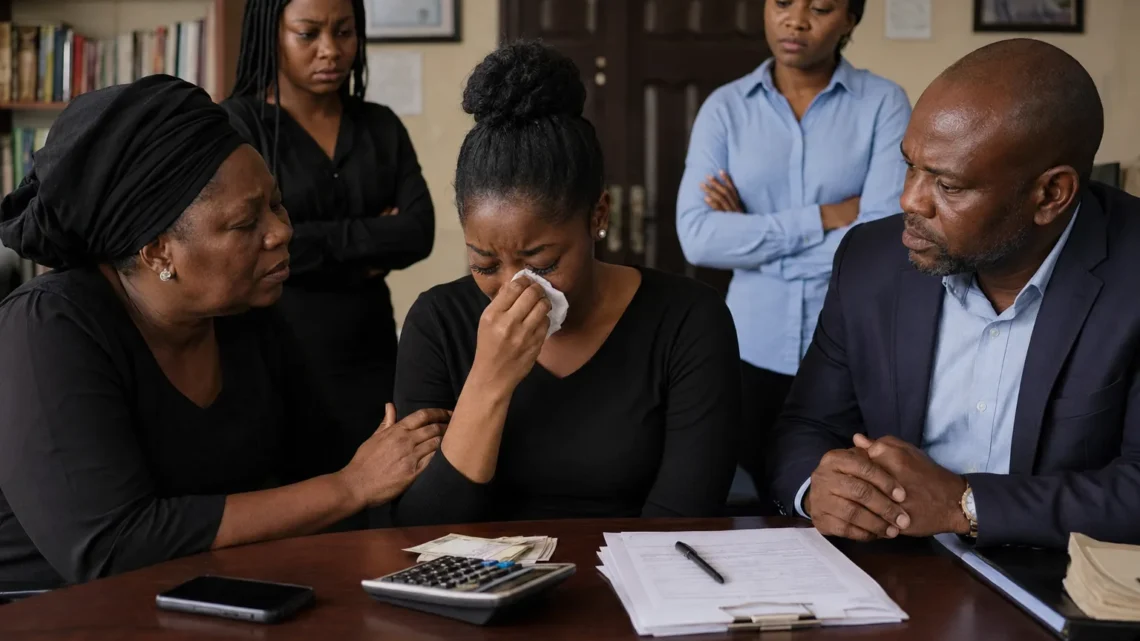
She Lost Her Mother, Then Spent Years Paying Her N55 Million Debt
She was not supposed to be the one to carry it.
The debt was not hers. She had not signed the papers, had not made the promises, had not taken the money. Her mother had.
Trending Now!!:
A mother who was full of plans, full of hope, full of the kind of ambition that makes you believe things will work out if you just keep moving. And then, six months after taking on that debt, her mother was gone.
Just like that, the weight transferred.
It did not come with a ceremony. Nobody sat her down and explained what was happening. The people her mother owed did not mourn and stay quiet out of respect.
The world does not pause for grief when money is involved. The calls started coming. The pressure followed. And somewhere in the fog of losing her mother, she realised that the debt was now hers to carry, whether she was ready or not.




N55 million.
For those who do not know what that figure feels like in Nigeria, let me help you understand. It is not just money. It is years. It is the kind of number that sits on your chest every morning when you wake up and reminds you, before you have even opened your eyes properly, that you are not free.
It is the number that follows you to job interviews, to family gatherings, to church, to bed. It lives with you.
She was barely holding herself together. She had lost her mother. She had inherited a crisis. And every door she knocked on stayed shut.
She went to lawyers. She explained her situation, laid out the facts, and waited for someone to find a legal way out, a technical error, a clause, anything. Nothing came.
The lawyers could not help her. Friends were sympathetic but distant in the way people become when the problem is too big and too complicated. Nobody wanted to be pulled into N55 million worth of someone else’s trouble.
So she carried it alone.
There is a particular kind of silence that surrounds a person in deep financial pain. It is not the silence of peace. It is the silence of isolation, the quiet that settles when people sense your problem is beyond them. She lived in that silence for a long time.
She worked. She saved. She sacrificed things most people would not think twice about spending money on. She watched her mates build lives, take vacations, celebrate milestones, while she was channelling everything she had into a debt that predated her adulthood.
People around her did not always understand. Some thought she should fight it, contest it, walk away. Others offered opinions shaped by ignorance, as though she had not already exhausted every option they could think of. The loneliness of being misunderstood in your suffering is its own kind of grief.
But she kept going.
She has not explained publicly exactly how she did it, how many years it took, what she gave up along the way. She kept that part private, and she deserves to. What she chose to share was the ending. In an emotional video on TikTok, she told the world that she had finally settled the debt. Every kobo. N55 million. Gone.
The video broke something open in people.
She was not crying tears of devastation. She was crying the way people cry when a weight they have carried so long they forgot what it felt like to put it down finally leaves their body. Relief has its own kind of grief. You mourn the years. You mourn the version of yourself that never got to be light. And then, slowly, you start to breathe again.
The comments poured in. Strangers who had never met her, who knew nothing about her life beyond those few minutes of raw honesty, left words of celebration, of prayer, of recognition. Because so many of them knew exactly what it felt like to carry something they did not ask for.
That is the thing about this story that cuts deeper than the money.
In Nigeria, inheritance does not only mean land and savings. Sometimes it means debt. Sometimes it means a name under pressure, a family reputation on the line, a burden passed from one generation to the next without a conversation.
Children bury parents and find, beneath the sorrow, a bill. And they pay it, not because the law always demands it, but because love demands it. Because they cannot let a parent’s name end in disgrace. Because they are Nigerian, and that means something, for better and for worse.
She paid that debt because her mother had been a person who mattered. A person full of plans and hope. And she refused to let that story end in unpaid chaos.
What she built in the process, though she may not see it this way yet, is not just a zero balance on a ledger. She built the kind of character that does not break under weight most people would have walked away from. She built a life she can look at without shame. She gave her mother’s memory a clean ending.
That is not a small thing. In a world that celebrates the quick win, the overnight success, the viral moment, there is something quietly extraordinary about a person who simply refused to quit.
Nobody helped her.
She helped herself.
And when she finally stood in the light, she was carrying nothing but her own name.