
The Entrepreneur Who Raised Funds Through Crowdfunding Against All Odds
The loan officer at Zanaco on Cairo Road typed with two fingers and did not look at me once. Madam, we need collateral, he said. A title deed. A car. Something we can hold.


I had a sewing machine with a cracked pedal, a rented corner in Kamwala, and a notebook full of orders. I told him that. He slid a brochure across the desk like I was a person asking for directions.
Trending Now!!:
My name is Mutinta Hamoonga. I was thirty-four that March, making school uniforms in Lusaka for nine families who paid me in instalments. In other words, I was running a bank nobody had given a licence.
I needed K96,000. An industrial overlocker, a second machine, and three months’ rent on a proper stall at Soweto Market. Anything smaller and I would stay what I was, a woman people recommended to each other as cheap.
My sister Chilufya called me that night while I was eating cold nshima and kapenta standing at the counter. She had moved to Manchester four years earlier and now said things like content and the algorithm.
Why are you begging banks, she said. Put it online. People do it every day.
People do it for cancer, I said. Not for overlockers.
Try anyway.
So I tried. I set up a page on GoFundMe and recorded a video at six in the morning with the phone propped against a tin of Blue Band. I stood in front of my machine and said all the correct things.
I explained that I wanted to employ three women. I said mealie meal had gone up again and every household I knew was doing sums at night.
I watched it back once. I sounded like a person reading a bus timetable.
In three weeks the page raised K740. Most of it came from Chilufya, two aunties, and a man from church who sent K20 with the message God is able. I checked the page every hour. I checked it in the toilet. I checked it while a customer’s mother was explaining how she wanted the collar done.
My friend Bwalya works at a radio station on Great East Road, and she is the kind of person who tells you the truth by saying something else first. She came by on a Saturday, ate three of my fritters, and watched the video.
Your face is nice, she said. Your story is not.
It is a business.
Nobody gives to a business, Mutinta. They give to a person. She wiped her fingers on her skirt. What is the worst thing in your life right now?
I said nothing. In truth, my life was fine. Tired and fine. My mother Namukolo sold tomatoes and rape at the stall near Chilenje; she was sixty-one, and she had once had malaria two years earlier.
She had been in the University Teaching Hospital for four days. I remembered the smell of the corridor and the plastic chair that left lines on the back of my legs.
I am still not sure who put the idea in the room, Bwalya or me.
I recorded the second video on a Sunday night with my hair tied in a scarf and no light except the bulb over the stove. I did not say my mother was dying. I was careful about that.
I said she had been in hospital, that the bills had eaten everything I had saved, and that this machine was the only way I could pay them and keep her safe. Every word came from something real, bent a little.
I cried in the video. That part I did not plan. The tears were real, even if the reason I let them run was not clean.
Bwalya posted it. Then a girl with two hundred thousand followers on TikTok, who lives somewhere near Manda Hill, shared it with a caption that said Lusaka, let’s carry this woman.
By Monday morning, the page had K9,000. By Wednesday it was past K40,000. I stopped sleeping. I stood in my kitchen at three in the morning refreshing a screen while the number moved like something alive, and each new name felt like a stranger leaning in the doorway.
A nurse in Leeds sent £200. A taxi driver in Kitwe sent K150 and wrote for your mama. A group of boys from a secondary school in Chingola pooled K60 and signed their message with a football club. By the ninth day the total was K112,000.
I screamed. I actually screamed, alone in a room, and the neighbour’s dog started barking in answer.
The money went through Airtel Money and a bank transfer in pieces over a week. I bought the overlocker from a dealer on Lumumba Road. I paid for the stall.
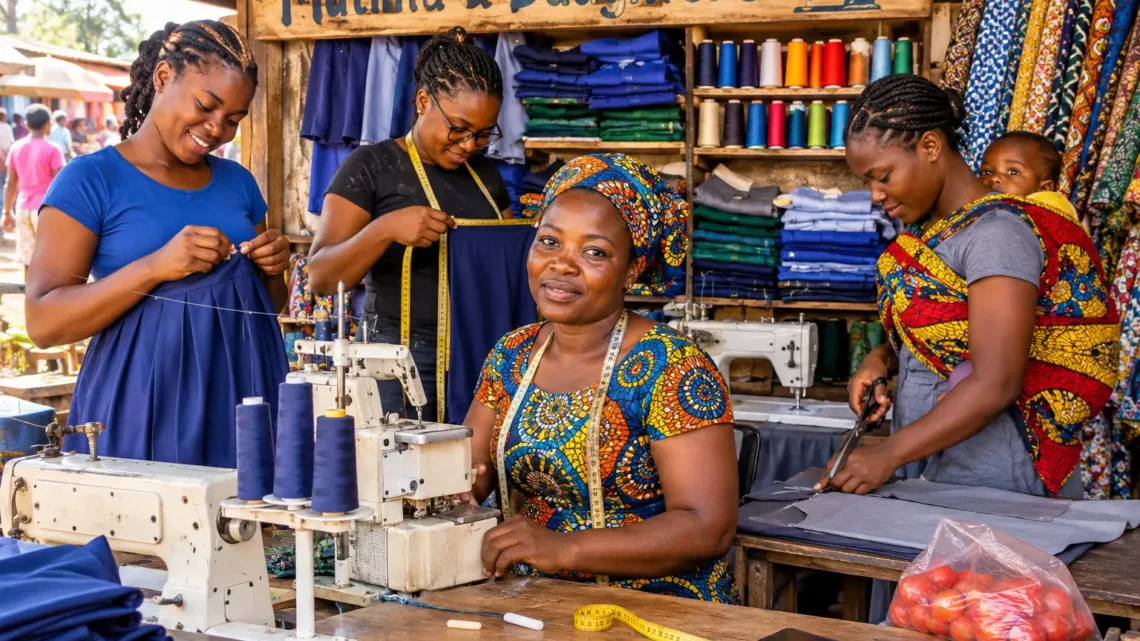
By June, there was a hand-painted board above it that said Mutinta & Daughters, which was silly, because I have no daughters. Three women worked for me. Mercy sang while she hemmed. Jane counted everything twice. Agnes had a baby on her back and still out-cut both of them.
The business did what I said it would do. That is what I tell myself when I am being honest and when I am not.
In August, I was at the stall wrapping a blazer for a customer when a woman I did not know came around the corner with a packet of bananas. She was about my mother’s age. She took my hand in both of hers.
Is it you? The girl with the video? she said. How is your mother now? We prayed for her at our fellowship every Thursday.
I said my mother was much better. It came out smooth. I had been practising without knowing.
Namukolo found out three weeks later, and not from me. A neighbour in Chilenje said something kind over the fence, and my mother nodded, and went inside to think.
I came on Sunday as usual with sugar and a loaf of Sasa bread. She served the nshima and the pumpkin leaves and sat across from me. She ate slowly. She did not mention the video. She asked about Agnes’s baby, the price of fabric in Kamwala, whether the roof at my stall leaked.
At the door she handed me a plastic bag of tomatoes, still warm from sitting in the sun. Take these, she said. You look thin.
That was all. I would have preferred shouting.
Last Thursday, a message arrived on the page’s inbox. It was from the man in Ndola who had sent K20 in the first week, the one who wrote Get well mama. His name is Mwansa. I looked him up. He drives a delivery van. His profile picture is a boy in a school jersey holding a trophy too big for him.
He wrote: I never asked, but I hope she is better. My own mother passed in July. I should have sent more when I could. Tell her I said keep fighting.
I have read it eleven times. I have typed four replies. In one, I tell him everything. In another, I say she is doing well and thank him for the prayers. In a third, I send him his K20 back, which is a ridiculous thing to even consider.
Agnes just walked in with the baby and asked if I wanted tea. I said yes. I put the phone face down on the cutting table, next to the chalk and the tape measure, and looked at the machines that would not exist without him.