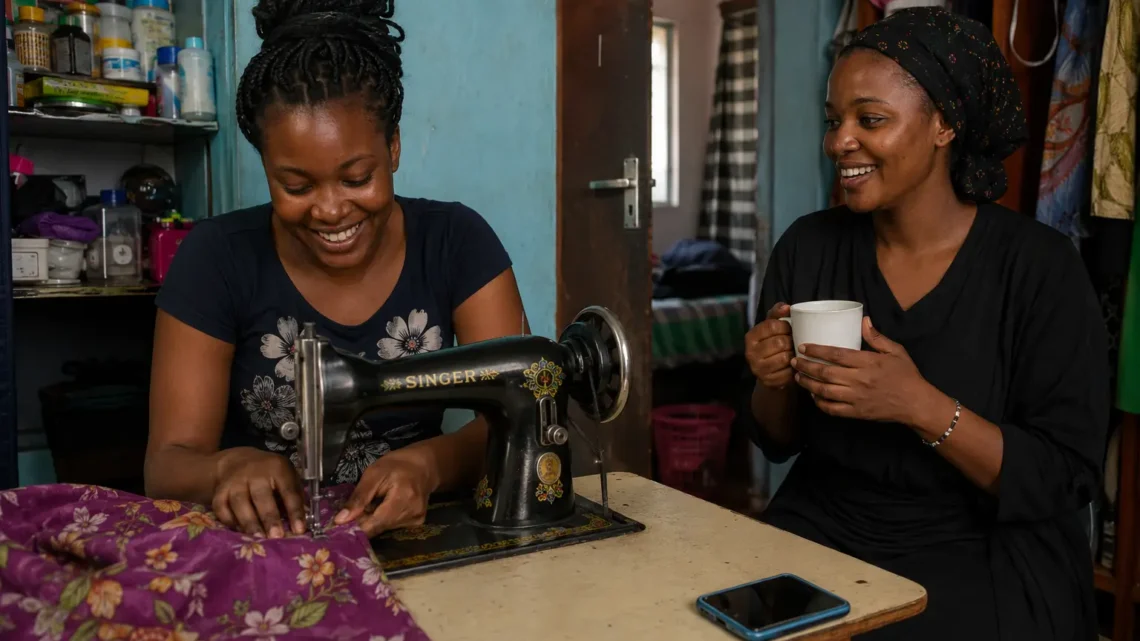
The Machine That Fed Her, and the Friend Who Almost Sold It
The pawnshop on Tom Mboya Street was already closing when I got there, and I still had the machine wrapped in a kitenge cloth under my arm like I was smuggling something.
I am Achieng, twenty-six years old, living in a bedsitter in South B, Nairobi, and that evening I was three thousand shillings short of rent with a landlord who does not do sentiment.
Trending Now!!:
The machine belonged to my best friend, Nyokabi.
She had left it at my place two weeks earlier while she travelled upcountry to bury her uncle, and somewhere between rent day and the electricity token running out, I had started doing the math that desperate people do. It’s just for a week, I told myself. I’ll get my hustle money by Friday and buy it back before she even lands.
My hustle, if you can call it that, was reselling secondhand clothes I bought in bulk from Gikomba market and posted on my WhatsApp status. Some weeks I made good money, enough to send a little something to my mother in Kisumu. Other weeks the customers ghosted after asking is the price negotiable fifteen times, and I sat there refreshing M-Pesa like it would refresh itself into something better.
That week was the second kind.


The pawnshop man, an older guy everyone on the street calls Baba Steve, looked at the machine and then looked at me the way people look at you when they already know your story before you tell it.
This is a good Singer, he said, running his thumb along the metal. You sure you want to let it go?
I almost said yes. My mouth was already forming the word.
Then my phone buzzed. A voice note from Nyokabi, sent from a matatu somewhere on the Nakuru highway, her voice cracking over the engine noise.
Ochieng, I’m coming back tomorrow. I don’t even want to talk about the burial, it’s too much. But I keep thinking about my machine, that thing is literally how I eat. Please tell me it’s safe at your place.
I stood there in that shop with dust in the air and Baba Steve waiting, and I felt something close to shame sit down in my chest like an uninvited guest.
Nyokabi had bought that machine two years ago after saving for eight months, doing hair on the side, skipping lunch, the whole story. She made school uniforms and repaired torn jeans for people in our estate, and that machine was not a hobby to her. It was rent. It was her mother’s hospital bills. It was, in the plainest sense, her financial freedom, the one thing standing between her and going back to a job that made her cry in the bathroom every day.
Sorry, uncle, not today, I told Baba Steve, and I walked out with the machine still wrapped, my legs shaking a little.
I called my cousin Brian, who works at a car wash near Ngong Road, and asked if he could lend me the three thousand until Friday. He laughed at first, because Brian owes half of Nairobi and everyone knows it, but then he went quiet.
You know what, he said, let me ask my boss for an advance. I’ll bring it to you tonight.
He did. He came at almost nine, smelling of soap and engine oil, and he handed me crumpled notes without making it a whole ceremony, which I will never forget about him.
Don’t do that again, he said. Borrow from me before you touch that woman’s machine. Friends don’t do business with each other’s survival.
I paid my landlord the next morning before he even finished his coffee, and I set the Singer machine right in the middle of my small table, cleaned it, oiled the wheel the way I had seen Nyokabi do, and waited for her.
She arrived in the afternoon, tired, thinner than when she left, wearing the same black dress she must have worn to the funeral. She dropped her bag by the door and went straight for the machine like she was checking on a child.
You kept it safe, she said, and something in her voice made it clear she had wondered, in some quiet corner of her mind during that long matatu ride, whether it would still be there.
I almost told her the truth right then.
I almost said, I nearly sold it, I stood in Baba Steve’s shop with your whole hustle wrapped in cloth, and I don’t know what kind of person that makes me.
But she looked so relieved, sitting there running her hand over the machine like it was proof that something in her life had stayed exactly where she left it, and I could not bring myself to take that from her on the same day she buried her uncle.
So I said nothing.
I made her tea instead, the way she likes it, heavy on the ginger, and we sat on my narrow bed and she told me about the burial, about her uncle’s compound in the village, about her cousins fighting over land before the body was even in the ground. She laughed at one point, this short surprised laugh, and said, Nairobi problems feel small when you go home and see real problems.
I laughed too, and inside I was thinking about how close I had come to creating a real Nairobi problem of my own, the kind that ends friendships, the kind that starts with just for a week and ends with someone standing in a bedsitter demanding to know where their machine went.
That night after she left, I sat with my phone and thought about writing her a long message explaining everything, the rent, the pawnshop, Brian’s crumpled notes. Some kind of confession that would make me feel lighter and put the weight back on her instead.
I did not send it.
Instead I opened my resale account and posted new stock, determined that the next time rent squeezed me, I would call Brian first, or sell something of my own, or simply go hungry for two days like I had before, rather than gamble with something that was not mine to gamble with.
Nyokabi still does not know how close her machine came to sitting in Baba Steve’s shop window with a price tag on it.
Maybe she will read this one day and recognize herself in it, the tired woman coming home from a funeral, checking on the one machine that keeps her fed, never knowing how thin the line was between her having it and not.
Some debts you repay with money.
Others you repay quietly, every single day, by simply never letting it happen again.