The Real Reason Your Homemade Food Never Tastes Like Grandma’s
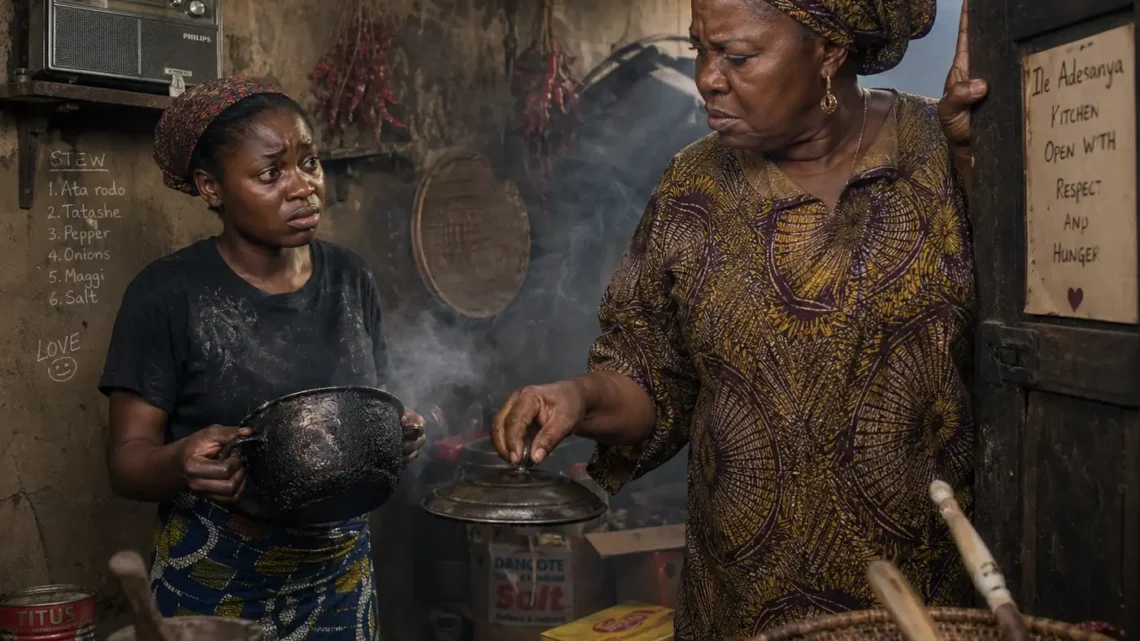
I was thirty-four years old, standing in a smoke-filled kitchen in Lagos, holding a blackened pot of what was supposed to be the most iconic Nigerian comfort food in the world, when my neighbour, Mrs Adesanya knocked on my door and said the words that changed everything about how I cook.
“You dey burn jollof rice again?”
Trending Now!!:
Not a question. A verdict.
I had been cooking for over a decade at that point. I had worked in professional kitchens, tested hundreds of easy homemade recipes, written meal prep guides that people across the internet bookmarked and never used.
I knew the science of the Maillard reaction. I could explain umami to a five-year-old. I had opinions about cast iron skillets that could fill a small novel.
And yet, there I was. Burning rice. Again.




The truth is, I did not grow up learning to cook. I grew up watching my grandmother, Mama Titi, cook. There is a difference so vast between those two things that entire culinary philosophies have been built inside that gap.
Mama Titi never measured anything. No measuring cups, no kitchen scale, no recipe card tucked inside a drawer. She cooked by feel, by smell, by the specific sound palm oil makes when it hits a hot pot and spreads itself across the bottom like it owns the place.
She made the best healthy Nigerian recipes I have ever tasted in my life, including dishes so deeply seasoned they felt like memories before I even swallowed them.
I remember being eight years old, sitting on a low wooden stool in her kitchen in Ibadan, watching her hands move through a bowl of egusi seeds.
The kitchen smelled of crayfish and dried pepper and something warm I could never name, something that lived only in that room. The walls were the color of old smoke. A transistor radio played Fuji music from a shelf near the window.
“Come here,” she said without looking at me. “Put your hand inside. Tell me what you feel.”
I reached into the ground egusi, still warm from the grinding stone.
“It feels… thick,” I said.
“Good. Now smell it.”
I bent close and inhaled. Nutty. Dense. Almost sweet underneath.
“That,” she said, finally looking at me with eyes that had cooked ten thousand meals, “is how you know it is ready to enter the soup.”
I did not understand then. I spent the next twenty-six years not understanding. I chased shortcuts instead.
The shortcuts felt smart at the time. I bought pre-blended pepper mixes when I should have been roasting my own tomatoes. I used seasoning cubes as the entire flavor base instead of building something real underneath them.
I followed trending quick dinner recipes on YouTube that promised a rich stew in twenty minutes and delivered something thin and apologetic that tasted like effort without wisdom.
I told myself I was busy. I told myself modern cooking had evolved past all that slow patient labor. I told myself the old ways were inefficient.
What I was really doing was grieving. Mama Titi had died the year before, and walking into a kitchen to cook her dishes and getting them wrong felt worse than not cooking them at all.
The day Mrs. Adesanya knocked on my door and assessed my disaster, she did not leave. She pushed the door open wider, walked past me, turned off the gas burner, and stood over the pot with the expression of a trauma surgeon.
“Sit down,” she said.
I sat down.
She opened my fridge. She opened my spice cabinet. She made a sound I can only describe as the culinary equivalent of a disappointed sigh that has given up on words.
“You have everything,” she said. “And you are using nothing.”
She pulled out fresh tomatoes, three red bell peppers, two scotch bonnets, a white onion, and a bottle of groundnut oil I had bought six months ago and used exactly twice. She set a clean pot on the burner. She moved through my kitchen like she had designed it herself.
“Watch,” she said. “Not the pot. Watch my hands.”
I watched. She did not rush. She blended the tomatoes and peppers without adding water, something I had always done wrong because I was always trying to speed up the process.
She fried the blended pepper base in hot oil for longer than I ever had patience for, stirring slowly, letting it reduce down from something wet and raw into something thick and almost caramel-dark, deeply concentrated, the foundational flavor layer that makes Nigerian party jollof rice different from every other rice on earth.
“This part,” she said, tapping the pot, “is what your grandmother spent. This is the time. You cannot buy this part in a shop.”
Thirty minutes of frying pepper. Thirty minutes I had been skipping for years.
I felt something shift inside my chest.
After that evening, I started cooking differently. I stopped treating healthy dinner recipes like algebra problems to be solved quickly and started treating them like conversations to be had slowly. I called my mother and asked her to describe, in exact detail, how Mama Titi made her egusi soup. The phone call lasted two hours. I cried twice and laughed more than I expected.
I started keeping a food journal, not to track macros or calorie counts, but to write down what I remembered about dishes from my childhood: the texture, the color, the smell, the feeling. Taste memory is one of the most underused tools in any home cook’s toolkit, and I had been ignoring mine for a decade.
I cooked egusi soup seven times in two months. The first three were wrong in ways I could identify. The fourth was close enough to make me emotional. The fifth made Mrs. Adesanya put down her spoon, look at me, and nod once. A single nod from that woman is worth three Michelin stars.
I also started exploring beyond Nigerian cuisine, not to abandon it, but to understand it better through contrast. I spent a month on West African cooking traditions, learning how groundnut soup travels across Ghana, Senegal, and Gambia in different forms, how the same ingredient speaks different dialects depending on the hands that hold it. I tried a Senegalese thieboudienne that rearranged my understanding of the words “one-pot meal.” I made a Ghanaian light soup that was so clean and precise it felt like minimalist architecture.
I discovered that the best easy homemade recipes across every culture share one quality: they are built on patience that somebody, somewhere, refused to skip.
My food blog started growing the month I stopped writing about quick dinner ideas and started writing about the story behind every dish. People do not search the internet only for recipes. They search for something that used to exist in their lives and disappeared. They search for their grandmothers. Their mothers. The specific smell of a Saturday morning kitchen when they were seven years old and nothing had gone wrong yet.
The most-read article I ever published was not a step-by-step guide. It was a 2,000-word piece about why Nigerian pepper soup tastes different when you make it for someone who is sick versus when you make it for a celebration. The keyword research said nobody was searching for that. The keyword research was wrong.
Food is not nutrition. Food is not content. Food is not a recipe card.
Food is the original human language, older than writing, older than organized religion, the first thing we ever shared across a fire with another person we did not fully trust yet. When you learn to cook with real presence and real patience, you are not just making a meal. You are participating in something that connects every generation that has ever lived in every home that has ever had a kitchen.
Last week, my niece Zara came to visit. She is twelve. She stood in my kitchen doorway the same way I once stood in Mama Titi’s, watching, not yet knowing she was learning.
I was making jollof rice. Not the burned disaster of five years ago. The real thing: the pepper base fried low and slow for thirty-five minutes, the parboiled long-grain rice soaked just right, the bay leaf and curry and thyme measured not in spoons but in confidence, the lid sealed tight with foil so the steam does its private work.
“Can I help?” Zara asked.
“Come here,” I said, without looking at her. “Put your hand in this bowl. Tell me what you feel.”
She reached in.
“It feels… like it has weight,” she said, surprised.
“Good. Now smell it.”
She bent close. I watched her face change. Something registered behind her eyes, some ancient recognition the body holds even when the mind has no name for it.
“What is that smell?” she asked.
I turned the burner to low and looked at her.
“That,” I said, “is how you know it is ready.”
She did not fully understand. And that is exactly right. She has years ahead of her to understand, years of standing in kitchens, years of burning things and getting it wrong and calling her mother and trying again, years of learning that the most important ingredient in any recipe is the willingness to give it the time it deserves.
The jollof rice was perfect that evening. Zara had two plates and asked if she could take some home.
Somewhere, I am convinced, Mama Titi heard that and smiled.
If you are standing in your kitchen right now, feeling like you will never get that dish right, like the flavor you are chasing is always one step ahead of you: you are not doing it wrong. You are doing it early. Keep going. The recipe is not the destination. The cooking is.