The Woman Who Bought Land Without Telling Her Husband
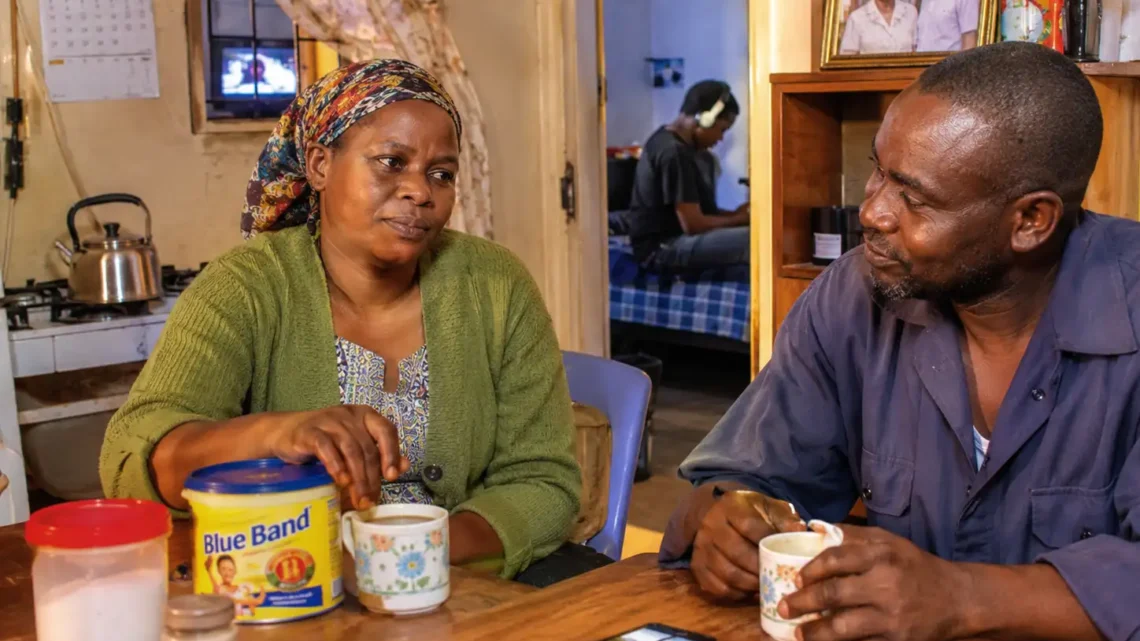
The title deed lived inside an empty Blue Band tin, under a bundle of receipts nobody would ever want to read. Wanjiru checked it every Thursday morning, the way other people check the weather.
It was there. It was always there. She pressed the lid down until it clicked, then stood in the bedroom of their flat in Umoja, Nairobi, with one sock on, listening for her husband in the corridor.
Trending Now!!:
Kamau was in the kitchen with Kameme FM turned low. She could hear the spoon scraping his mug: four sugars in his Ketepa tea, same as for nineteen years. Nothing about him ever changed, and once she had loved that about him.
The land was in Kitengela, an eighth of an acre off the Namanga Road, with one mango tree somebody had planted by mistake. She had paid a man called Mr. Ochieng four hundred and eighty thousand shillings over fourteen months. Before the first payment, she queued a whole morning at Ardhi House for an official search, to be sure he was not selling the same plot to three other people.
The money came from her mitumba stall at Toi Market, where she sold secondhand jeans out of bales that still smelled of the shipping container. More came from the chama that met on Tuesdays in Mama Wambui’s sitting room, three thousand each, a plate of githeri passed round. The rest came from the gaps in her week: a Fuliza repaid at midnight before the interest could bite, market change she never mentioned.



Her reason had a name, and the name was Githinji. He was Kamau’s younger brother, and two years ago he had borrowed three hundred and eighty thousand shillings for a printing and cyber café in Pipeline. It lasted five months. The money never came back, and nobody in that family ever used the word loan again, only the word family, said in a particular voice.
In Kamau’s family, property ownership was something that happened to other people. The shamba in Murang’a still belonged to his late father, which in practice meant it belonged to whichever son had the loudest mother. Kamau was not a bad man. He was a man who could not hear his mother say his brother’s name in that tone without reaching for his phone, and every shilling that landed in his M-Pesa became family money.
Rent in Umoja had gone up to seventeen thousand in January. Unga, cooking oil, matatu fare, Brian’s school shoes: the cost of living rose all at once, like water in a small room. Wanjiru did her sums on the back of a Brookside receipt and understood that Nairobi gives a woman with a stall and no land about one bad month before it asks her to leave.
At two in the morning she typed into her phone, with the screen dimmed so it would not wake him: can a wife buy land without her husband? The answers contradicted each other until the sky outside started going grey.
Mama Wambui settled it. She worked as a filing clerk for a law firm on Tom Mboya Street, and she poured the tea without looking up. The advocates call it asset protection, she said. We call it not telling. Go and see Mutua. Tell him I sent you.
Advocate Mutua kept an office above a pharmacy, with a ceiling fan that turned and did nothing. She paid two thousand shillings to sit in front of him for twenty minutes.
I want to buy land in my own name, she said. My husband does not need to know. Is this asset protection, or is this a crime?
He did not blink. Property ownership in your own name is not a crime, he said. Women do it every week. Whether it protects you is a different question.
What is the difference?
The registered owner is one thing. Matrimonial property is another. If you buy during the marriage, a court will ask who contributed. Money, yes, and also the person who raised the children while you stood in the market. He tapped the desk. The name on the title is where the argument starts. It is not where it ends.
Wanjiru thanked him, took the matatu home, and decided to hear only the first half.
On Sunday they went to Mama Kamau’s in Kayole for lunch: rice, beef stew, kachumbari, a jug of Stoney nobody finished. Githinji arrived late in white sneakers so clean they looked wet. He waited until the plates were cleared.
It is only a signature, he said. The Sacco wants a guarantor with a title. Just for the paperwork. Six months and I am out.
You are the firstborn, Mama Kamau said, to the tablecloth. Does he have anyone else?
Kamau ran his thumb along the edge of the table. We will see, he said.
Under the table, Wanjiru pressed her knee hard against the table leg. He had been saying we will see for months now, and she had quietly taken the credit. She thought she had finally taught him something.
Later, after Brian had gone to his room with his headphones on, she came out of the bathroom with her face still wet and found her husband at the kitchen table. The Blue Band tin sat between the salt and the sugar like one more dish.
She did not remember crossing the room. She remembered the plastic chair being cold.
Did you eat? He asked.
I ate at your mother’s.
Mm. The stew was salty.
They both knew nobody was talking about stew.
I was looking for the receipt for my work boots, he said. March. The twelfth. I remember because it rained all afternoon.
She said nothing. Outside, somebody’s television was reading the news at full volume to the whole block.
I read all of it, he said. The agreement. The receipts. The search from Ardhi House. Ochieng’s phone number. The mango tree. One corner of his mouth moved, then stopped itself.
Eight months. Wanjiru went back through them the way you scroll up a chat to find the moment it changed. Every Sunday he had told Githinji We will see. Every Sunday she had thought her husband was growing a spine. She still could not tell whether he had been guarding her secret or only holding it.
Why did you not say anything? she asked.
I was angry first, he said. Then I looked at the dates. Your first payment was the month after I gave Githinji the money. He turned the tin a quarter turn on the table. Then I was ashamed. It is a bad feeling, finding out your wife needed somewhere to hide from your family, and you were the family.
She wanted to say sorry. She also wanted to say she was not sorry, and the two wants stuck in her throat like two people trying to get through the same door.
I am not asking you to sign anything for Githinji, he said. I am not asking you to sell. Mama will ask again, and I will say no, and I need to be the one who says it. He stopped. Tell me one thing. Years from now, with Brian finished school or one of us sick, whose is it?
Wanjiru looked at the tin, then at the one name printed on the paper inside it, then at the man who had read every receipt and put them back in the right order. She heard Mutua again: the name on the title is where the argument starts. Her husband had said he was not asking her to sell. She noticed he had not said he never would.
Below them, the television moved on to the weather. Kamau waited the way he waited for his tea to cool: patiently, and a little too long. Her hand found the lid of the tin and rested there.
A locked door keeps out the thief, but it also tells everyone inside what you think of them.