He Came for Two Meals Every Morning, Then One Day He Never Came Back
A quick fresh direction: this one moves away from the recent money, relationship, bureaucracy, and viral-rumor plots, and centers on faith, ordinary kindness, and an awkward choice in Kathmandu.
The first thing Mina noticed was that the old man was stealing food.
Trending Now!!:
Not money. Not flowers. Food.
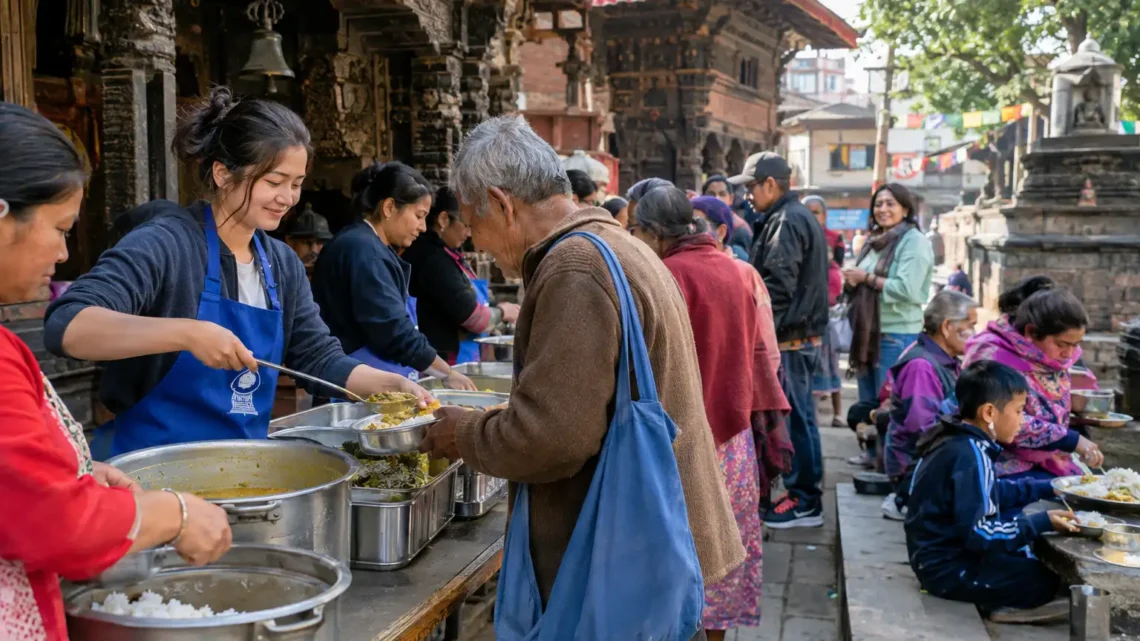
Every morning at 7:15, just after the first rush of people had finished offering prayers at the small temple near Patan Durbar Square, Mina watched him walk toward the community kitchen with the same faded blue cloth bag hanging from his shoulder.
He would wait until the volunteers were busy.
Then he would take two packets of rice.




The first time, Mina thought she had misunderstood what she saw.
The second time, she told herself maybe the food had been given to him.
By the fifth morning, she knew he was hiding it.
The strange thing was that nobody seemed to care.
Mina had been volunteering at the temple kitchen for three months. She was twenty-nine, worked remotely for a small travel company, and had started coming because she was tired of spending every morning staring at the same laptop screen in her rented room in Lalitpur.
The kitchen gave her a reason to leave the house.
It also gave her something her job could not.
People looked at her when they spoke.
The old temple courtyard filled slowly each morning. Bells rang. Motorbikes squeezed through narrow streets outside. Shopkeepers lifted metal shutters. The smell of incense mixed with frying oil, dust, wet stone, and the first cups of milk tea being poured at nearby stalls.
Then came the food.
Rice. Lentils. Vegetables. Sometimes potatoes. Sometimes a simple pickle that disappeared before anything else.
The meals were free for anyone who needed them.
That was the whole point.
Mina liked that.
She liked watching people sit together without asking each other what they did for a living.
She liked the elderly women who came with steel containers.
She liked the schoolboys who pretended they were not hungry and then asked for extra rice.
She even liked the chaos.
One morning, a man arrived carrying a plastic chair and tried to eat while sitting in it.
The chair collapsed.
Everyone laughed.
Even the man laughed.
Mina laughed so hard she nearly dropped a serving spoon.
The old man with the blue bag did not laugh.
He stood near the wall and waited.
His name, Hari, was something Mina learned later.
At first, she only knew him as the man who came at 7:15.
He was probably in his seventies. Thin, but not weak-looking. His grey hair was always combed neatly. He wore the same brown sweater most mornings, even when the weather became warmer.
He never asked for anything.
That was what bothered Mina.
People who needed help usually asked.
Hari did not.
He simply took two packets of food and left.
On the sixth morning, Mina followed him.
She did not plan to.
At least, that was what she told herself.
She waited a few minutes, then walked through the courtyard and out toward Mangal Bazaar.
Hari moved slowly.
He stopped once to adjust his shoe.
Then he crossed the road near a line of parked scooters and disappeared into a narrow lane.
Mina followed.
She felt ridiculous.
She was twenty-nine years old, following an old man carrying rice.
If anyone saw her, there was no explanation that would make her sound normal.
Then Hari stopped outside a small house.
A woman opened the door.
She looked to be around forty.
Hari handed her the food.
The woman immediately started crying.
Mina froze.
The woman touched his hands.
He said something too quietly for Mina to hear.
Then he turned around.
That was when he saw her.
For several seconds, neither of them spoke.
Mina wanted the ground to open.
Instead, Hari looked at her blue volunteer apron and gave a tired smile.
You followed me.
It was not a question.
Mina looked down.
I am sorry.
Hari adjusted the cloth bag on his shoulder.
You wanted to know.
She nodded.
The woman stood silently in the doorway.
Hari looked at her.
Then he looked back at Mina.
That is my daughter.
The woman disappeared inside.
Mina expected an explanation.
She got one three days later.
Her name was Sushila.
She had been married once and had a son who lived in Pokhara. Her marriage had ended years earlier. She had struggled with depression after losing her job and had stopped speaking to most of her family.
Hari had not spoken to her for nearly four years.
Nobody at the temple knew.
Nobody in the neighborhood knew.
The food was the only reason he had to visit her.
Every morning, he brought her breakfast.
Mina listened quietly.
There was no dramatic family secret.
No hidden fortune.
No terrible crime.
Just two people who had been angry for too long.
Why do you not just tell her you want to help her? Mina asked.
Hari looked toward the courtyard.
Because she would refuse.
You are her father.
That is exactly why.
The answer stayed with Mina.
Over the next few weeks, she stopped following him.
She also stopped watching.
She had decided it was none of her business.
Then one morning, Hari did not come.
Neither did the next morning.
On the third day, Mina asked one of the older volunteers whether anyone had seen him.
Nobody had.
That afternoon, she found a message from an unknown number.
It was Sushila.
She had found Mina through the temple volunteer group.
He is in hospital.
That was all.
Mina stared at the message for nearly a minute.
Then she called.
Sushila answered.
Her voice sounded exhausted.
Hari had fallen on the stairs outside his home.
His hip was badly injured.
The doctors said he needed surgery.
The family needed money.
Mina asked how much.
The answer made her sit down.
It was more than Sushila had.
More than Mina had.
More than either of them could borrow easily.
That evening, Mina created a small fundraising post.
She did not know whether it was appropriate.
She did not know whether Hari would want strangers to know.
She posted anyway.
She included his photograph from the temple kitchen, with permission from Sushila.
Within hours, people began sending small amounts.
Five hundred rupees.
One thousand.
Two hundred.
A retired teacher sent five thousand.
A student sent one hundred and wrote that it was all she had.
A man who had eaten at the kitchen several times sent ten thousand.
By midnight, they had raised enough to cover the first hospital payment.
Mina cried when she saw the total.
Not because it was a huge amount.
Because most of the people had never met Hari.
The next morning, she went to the hospital.
Hari was awake.
His first words were not thank you.
They were:
You told people.
Mina stopped beside his bed.
I needed help.
He looked annoyed.
Then he smiled.
You are becoming troublesome.
She laughed.
Sushila was sitting beside the window.
For the first time, Mina saw her holding her father’s hand.
Neither of them said anything.
They did not need to.
The surgery went well.
Recovery did not.
Hari hated being helped.
He complained about the hospital food.
He complained about the television.
He complained about the nurses.
He complained about his daughter.
One afternoon, Sushila brought him lunch from home.
He tasted it.
Too much salt.
Sushila rolled her eyes.
Then do not eat it.
Hari ate everything.
A week later, Mina returned to the temple kitchen.
The old routine continued.
Rice.
Lentils.
Vegetables.
Incense.
Bells.
Scooters.
The city waking up around them.
Then, at exactly 7:15, a woman arrived carrying a blue cloth bag.
It was Sushila.
She placed two packets of food into the bag.
Mina stared.
Sushila smiled.
He still wants two.
Mina laughed.
For himself?
No. He says the food tastes better when I complain about it.
They stood there laughing like two people who had known each other for years.
A month later, Hari returned to the temple.
He walked slowly.
He used a cane.
He looked thinner.
He also looked irritated to be receiving attention.
When he reached the kitchen, Mina handed him a packet.
Then another.
Hari looked at them.
Two?
You trained us.
He shook his head.
I made one mistake.
Which one?
He pointed toward the food.
I should have taken three.
Everyone nearby laughed.
Hari sat beneath the old tree in the courtyard and opened his packet.
Sushila sat beside him.
They argued about the vegetables.
They argued about the rice.
They argued about whether he was walking too fast.
Nobody mentioned the four years they had lost.
Nobody asked them to explain.
Later, while cleaning the kitchen, Mina found the old blue cloth bag hanging from a nail.
She almost put it away.
Then she noticed something inside.
A small folded piece of paper.
It was a hospital receipt.
Underneath it was another paper.
A handwritten list of names and amounts.
The people who had donated money.
At the bottom, Hari had written one sentence.
I thought I was taking food for my daughter. She was the one feeding me back.
Mina folded the paper and put it back.
Outside, the bells started again.
People were arriving with empty containers.
The kitchen filled.
The rice ran low.
Someone asked for more pickle.
A child spilled lentils on the floor.
Someone laughed.
Someone complained.
Someone prayed.
Nobody noticed that Hari had left his blue bag behind.
Not this time.
This time, Sushila was carrying it.
Some things are repaired quietly, one ordinary morning at a time.