
Was He Wrong to Ignore His Father for 3 Months After What He Said?
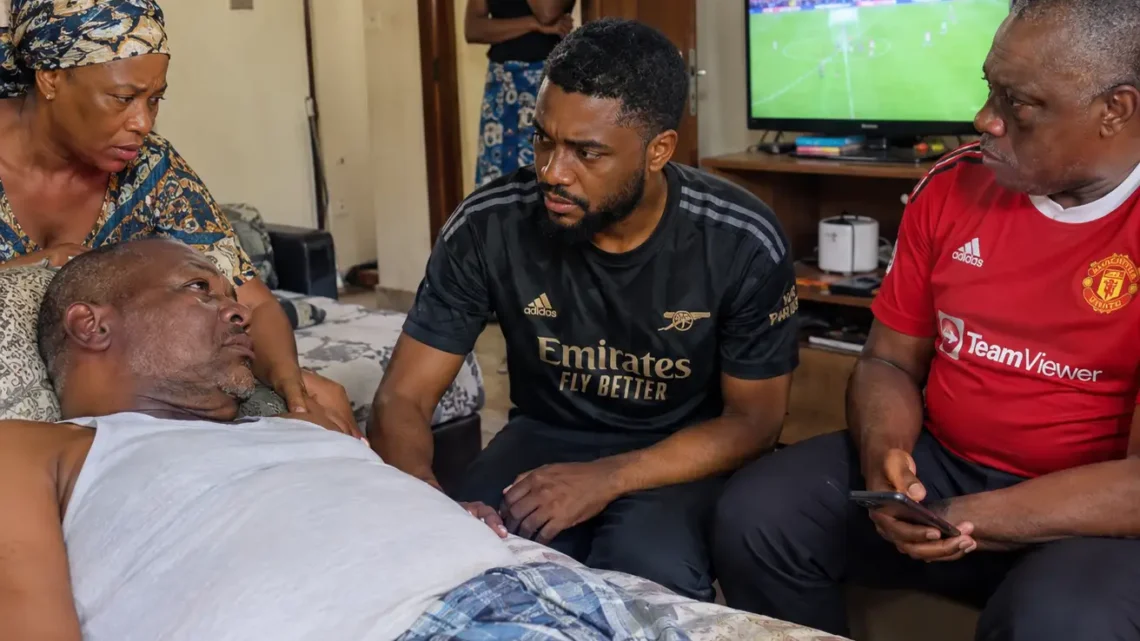
The first thing Tunde did after his father fell in the bathroom was check the football score.
He had not meant to. His phone buzzed against his thigh while he was helping his mother lift the old man from the wet floor, and his thumb moved before his brain caught up.
Trending Now!!:
Arsenal had scored in the eighty-seventh minute. He saw the notification, felt the quick rush of excitement, and then looked up at his father’s face.
For a moment, neither of them spoke.
Your phone is more important than your father now? his mother said.
Tunde locked the screen. He wanted to explain that he had been following the match all afternoon, that Arsenal were playing Manchester United, that the score had been level for nearly the entire second half. He wanted to say that checking the score had become a reflex, the same way some people checked the time.




Instead, he helped his father onto the bed.
That was how the trouble started, although if you asked Tunde, he would tell you it started three months earlier, on a Sunday in Lagos, when his father said something that could not be taken back.
Football had always been the one thing they shared without having to work at it.
Tunde was twenty-nine, lived in a rented one-bedroom flat in Surulere, and worked as a customer service supervisor for a logistics company on Victoria Island. His salary arrived late often enough that he had stopped making plans around the date. He spent too much on data, bought lunch from roadside sellers when he was too tired to cook, and sometimes sent money to his younger sister before remembering he still owed his landlord.
His father, Mr. Adewale, was sixty-three and retired from the civil service. He lived with Tunde’s mother in a modest house in Yaba, where the ceiling fan in the sitting room made a clicking noise every time it turned. He supported Manchester United with the kind of stubbornness usually reserved for family members and religious beliefs.
Tunde supported Arsenal.
Nobody remembered how it had begun. His father claimed he had introduced him to football by taking him to watch a local match when he was seven. Tunde remembered a red Arsenal shirt his uncle had brought from London when he was ten. The shirt was too large, the collar stretched, and the number on the back had started peeling before he wore it for the first time.
He had slept in it anyway.
For years, the rivalry had been harmless. His father called Arsenal children of the internet whenever they lost. Tunde called Manchester United a retirement home with floodlights. They argued over breakfast, during family visits, and in the WhatsApp group his cousins had created to discuss football.
Their favourite part was the aftermath.
When United lost, Tunde sent laughing emojis before his father had finished watching the highlights. When Arsenal lost, his father sent a single message: How was your weekend, my son?
It was funny because it was predictable. Even Tunde’s mother had learned to identify the result of a match by the sound of their voices on Sunday evening.
If your father is singing in the kitchen, United won, she once told a neighbour. If my son arrives and greets everybody too loudly, Arsenal won.
Nobody took it seriously. Not until the money became involved.
It happened in March, during a period when Tunde was struggling to keep his head above water. His landlord had increased the rent, his company had delayed salaries for six weeks, and his sister Amaka had called from Ibadan to say her school fees were due.
He had ₦38,000 left in his account after paying for food and transport. He needed ₦120,000 to cover the most urgent bills.
On a Saturday afternoon, he visited his parents. His mother served him jollof rice with fried plantain, and his father complained that the rice was too soft. The television was showing a football discussion programme. A Manchester United match was scheduled for later that evening.
Mr. Adewale had been in a good mood all morning.
He had recently received money from an old cooperative savings scheme. He had mentioned it twice at dinner the previous week, making sure everyone understood that he had saved carefully for years and had not wasted his retirement benefits.
Tunde had listened quietly.
After lunch, he followed his father into the bedroom and asked if he could borrow ₦150,000.
His father sat on the edge of the bed, adjusting the volume on his phone.
For what?
Tunde explained the rent increase, the delayed salary, and his sister’s school fees. He did not mention that he had also borrowed ₦25,000 from a colleague and had been avoiding his messages.
His father listened without interrupting.
When will you pay me back?
When work pays us. Two months, maximum.
You said that last year.
Tunde looked at him.
Last year, he had borrowed ₦60,000 to repair his laptop. He had repaid it, but not within the agreed time. His father had reminded him about the delay at nearly every family gathering for months.
I paid you back, Tunde said.
Eventually.
Daddy, I came here because I need help, not a lecture.
His father placed the phone on the bed.
You are nearly thirty years old. Every month, there is a new emergency. When are you going to arrange your life?
The words hurt because Tunde had been asking himself the same question every night.
He tried to explain that he was working, that he was not sitting around waiting for someone to rescue him, that the cost of living had become ridiculous. He mentioned the transport fares, the rent, the food prices. His father listened with the expression of a man who believed a problem became smaller when you stopped complaining about it.
Then Mr. Adewale said the thing that changed their relationship.
I cannot keep paying for the consequences of your decisions. If you have money to spend on Arsenal every weekend, you should have money to manage your life.
Tunde stared at him.
For a few seconds, he could not even work out what his father meant.
He had never paid to attend an Arsenal match. He watched football on his phone or at a viewing centre when he could afford the entrance fee. Most weekends, he bought a bottle of malt and sat on a plastic chair with strangers, shouting at a screen that sometimes lost its signal at the worst possible moment.
His father knew all this.
What does Arsenal have to do with my rent? Tunde asked.
You people have money for everything except responsibility.
You don’t know anything about my life.
Then stop asking me to pay for it.
The conversation ended there. His father returned to the sitting room, where the pre-match discussion had moved to Manchester United’s midfield. Tunde went outside and ordered a ride home.
On the way, he opened the family WhatsApp group. His cousin had posted a joke about Arsenal’s chances of winning the league. Tunde typed a reply, deleted it, and put his phone away.
He did not visit his parents the following Sunday.
He did not call the Sunday after that either.
When his mother asked whether he was coming for lunch, he said he had work. When his father called, he watched the phone ring until it stopped.
The first week, he felt justified. The second week, he felt angry. By the third, he had begun to miss the ordinary things he had never thought of as important, like arguing over which defender had made a terrible mistake or watching his father fall asleep before the final whistle.
He missed his mother’s cooking, too, although he would never admit that was part of it.
At the viewing centre near Ojuelegba, he continued watching Arsenal. He sat beside men who knew his name and shouted at him when his team lost. One of them, a mechanic called Baba Kola, noticed that he had stopped making jokes about United.
Your mouth is closed these days, Baba Kola said one evening.
I’m concentrating on the match.
You have been concentrating for three weeks. Did Arsenal employ you as their accountant?
Tunde laughed despite himself.
He told Baba Kola a little about the argument. Not everything, just enough to explain why he was no longer speaking to his father.
The mechanic listened while wiping his hands with a rag.
My own father never watched football, he said. He used to say football was for men who had no land to farm. When he was sick, I spent money I didn’t have taking him to the hospital. He still told me I was wasting my money.
Tunde waited for the rest.
I was angry with him until he died. Now I wish he was alive to waste my money again.
Then Baba Kola turned back to the screen and shouted at the referee.
Tunde hated him a little for saying it. It felt unfair to bring death into an argument about money. His father was alive, stubborn, and perfectly capable of apologising if he chose to.
That was the problem, really. Tunde wanted an apology. He wanted his father to call and say he had been wrong, that he understood what it was like to be an adult who worked hard and still struggled.
He also wanted his father to send the ₦150,000.
He was embarrassed by that second desire, so he concentrated on the first.
Then came the bathroom incident.
It was a Sunday afternoon, three months after the argument. His mother called while Tunde was at home trying to fix a loose button on a work shirt. She said his father had slipped while getting out of the shower. He was conscious, she said, but he could not stand properly.
Tunde left without finishing the shirt.
He took a bus to Yaba, then a motorcycle for the last stretch because traffic had stalled along the main road. By the time he reached the house, his mother was standing outside the bathroom in a wrapper, frightened and angry at the same time.
His father was sitting on the floor, one hand gripping the edge of the bathtub.
Together, they helped him to the bed.
That was when the football notification arrived.
After his mother scolded him, Tunde put the phone on silent and sat beside his father. His right knee hurt. He had bruised it against the bathroom door while lifting the old man, and the damp patch on his trousers was beginning to feel cold.
His father said he was fine.
I only slipped. It happens.
You can’t stand up, Tunde replied.
I can stand. I don’t want to stand.
They took him to a nearby clinic. The doctor checked his blood pressure, examined his leg, and advised further tests because the fall might not have been caused by the wet floor alone. Tunde paid for the consultation with money he had set aside for electricity and groceries.
The doctor said they would need to monitor him closely.
For the next two days, Tunde worked from his parents’ sitting room. He answered customer complaints on his laptop while his mother prepared food. He helped his father walk to the bathroom, collected his medication, and set alarms on his phone so nobody would forget the evening dose.
The house smelled of menthol rub, boiled yam, and the disinfectant his mother used on the bathroom floor.
His father complained about the medication. He complained about the food. He complained that the television was too loud when Tunde turned it up and too quiet when Tunde turned it down.
On the third evening, while his mother was buying bread from the woman at the corner, Mr. Adewale asked him to bring the phone charger.
Tunde reached for it on the bedside table.
His father’s phone was open to a bank notification. Beside it lay a small notebook with figures written in blue ink.
He had not intended to look. The notebook was open, and the page was facing him.
There were dates, amounts, and names. Some were familiar. A cousin. An old colleague. A neighbour whose daughter was in university. Beside each amount was a note about repayment, most of them crossed out.
At the bottom of the page, Tunde saw his own name.
₦150,000.
Underneath it, his father had written: Keep aside if he asks again.
Tunde read the words twice.
His father noticed where he was looking and closed the notebook.
Neither of them spoke for a while.
Then Mr. Adewale asked for the charger again, even though Tunde had already handed it to him.
Why did you keep the money aside? Tunde asked.
His father plugged in the phone.
I didn’t say I didn’t have it.
You said you couldn’t keep paying for my decisions.
That is what I said.
You could have just told me you wanted me to be more responsible.
His father looked at him, then away.
You think I don’t worry about you?
Tunde felt the anger rising again. It was different now, mixed with something he did not want to name.
You could have helped me without making me feel like a useless person.
His father rubbed his forehead.
If I give you money every time you are in trouble, what happens when I am no longer here?
It was not an apology. It was not even an explanation that satisfied Tunde. It was another question, another way of making him feel as if he had failed an examination he had not known he was taking.
I’m not asking you to take care of me forever, Tunde said. I asked for help once.
His father gave a small laugh without humour.
Once?
That single word brought the old argument back into the room. The laptop repair. The late repayment. The times his father had paid for something and mentioned it years later. The times Tunde had promised he would never need help again, then called when life became too expensive.
His father had his own list. Tunde had his.
Neither man wanted to read his aloud.
That night, after his mother had gone to bed, Tunde sat alone in the sitting room and watched the highlights of Arsenal’s match on his phone. His team had won. He replayed the winning goal twice, then closed the video before it reached the celebrations.
His father was asleep in the next room, breathing heavily.
Tunde thought about the notebook. He thought about the money his father had kept aside, and the fact that he had been willing to lend it if only his son had asked in a way he considered proper.
He thought about the times he had borrowed money and spent the next few weeks avoiding calls because he could not repay it on time. He thought about how his father had turned every mistake into a lesson, and how he had turned every lesson into a reason to stay away.
The next morning, he made tea for both of them.
His father drank his without saying thank you. Tunde ate two slices of bread with sardines and checked his work email. A customer had sent an angry message about a parcel that had been delivered to the wrong address. His supervisor wanted an explanation by noon.
For a while, life became ordinary again.
His father regained enough strength to move around the house without assistance. His mother stopped watching him every time he stood up. Tunde returned to his flat and went back to work. He paid his colleague ₦10,000 towards the debt and promised to pay more after his next salary.
He still visited his parents, though not every Sunday.
One afternoon, he found his father watching a Manchester United match with the sound turned low. Mr. Adewale had a bowl of groundnuts beside him and was wearing the old grey singlet he refused to throw away.
Tunde stood in the doorway.
Your team is playing, he said.
I can see that.
They’re losing.
The match has not finished.
Tunde nearly smiled.
He sat down on the other end of the sofa. For twenty minutes, they watched without speaking. Then a United player missed an easy chance, and Tunde made a noise he could not suppress.
His father turned towards him.
You are happy.
Very.
Small boy.
They both laughed. It was brief, and it did not fix anything, but it was the first time in months that the laughter came without effort.
Later, while his mother was serving dinner, Mr. Adewale asked whether Tunde had enough money for transport back to Surulere.
Tunde said yes.
His father nodded and returned to his food.
The question stayed with Tunde longer than it should have. It was the sort of question his father had always asked, even when they were fighting. Sometimes he had asked it after an argument. Sometimes he had slipped a folded note into Tunde’s hand without saying what it was for. Sometimes he had made him angry first, then helped him anyway.
Tunde was beginning to understand that care could arrive in a form that made it hard to accept. He was also beginning to understand that this did not excuse every hurtful thing his father said.
Those two truths sat together in his head, refusing to cancel each other out.
A week later, Arsenal played Manchester United again. The match was scheduled for a Sunday evening, and Tunde spent most of the afternoon deciding whether to watch it at the viewing centre or at his parents’ house.
He had a little money left until payday. The viewing centre would cost ₦1,000, plus transport and whatever he bought to drink. Watching at home would cost nothing, although his father would probably talk through every important moment.
At 5:12 p.m., his mother sent a WhatsApp message.
Your father says the match is starting soon. He says if you are coming, come before the traffic gets bad.
There was no greeting. No apology. No mention of the money.
Tunde read it, put the phone down, and returned to the shirt he was ironing for work.
At 5:26 p.m., he picked up the phone again.
He could go to Yaba. He could sit beside his father and argue about football as if the last three months had been an ordinary disagreement. He could also stay home, save the transport money, and let his father experience what it felt like to wait for someone who did not arrive.
He knew what his friends would tell him. Some would say that parents were not perfect and that he should cherish the time he had left with his father. Others would say that being a parent did not give a person permission to humiliate an adult child, especially one who was already struggling.
He agreed with both sides, which was making the decision harder.
At 5:41 p.m., he opened the family WhatsApp group. His cousin had posted the line-ups, followed by a joke about Mr. Adewale needing to pray for United’s defence.
Tunde typed a laughing emoji.
His father replied almost immediately.
You are laughing now. We will see after ninety minutes.
Tunde stared at the message.
Then he opened his banking app and checked his balance. He had enough for the trip if he did not buy dinner tomorrow. He had already eaten rice at lunch, and there was half a loaf of bread in his kitchen.
He put on his trainers.
Before leaving, he stood at the door for a moment and looked at the room. His laptop was charging on the floor. His work shirt was hanging behind the door. A plastic bag containing empty water sachets waited beside the bin because he had been too tired to take it downstairs.
He could stay. Nobody would blame him for staying.
Instead, he locked the door and headed towards the bus stop.
The traffic was already thick. A conductor shouted destinations over the noise of horns, and a woman carrying a tray of boiled eggs moved between the vehicles. Tunde squeezed into a bus, held his phone above his head to keep it away from someone’s shopping bag, and watched the time.
At 6:37 p.m., he reached Yaba.
His mother opened the door before he knocked. From the sitting room came the familiar sound of football commentary. His father was on the sofa, the groundnuts beside him, his eyes fixed on the television.
Mr. Adewale glanced over his shoulder.
You came.
Tunde dropped his keys into a bowl near the door.
The match is about to start.
His father shifted to make room on the sofa.
Tunde sat down. Their shoulders did not touch.
The referee blew the whistle, and both men leaned forward.
For the first twenty minutes, they argued about a foul. His father blamed the referee. Tunde blamed a defender. His mother called from the kitchen to ask whether either of them wanted more rice, and both shouted yes without looking away from the screen.
It was familiar enough to hurt.
Near the end of the first half, Mr. Adewale reached for the groundnuts, missed the bowl slightly, and scattered a handful across the floor. Tunde bent down to collect them. His father reached for the same one, and their fingers touched.
Neither man moved immediately.
Then his father picked up the bowl and placed it on the table.
There is malt in the fridge, he said.
I’m fine.
I didn’t ask if you were fine. I said there is malt in the fridge.
Tunde looked at him.
For the first time in months, he could not tell whether his father was trying to make peace or simply telling him where the drinks were kept.
He went to the kitchen anyway.
The second half began while he was pouring the malt into a glass. From the sitting room, he heard his father shouting at a player who had lost possession. He heard his mother laughing at something on her phone. He heard the television volume rise.
He stood beside the fridge, holding the cold glass, and considered going back to the sofa.
He also considered finishing the drink and leaving before the match ended.
He had come because he missed his father. He had come because he was tired of the silence. He had come because, despite everything, the thought of watching Arsenal play United without someone beside him to annoy him had felt worse than spending money he could barely spare.
None of that meant he was ready to forgive the way his father had spoken to him.
None of it meant his father was ready to apologise.
From the sitting room, Mr. Adewale called out.
Are you drinking that malt or have you gone to sleep in the kitchen?
Tunde laughed, quietly at first, then loud enough for his father to hear.
He carried the glass back into the sitting room and sat down. On the television, the players were lining up for a corner. His father was already shouting instructions at them, as if either manager might suddenly remember to listen.
Tunde took a sip.
He had not forgiven his father. His father had not asked him to. The money remained in the notebook, and the words from that afternoon in March remained in his memory. They would probably come up again, perhaps in another argument, perhaps years later when neither man could remember what had started it.
For now, they watched the same match from opposite ends of the sofa.
When Arsenal attacked, Tunde stood up. When Manchester United countered, his father stood up too. They shouted at the referee together, then immediately returned to blaming each other’s teams.
His mother shook her head from the doorway.
Two grown men, she said, behaving like children over people who don’t even know their names.
Neither of them answered.
The match continued, and the space between them remained exactly where it was.
Sometimes, the person you are still angry with is also the person you keep hoping will make room for you on the sofa.