What Small Business Owners Get Wrong About Liability Insurance
I remember the exact moment my stomach dropped.
It was a Tuesday morning in March, the kind where the sun is out but the wind still bites through your jacket. I was sitting in my small office in Austin, Texas, sipping the third coffee of the day, when my phone rang. Unknown number. I almost let it go to voicemail.
Trending Now!!:
“Mr. Carter?” The voice on the other end was calm in that professional, rehearsed way that makes your skin crawl.
“Yes, speaking,” I said.
“My name is Gregory Holt. I’m an attorney representing a former client of yours, Sandra Osei. We are filing a liability claim against your business for damages totaling $87,000. You should expect formal documentation by end of week.”
I set my coffee down. Very slowly. Like if I moved too fast, the number would get bigger.




Eighty-seven thousand dollars.
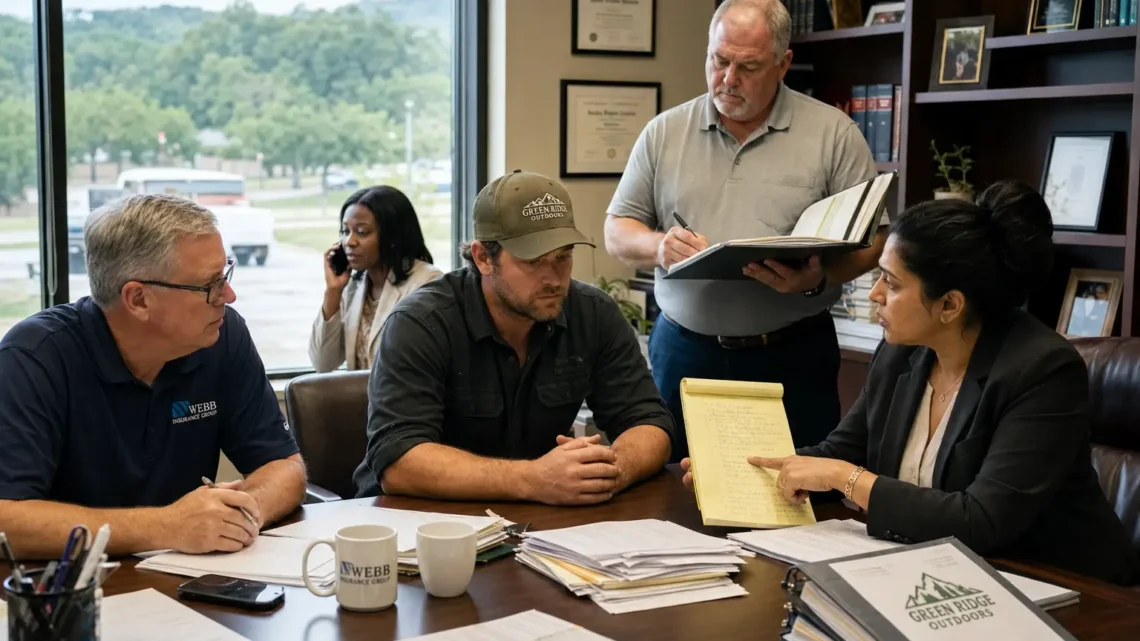
I had been running my small landscaping business, Green Ridge Outdoors, for six years. Built it from a pickup truck and a second-hand mower. I had four full-time employees, a growing list of residential and commercial clients, and a reputation I was genuinely proud of. What I did not have, it turned out, was the right kind of general liability insurance coverage.
That phone call was the beginning of the most expensive education of my life.
Eight months earlier, one of my crew members had accidentally damaged an irrigation system at Sandra Osei’s property during a routine lawn maintenance job. The repair cost at the time was roughly $2,200. She called, upset. We apologized. I sent her a check from my business account, no paperwork, no written release, no formal settlement agreement.
I thought that was it. Problem solved.
What I did not understand then, and what every small business owner needs to understand now, is that an informal payment without a signed liability waiver or legal release is worth nothing in court. Sandra argued the damage had caused a secondary flooding issue in her basement weeks later. Whether that was directly connected to our work was debatable. But without documentation, I had no legal footing.
I called my insurance broker, Marcus Webb, the moment I got off the phone with the attorney.
“Marcus, I need you to pull up my policy. Someone is suing me for $87,000.”
There was a pause on his end that lasted just long enough to make me nervous.
“Walk me through what happened,” he said.
I did. Every detail. And when I finished, he let out a slow breath.
“Okay. So here’s the issue, Ryan. Your current commercial general liability policy has a per-occurrence limit of $50,000. And because you made a prior payment directly to the claimant without going through the insurer first, the insurance company could argue you’ve complicated the claim. They may still cover part of it, but there’s no guarantee they’ll cover the full amount.”
I gripped the edge of my desk.
“How did I not know that?”
“Because nobody reads their policy documents until something goes wrong,” Marcus said. It was not accusatory. It was just the truth, delivered with the quiet exhaustion of a man who had said it too many times.
Two days later, I was sitting in a law office in downtown Austin. The chairs were leather. The bookshelves were tall and intimidating. The attorney across from me was a woman named Priya Nair, who had been recommended by a friend. She wore reading glasses on a chain and had a yellow legal pad covered in handwriting that moved fast and confident.
“Tell me everything,” she said. “Leave nothing out. The embarrassing parts especially.”
So I did.
She listened without interrupting. When I finished, she took off her glasses and looked at me directly.
“Here is what you need to understand. You are not in a catastrophic position yet. But you made several classic small business mistakes that compounded each other. First, you settled informally without legal documentation. Second, your liability coverage limits were too low for a business of your size and risk profile. Third, you had no contract clause with your clients that defined the scope of liability for incidental damage.”
She wrote three things on her legal pad and turned it toward me.
- Coverage gaps
- No signed client contracts
- No settlement release
“These three things together,” she said, “are why you are sitting in my office right now.”
I looked at the list. Six years of early mornings and sunburned afternoons, and it all came down to three lines on a yellow notepad.
Over the next several weeks, I learned more about the insurance claims process than I ever wanted to know. My insurer assigned a claims adjuster named Tom Braddock, a stocky man in his fifties who drove a silver sedan and asked questions like he was filling out a tax return.
“Did you have written authorization from the property owner before beginning work near the irrigation zone?”
“No.”
“Did your crew document the condition of the property before beginning the job?”
“No.”
“Do you have a signed contract with the claimant that includes a limitation of liability clause?”
“No.”
Every “no” felt like a small punch. Tom was not mean about it. But he was thorough, and thoroughness in an insurance investigation is its own kind of pain. He reviewed everything, including the informal payment I had sent Sandra, and confirmed what Marcus had warned me about. The insurer was going to push back on full coverage because of that prior payment.
In the end, after weeks of negotiation between Priya, the opposing attorney Gregory Holt, and the insurer, we reached a settlement of $61,000. My insurance covered $44,000 of that after applying the complication factor from my informal payment. The remaining $17,000 came out of my personal savings.
Seventeen thousand dollars. Because I did not read my policy. Because I paid someone informally without a piece of paper. Because I assumed a handshake and a check was the same thing as a legal resolution.
It is not.
The week after the settlement, I called Marcus back.
“I want to rebuild this properly,” I said. “Walk me through everything I should have.”
He did. We sat on the phone for almost two hours. Here is what we redesigned together:
Commercial General Liability Insurance with a $1 million per-occurrence limit and $2 million aggregate. For a business operating on other people’s properties, especially with equipment and crews, anything below $1 million is a gamble you should not take.
Workers’ Compensation Insurance, which I technically had but had not kept fully updated as my team grew. Every employee matters. Every coverage gap is a lawsuit waiting to happen.
Commercial Auto Insurance for all business vehicles, properly registered under the business entity and not as personal vehicles.
An umbrella liability policy sitting above all of it, adding an additional $1 million in coverage for situations where primary limits are exhausted.
And then Priya helped me build a proper client contract template. It included a scope of work definition, a limitation of liability clause, a damage documentation requirement before job commencement, and a dispute resolution process that required written notice before any legal action.
Clients sign it before we touch their property. Every time.
If you are a small business owner, a freelancer, a contractor, or even a landlord, here is what ten years in the trenches have taught me about legal and insurance protection:
Your general liability insurance is only as strong as your policy limits. A $50,000 limit sounds like a lot until you are staring at an $87,000 claim. Review your coverage every year as your business grows.
Never settle a claim without going through your insurer first. I know it feels faster and friendlier to just write a check. It is not. You are potentially complicating your own coverage without knowing it.
Business contracts are not just formalities. They are your first line of legal defense. Every client interaction, no matter how routine, should have a written agreement. It protects both parties.
Documentation is everything. Before-and-after photos. Signed work orders. Written communication logs. If you cannot prove something in writing, it did not happen, at least not in any way a court will recognize.
An independent insurance broker is worth every penny. Not a call center, not a comparison website. A real human being like Marcus who knows your business and reviews your coverage with you regularly.
About a year after the settlement, I got a call from an unexpected number. It was Sandra Osei.
“I heard through a mutual contact that things were hard for you after everything,” she said. Her voice was quieter than I expected. “I want you to know… I did not anticipate it going that far. My attorney pushed harder than I wanted.”
I did not know what to say for a moment.
“I appreciate you saying that,” I finally managed. “Honestly, it was the most expensive lesson I ever learned. But I run a better business because of it.”
There was a small silence.
“For what it’s worth,” she said, “your crew always did beautiful work.”
I laughed. A real one, the surprised kind.
Green Ridge Outdoors is still standing. We have eleven employees now. Our contracts are tight, our coverage is solid, and every new hire sits through a basic orientation that includes one non-negotiable lesson: document everything, assume nothing, and always, always read the policy.
The $17,000 I lost taught me something no business course ever could. Legal protection and the right insurance coverage are not expenses. They are the foundation your entire livelihood stands on.
Build it right the first time.
Because the call will come. It always does. The only question is whether you are ready for it when it does.