What a Trotro Driver in Accra Knows About Money That I Never Learned in School
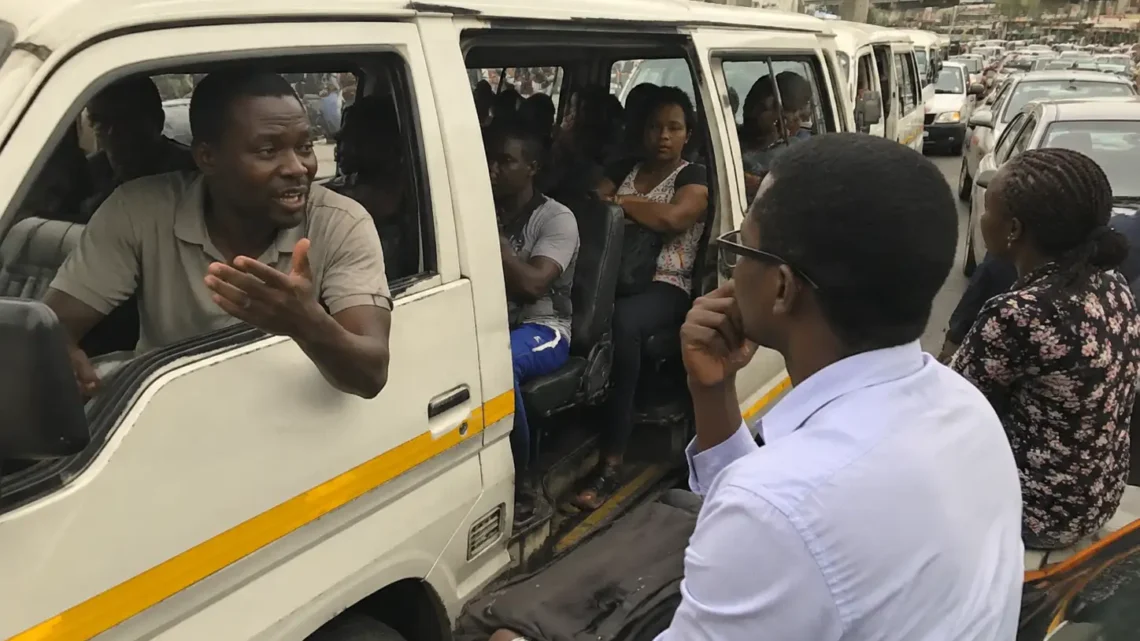
The engine cut off in the middle of the Kwame Nkrumah Interchange, and twenty of us sat there in silence, sweating, while Kojo banged his palm against the dashboard like it owed him money.
This one too, ah, he said, not to anyone in particular. Every week na the same story.
Trending Now!!:
I was on my way to a client meeting in Osu, the kind of meeting where you rehearse your pitch in your head three times before you even get out of the car, except now there was no car, just a stalled trotro on a Tuesday morning in Accra with traffic building behind us like a wall of noise. My phone was at eleven percent. My shirt was already sticking to my back.
A woman two seats up muttered that she would be late for work again, and somebody near the door laughed, that tired laugh Ghanaians do when nothing is funny but everything is.
Kojo turned the key again. Nothing. He turned it a third time, and something coughed, caught, and held. The whole trotro cheered like Black Stars had scored.
You see why I dey save small small, he said to me specifically, because I was sitting closest to him, clutching my laptop bag like it was a baby. This car go finish me one day.



I asked him what he meant, mostly to be polite, mostly because my meeting was already gone and there was nothing else to do but talk.
He told me he had been driving this route, Kaneshie to Circle to Osu, for six years. He didn’t own the trotro, he was renting it from a man named Mr. Sarpong who lived somewhere in Tema and never once, in six years, came to see the vehicle he owned. Every evening Kojo paid his sales, the daily rental fee, before he even started counting what he’d made for himself.
Some days I go home with nothing, he said. Some days I go home with small change. But I don’t fit stop, because if I stop for one day, the debt still dey wait for me tomorrow.
I asked if he had ever thought about doing something else.
He laughed, properly this time, the way you laugh at a question that shows you don’t understand the world you’re asking about.
Doing what, he said. You think work dey fall from sky?
But then he told me about the small side hustle he had been building for the past year, on the days when the trotro was in the workshop or when passengers were slow. He bought phone credit in bulk, cheap, from a wholesaler near Agbogbloshie, and resold it to people along his route who didn’t want to walk to the nearest kiosk. Small profit, he said, but it added up. He kept the money in a small black book, not a bank account, because the last time he tried a bank account the fees ate more than he saved.
I dey learn small small, he told me. One day I go get enough for my own car. Then no more sales for Sarpong.
I didn’t know what to say to that, so I said something about financial freedom, some phrase I’d read in an article once about how the real secret to building wealth in a place like Ghana wasn’t a big salary, it was patience and small consistent moves that nobody was watching. He looked at me like I had said something in a foreign language, which, in a way, I had.
Freedom, he repeated, testing the word. Maybe. Or maybe just enough small small so my children no go suffer like me.
We sat in that traffic for another forty minutes. Somewhere around the Sanka mit, my phone died completely, and I stopped thinking about the meeting altogether. I just watched Kojo work, weaving through gaps in traffic that shouldn’t have existed, shouting fares out the window, laughing with a hawker selling groundnuts who called him by name, arguing briefly and cheerfully with another driver about whose turn it was to cut into the lane.
By the time we reached Osu, I was two hours late, and my client had already left. I didn’t even feel angry about it, which surprised me.
I gave Kojo his fare, and then, without really planning to, I gave him double.
He looked at the extra note in his hand for a second too long.
Why, he asked, not offended, just genuinely asking.
For teaching me something today, I said, which sounded stupid out loud, but he nodded slowly like it made sense to him.
You go remember me when you get rich, he said, half joking, and pulled off before I could answer.
I never saw Kojo again, not properly. I took that route maybe a dozen more times over the following year, and once I thought I saw him near Kaneshie market, but the trotro was a different color, and the driver’s face wasn’t quite right when I looked twice.
I started keeping a small notebook of my own after that day, tracking every cedi that came in and went out, the way he’d described his black book. It felt embarrassing at first, like something a person my age with my education shouldn’t need to do. It turned out I needed it more than I wanted to admit. The cost of living in Accra had crept up so quietly that I hadn’t noticed how much of my salary was disappearing into things I couldn’t even name by the end of the month.
Sometimes I wonder if Kojo ever got his own car, if the sales he owed Mr. Sarpong ever stopped being a weight on his shoulders, if his black book ever turned into something bigger.
I like to think it did. I like to think he’s somewhere on the Kaneshie road right now, in his own trotro, arguing cheerfully with another driver about lane space, no longer counting out someone else’s cut before his own.
But I don’t actually know. And maybe that’s the part of the story that stays with me the most, that I spent two hours of my life sitting next to a man who taught me more about money than four years of university, and I never even found out how his story ended.