The Day I Almost Married a Photograph
Amaka Nwosu met Richard Coleman on a Tuesday afternoon in March, three weeks before her thirty-second birthday, in the comments section of a photography page she followed for inspiration.
He was, according to his profile, a structural engineer working on an oil rig off the coast of Aberdeen, widowed, with a nine-year-old daughter named Sophie who loved unicorns and missed her mother terribly.
Trending Now!!:
He had kind eyes in his profile picture, the practiced kindness of a man who had clearly never worked a single day on an oil rig in his life, though Amaka wouldn’t know that for another six weeks.
You have such an artistic eye, he wrote under a photo she’d posted of Third Mainland Bridge at sunset, the water catching orange light like something out of a painting. I could tell immediately you’re not like other women.
Amaka rolled her eyes at her phone, sitting in traffic near Ojota with the AC blowing warm, useless air across her face, but she replied anyway.
It had been eleven months since her last relationship ended, a slow, humiliating collapse that everyone in her Lekki Phase 1 friend group still occasionally referenced with the particular cruelty of people who love you, and a stranger calling her artistic felt, in that moment, like water in a desert.



By April, Richard was calling her “my Nigerian queen” in messages that arrived at suspiciously convenient hours, always right after Amaka mentioned she was stressed, always exactly as long and thoughtful as a woman craving attention would want them to be.
He sent photos of Sophie, a stock image of a laughing blonde child that Amaka’s cousin Tega would later reverse-image-search and find attached to a stroller advertisement from 2019. He sent voice notes in an accent that wandered, on bad days, somewhere between Scottish and vaguely South African, though Amaka, in love or something close enough to it, chose not to notice.
Babe, when are you coming to Lagos, she asked one night, lying in bed with her phone propped against a pillow, the ceiling fan turning lazily above her.
Soon, my love, he wrote back. There’s just a small issue with my clearance certificate at the port. Nothing serious. I just need eight hundred dollars to release my equipment, and then I’m free to come to you.
It was Tega who saved her, the way cousins in Lagos families are contractually obligated to save each other from themselves, usually at the worst possible moment and with the least tact available.
Tega worked in cybersecurity for a bank on Adeola Odeku and had the specific, weary suspicion of someone who had watched three separate aunties lose their pension to men who did not exist.
Send me his pictures, Tega said over the phone, not even bothering with pleasantries. All of them. Now now.
Amaka resisted at first, the way people resist any evidence that might dismantle something they’ve decided to believe in. You don’t understand, Tega, he’s different. He talks to me every single day. He remembers small things I mention.
Yahoo boys remember everything you mention, Tega said flatly. That’s the whole job. Send the pictures.
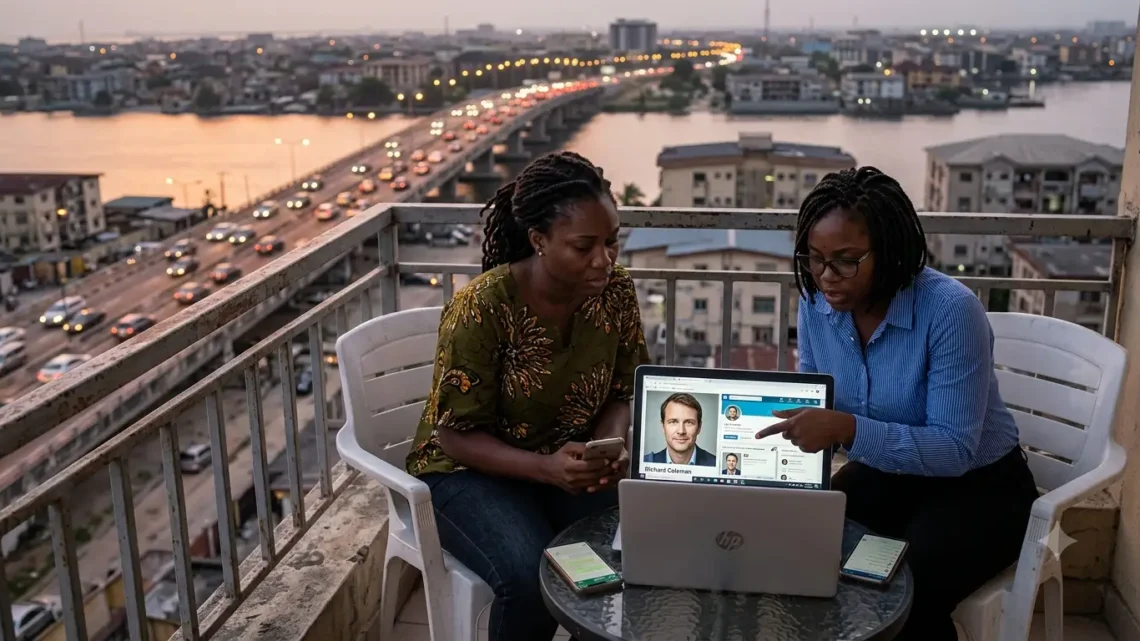
Within forty minutes, Tega had found the real owner of Richard’s profile photos, a Danish marine biologist named Lars who had a genuine wife, two genuine children, and absolutely no idea that his LinkedIn headshot had been recruiting Nigerian women for eight months across four different fake identities.
Tega sent screenshots with the energy of a prosecutor delivering closing arguments, and Amaka sat on her bed staring at the evidence with a strange, hollow calm, the kind that comes right before the crying starts.
She didn’t cry immediately. First she opened the chat with Richard and typed, slowly, deliberately: Lars says hello from Denmark. So does his wife.
The three dots appeared, disappeared, appeared again. Then nothing. No apology, no defense, not even the courtesy of a denial. He simply blocked her, the digital equivalent of a market trader sweeping his goods off the table the moment police sirens sound, and Amaka was left staring at a chat history that no longer existed, six weeks of a relationship erased in the time it takes to tap a single button.
I feel so stupid, she told Tega later, sitting on her balcony overlooking the Lekki-Ikoyi Link Bridge, its lights strung out like something borrowed from a better story than her own.
You’re not stupid, Tega said, settling into the plastic chair beside her, the kind everyone’s balcony seems to own at least two of. You were lonely, and somebody professional took advantage of that. That’s not a character flaw, that’s just Tuesday in this economy.
Amaka laughed despite herself, a wet, ugly laugh that felt better than it sounded. Below them, Lagos did what Lagos always did at that hour, honking and hustling and refusing, stubbornly, to stop moving no matter how many of its people got their hearts quietly emptied along the way.
She deleted the photography page a week later, not because she’d stopped loving photography, but because grief needed somewhere to land that wasn’t the exact spot where the wound had opened.
She started following a hiking group instead, real people, verified faces, muddy boots and Sunday morning trails around Lekki Conservation Centre, and told herself that trust, like everything else worth having in this city, would have to be rebuilt slowly, in cash, with no shortcuts and no one calling her “my Nigerian queen” before they’d even learned her middle name.
Some men will lie to you with a stranger’s face and call it love. The real work is learning to recognise your own reflection again once the mirror stops lying back.