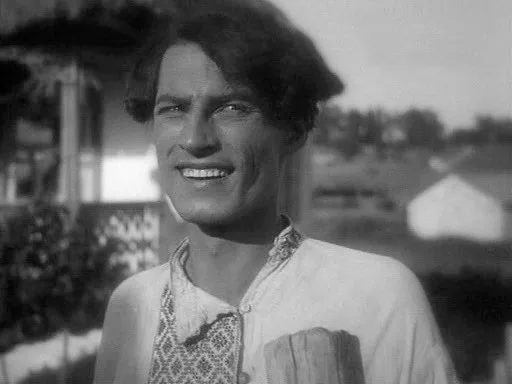
Andrei Abrikosov Biography: Nationality, Wife, Age, Height, Net Worth, Parents, Children, Movies, Death
Andrei Lvovich Abrikosov, known professionally as Andrei Abrikosov, was a distinguished Soviet stage and film actor whose career spanned more than four decades.
He gained early fame for his leading role in the silent adaptation of And Quiet Flows the Don and later became known for memorable performances in Sergei Eisenstein’s Alexander Nevsky and Ivan the Terrible, as well as numerous other classic Soviet productions.
Trending Now!!:
Honored as a People’s Artist of the USSR, he left a lasting mark on both cinema and the Vakhtangov Theatre.
| Andrei Abrikosov | |
|---|---|
|
|
| Wiki Facts & About Data | |
| Real Name: | Andrei Lvovich Abrikosov |
| Stage Name: | Andrei Abrikosov |
| Born: | November 14, 1906 |
| Died: | 21 October 1973 (age 66 years old) |
| Place of Birth: | Simferopol, Taurida Governorate, Russian Empire (now Crimea) |
| Nationality: | Soviet—Russian |
| Height: | 1.93 m |
| Parents: | Lev Abrikosov, Mrs. Abrikosov |
| Spouse: | Married |
| Relationship: | Married |
| Children: | Grigori Andreyevich Abrikosov |
| Occupation: | Actor |
| Net Worth: | $50,000 |
Early Life and Education
Andrei Abrikosov came into the world on November 14, 1906 in Simferopol, Taurida Governorate, Russian Empire, to Lev Abrikosov, an agricultural technician and agronomist, and his wife, a homemaker. Information about siblings is not publicly available.
He spent part of his youth amid the hardships of the post-revolutionary period and completed his schooling in Tula before moving to Moscow in the mid-1920s.

There he trained in acting at a cinematographic studio and later studied under Z. S. Sokolova. He is of Russian and Ukrainian descent, and his religion was Russian Orthodox Christianity.
Career
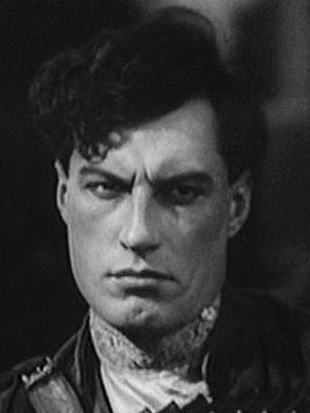
Andrei Abrikosov began his professional path on the stage in the mid-1920s and made his screen debut in 1930 as Grigori Melekhov in the silent film Tikhiy Don (And Quiet Flows the Don), a role that brought him immediate recognition.
He continued with supporting and leading parts throughout the 1930s, steadily building a reputation for strong, charismatic portrayals of determined and heroic characters.
His work during this formative period established him as a reliable presence in Soviet cinema.
His career reached new heights with the role of Gavrilo Oleksich in Sergei Eisenstein’s Alexander Nevsky (1938), for which he shared the Stalin Prize.
He went on to appear in both parts of Ivan the Terrible as Boyar Fyodor Kolychev / Archbishop Philip, and took on significant parts in films such as Stepan Razin, The Turning Point, The Fall of Berlin, Ilya Muromets, and Virgin Soil Upturned.
Concurrently he became a long-standing member of the Vakhtangov Theatre in Moscow, where he performed major stage roles and later served as director of the theatre from 1953 to 1959.
In his later years Abrikosov continued to work steadily in both film and theatre, appearing in productions including The Brothers Karamazov, Wedding in Malinovka, and Ruslan and Ludmila.
Named People’s Artist of the USSR in 1968, he remained active until the early 1970s, leaving a substantial body of work that influenced generations of Soviet performers and audiences.
Personal Life
Andrei Abrikosov was married at the time of his death; the name of his spouse is not publicly known.
He and his wife had one son, Grigori Andreyevich Abrikosov, who became a well-known Soviet actor in his own right.
Abrikosov died on October 21,1973 in Moscow at the age of 66 and was buried at the Novodevichy Cemetery.
Filmography
- Tikhiy Don (1930)
- Vstrechnyy (1932)
- Alexander Nevsky (1938)
- Stepan Razin (1939)
- Ivan the Terrible, Part I (1944)
- The Turning Point (1945)
- The Fall of Berlin (1950)
- Ilya Muromets (1956)
- Ivan the Terrible, Part II (1958)
- Virgin Soil Upturned (1959–1960)
- The Brothers Karamazov (1969)
- Wedding in Malinovka (1967)
- Ruslan and Ludmila (1972)
Net Worth
Andrei Abrikosov maintained an estimated net worth equivalent to approximately $50,000 in historical terms, reflecting the earnings and professional standing of a leading Soviet actor and People’s Artist of the USSR.
His primary sources of income were salaries from film and theatre work, state awards including the Stalin Prize, and long-term membership at the Vakhtangov Theatre.
What People Ask
NOTICE!! NOTICE!! NOTICE!!
At TheCityCeleb, we strive to provide accurate and up-to-date biographies and entertainment news, focusing on celebrities. Our editorial team researches information from reputable sources, including interviews, official statements, and verified media.If you spot an error or have additional details, please contact us at editor@thecityceleb.com. We value your feedback and are committed to maintaining trustworthy content.